

Gearbox Running Hot Under Load: Root Causes
A gearbox running hot under load is a clear sign that something in the system is not operating as intended. While gearboxes naturally generate heat during operation, excessive temperature rise specifically when load is applied often points to sizing, lubrication, alignment, or mechanical issues that can quickly shorten equipment life.
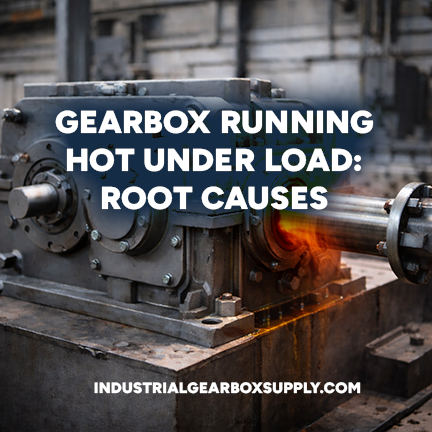
Understanding why a gearbox runs hot under load allows operators and maintenance teams to identify root causes early, correct problems before failure occurs, and avoid costly downtime.
This guide explains the most common reasons a gearbox overheats under load and how to diagnose the issue correctly.
What “Running Hot Under Load” Really Means
A gearbox running hot under load typically operates within acceptable temperature limits at no load or light load, but experiences a sharp temperature increase when torque demand rises.
This pattern indicates that internal friction, gear contact stress, or bearing load increases disproportionately under operating conditions. Left uncorrected, this type of overheating accelerates lubricant breakdown and internal wear.
Undersized Gearbox for the Application
One of the most common root causes is an undersized gearbox.
If the gearbox is operating near or above its rated torque capacity, internal components experience excessive stress when load is applied. This leads to increased friction, higher bearing loads, and rapid heat buildup.
Undersizing often occurs when applications change, duty cycles increase, or safety factors were minimal during initial selection.
Excessive Load or Shock Loading
Even a properly sized gearbox can run hot if the applied load exceeds design assumptions.
Frequent starts and stops, impact loading, product jams, or sudden torque spikes create shock loads that dramatically increase heat generation. These loads are often brief but frequent enough to raise operating temperature significantly.
Shock loading also accelerates gear tooth and bearing wear, compounding the overheating problem over time.
Incorrect or Degraded Lubrication
Lubrication plays a critical role in managing heat under load.
If lubricant viscosity is too low, the oil film breaks down under load, allowing metal-to-metal contact. If viscosity is too high, internal churning losses increase, generating excess heat.
Contaminated, oxidized, or thermally degraded oil loses its ability to protect gears and bearings, causing rapid temperature rise when load increases.
Misalignment Under Load
Misalignment may not be obvious at no load but can become severe once torque is applied.
Under load, shafts may deflect, causing uneven gear tooth contact and localized stress. This increases friction and heat generation, especially in bearings and gear mesh zones.
Thermal growth of components can further worsen alignment during operation.
Bearing Overload or Wear
Bearings carry significant radial and axial loads when a gearbox is under load.
Worn bearings, improper bearing selection, or incorrect preload conditions increase rolling resistance. As load increases, bearing friction rises sharply, contributing to localized heating that spreads throughout the gearbox.
Bearing-related heat is often accompanied by increased vibration and noise.
Poor Heat Dissipation
A gearbox may be mechanically sound but unable to dissipate heat effectively under load.
Blocked cooling fins, dirty housings, restricted airflow, or installation in high ambient temperature environments reduce heat transfer. When load increases, the gearbox generates more heat than it can shed, causing operating temperatures to climb.
Enclosures without proper ventilation can significantly worsen this condition.
How to Diagnose a Gearbox Running Hot Under Load
Start by comparing temperature at no load versus full load using an infrared thermometer or thermal imaging camera. A sharp temperature rise under load is a key diagnostic indicator.
Inspect lubrication condition and verify the correct oil type, viscosity, and level. Oil analysis can reveal contamination, oxidation, or metal particles.
Review application load requirements, duty cycle, and startup conditions. Confirm that torque and service factors match the gearbox rating.
Check alignment and mounting, paying close attention to conditions under operating load. Shaft deflection and thermal growth should be considered.
Finally, evaluate bearing condition and listen for abnormal noise or vibration that increases under load.
How to Prevent Overheating Under Load
Proper gearbox sizing with adequate service factors is the most effective preventive measure. Gearboxes should be selected based on worst-case load conditions, not average operation.
Using the correct lubricant type and maintaining oil cleanliness ensures proper heat management. Regular oil analysis helps detect problems early.
Maintaining precise alignment, especially in high-load applications, reduces uneven loading and heat generation.
Keeping housings clean, ensuring adequate airflow, and addressing ambient temperature issues improve heat dissipation under load.
When Running Hot Under Load Indicates Replacement Is Necessary
In some cases, a gearbox running hot under load has suffered internal damage that cannot be economically corrected.
Replacement should be considered when gears show advanced wear, bearings are damaged, lubricant breaks down repeatedly, or when overheating persists despite corrective actions.
Selecting a properly sized replacement gearbox with appropriate service factors helps eliminate recurring overheating issues.
Final Thoughts
A gearbox running hot under load is not a normal condition and should never be ignored. It is a strong indicator of excessive stress, friction, or heat retention within the system.
By understanding root causes and diagnosing the issue correctly, operators can take timely action to protect equipment, extend gearbox life, and avoid unexpected failures.
If you need help evaluating a gearbox running hot under load or selecting the correct replacement for your application, IndustrialGearboxSupply.com can help guide you toward the right solution.