

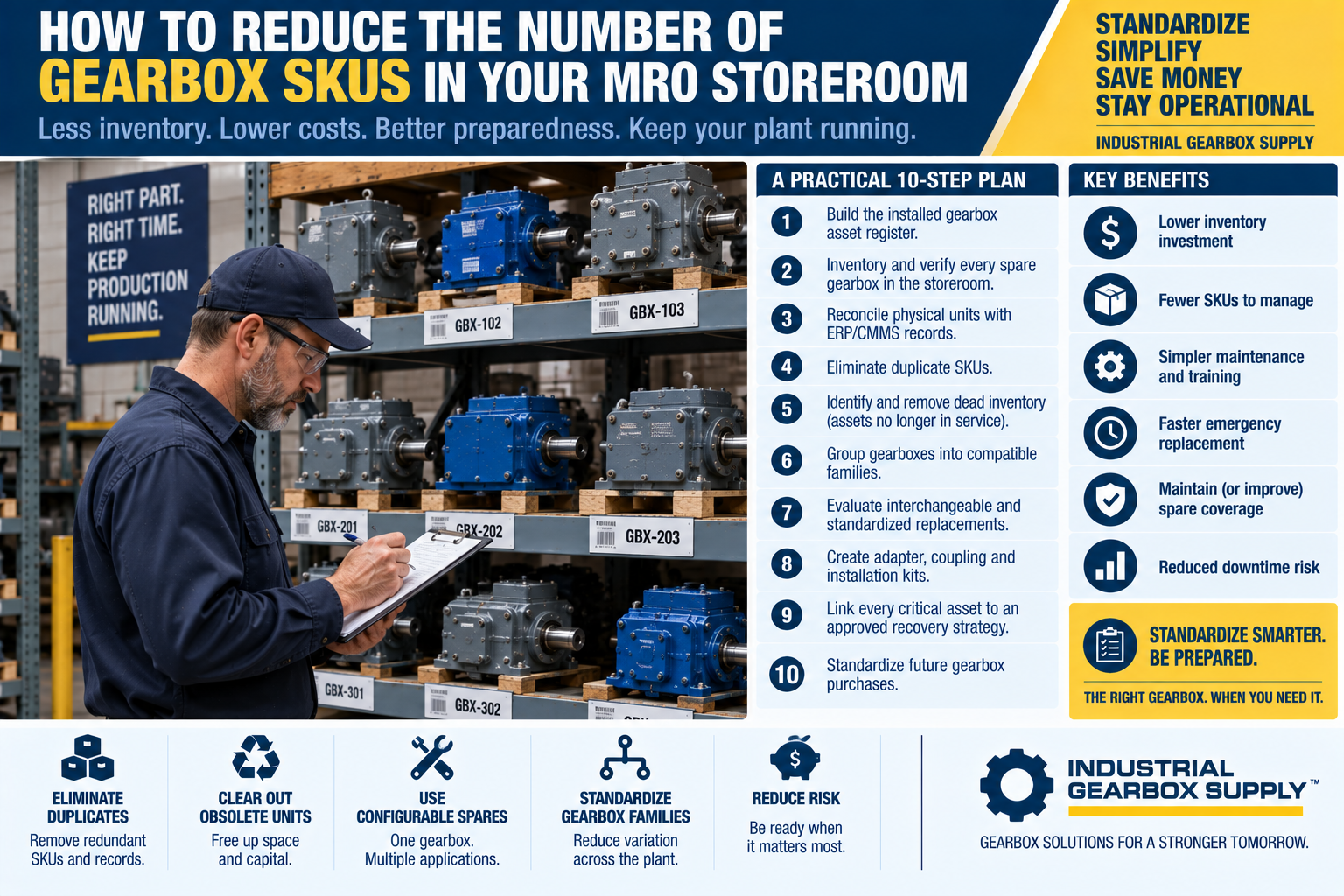
How to Reduce the Number of Gearbox SKUs in Your MRO Storeroom
Too many industrial gearbox SKUs can tie up MRO inventory dollars without improving downtime protection. Learn how to audit installed and spare gearboxes, eliminate duplicate records, identify interchangeable units, create configurable spares and standardize gearbox families while preserving critical spare coverage.

When Is It Worth Paying for Expedited Gearbox Delivery?
Expedited industrial gearbox delivery can carry a substantial premium, but waiting may cost far more when production is down. Learn how procurement and maintenance teams can calculate the break-even point, compare standard and expedited lead times, evaluate downtime costs, and determine whether faster gearbox delivery will actually restore production sooner.
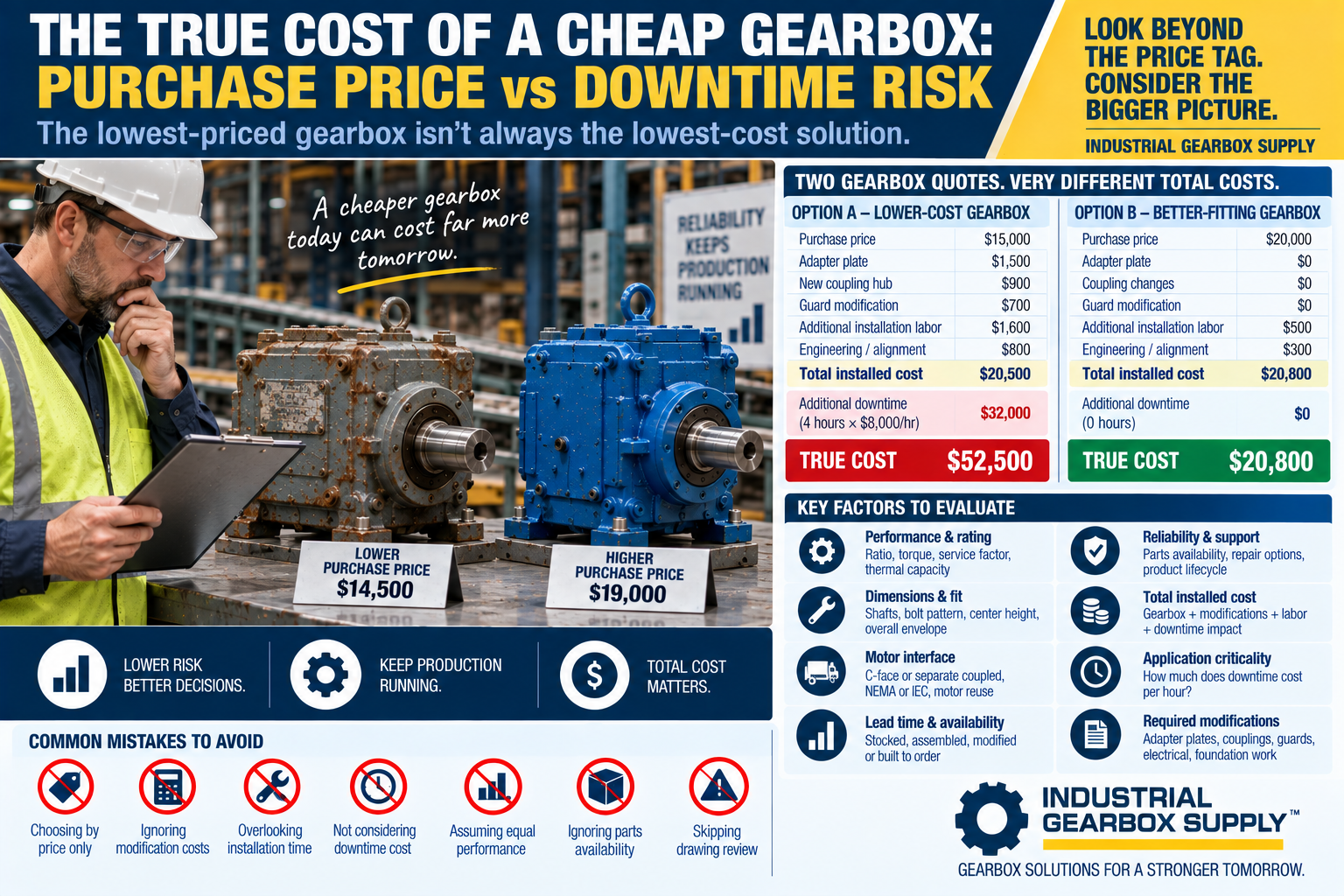
The True Cost of a Cheap Gearbox: Purchase Price vs Downtime Risk
The lowest-priced industrial gearbox is not always the least expensive solution. Learn how procurement teams can compare purchase price with modification costs, installation time, downtime exposure, reliability, parts availability, support, and lifecycle risk to determine the true cost of a gearbox.
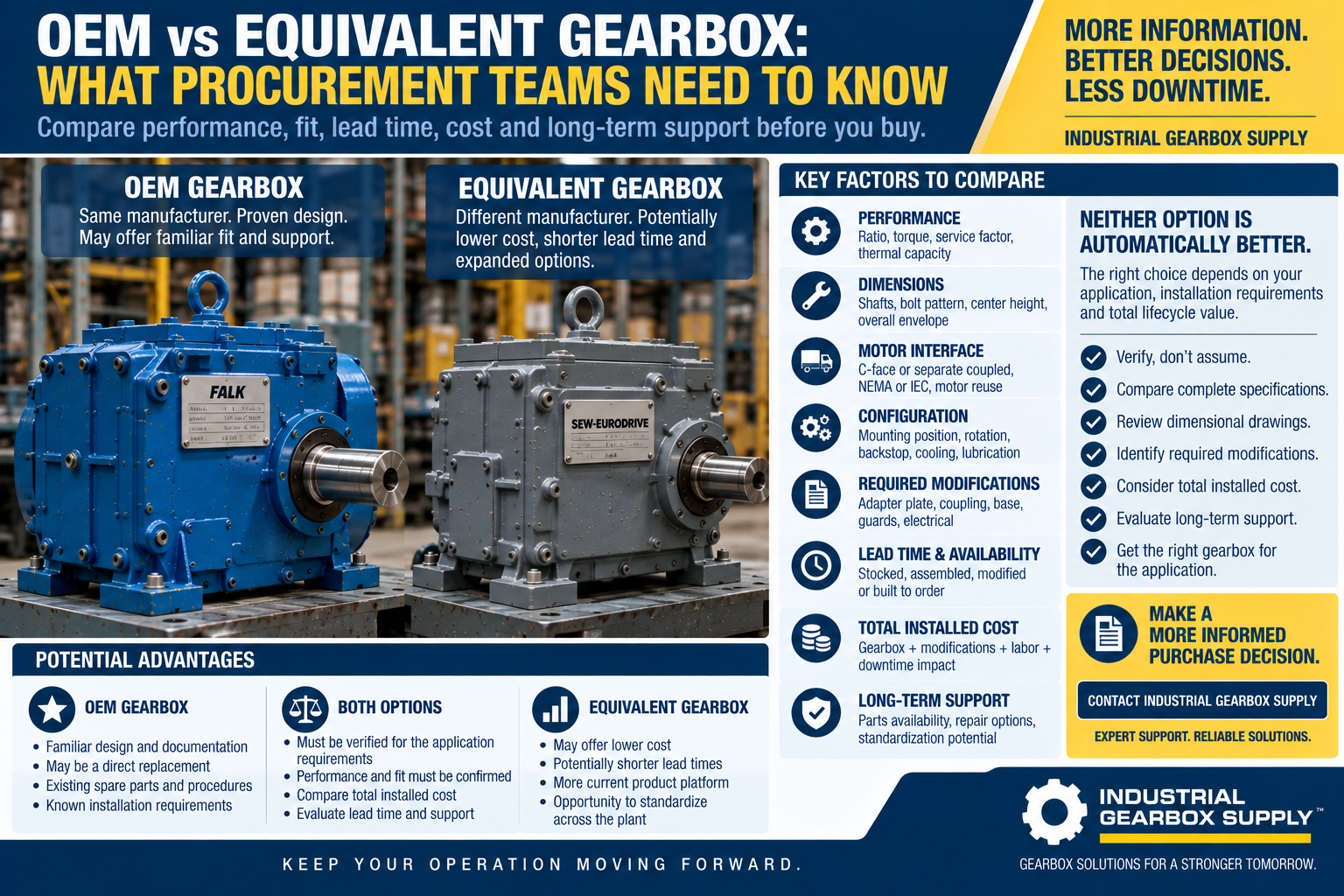
OEM vs Equivalent Gearbox: What Procurement Teams Need to Know
Should procurement buy the original OEM gearbox or consider an equivalent from another manufacturer? Learn how to compare performance, torque, shafts, mounting dimensions, motor interfaces, accessories, required modifications, lead time, lifecycle support, and total installed cost before approving a replacement.
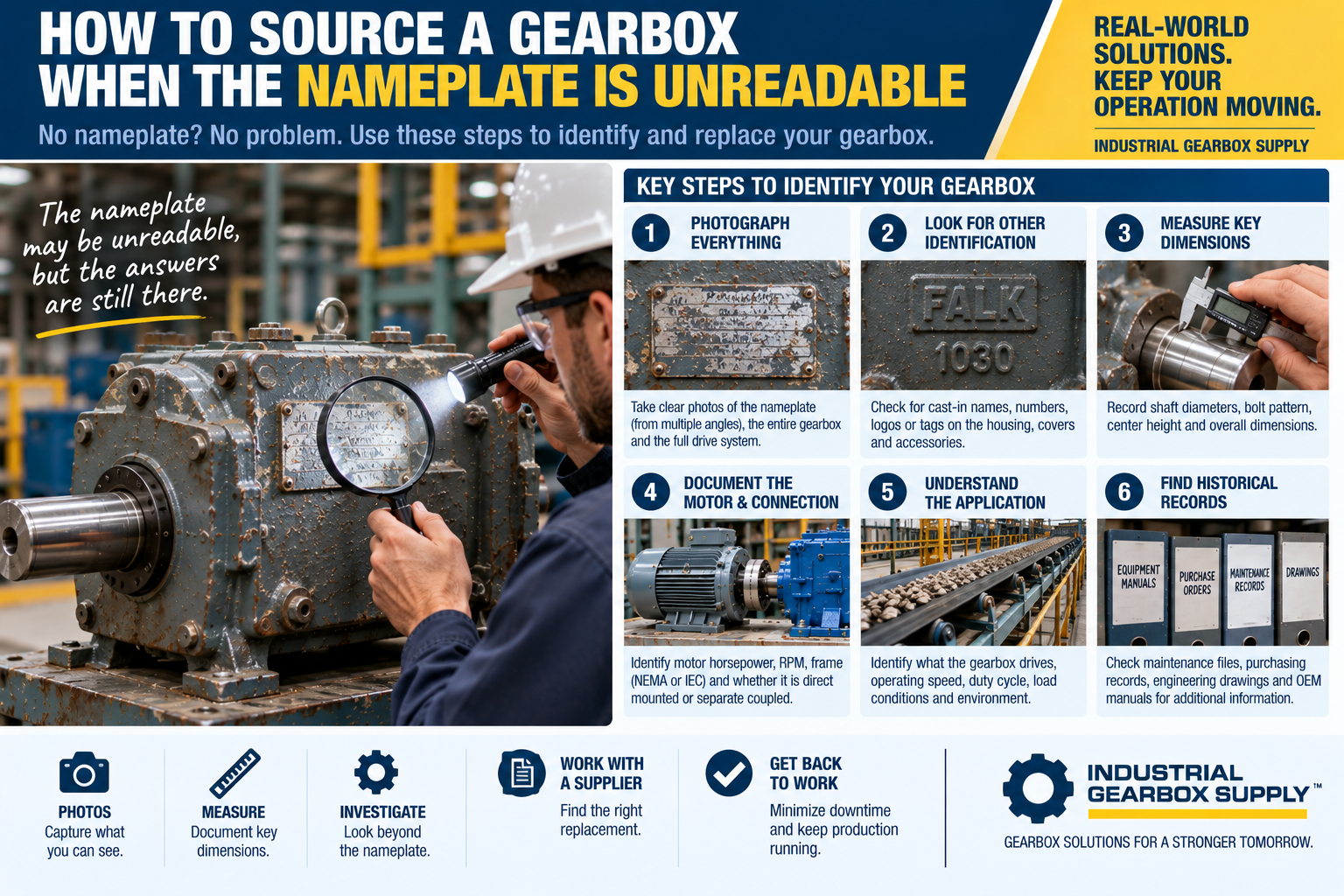
How to Source a Gearbox When the Nameplate Is Unreadable
An unreadable or missing gearbox nameplate doesn't make replacement impossible. Learn how to reconstruct the required gearbox specification using photographs, motor data, operating speed, shaft dimensions, bolt pattern, center height, mounting position, application information, and historical plant records.
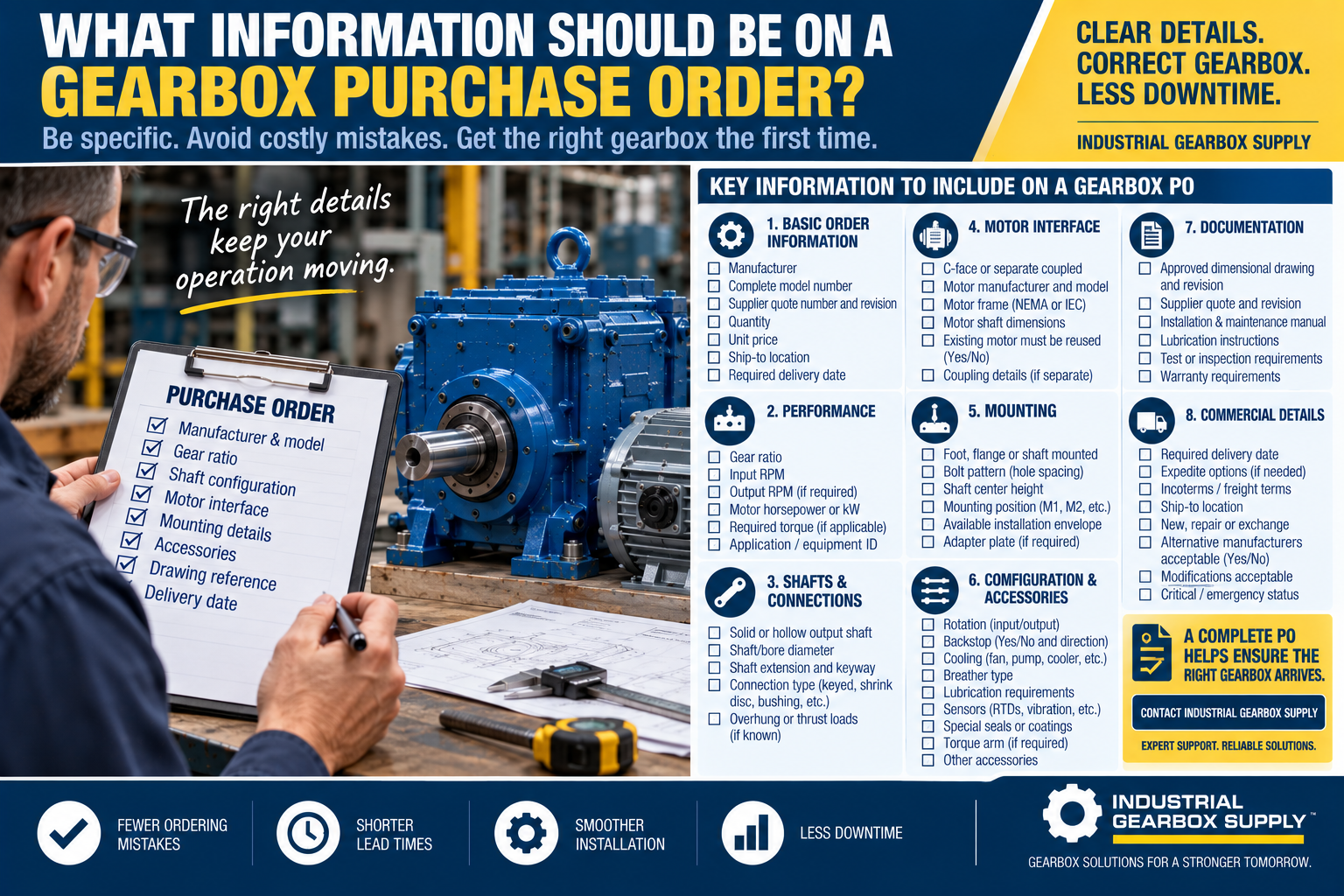
What Information Should Be on a Gearbox Purchase Order?
An industrial gearbox purchase order should do more than list a model number and price. Learn what maintenance buyers should document—including the approved configuration, ratio, shafts, motor interface, mounting position, accessories, drawing revision, lubrication, and delivery requirements—to help ensure the gearbox ordered is the gearbox the plant actually needs.
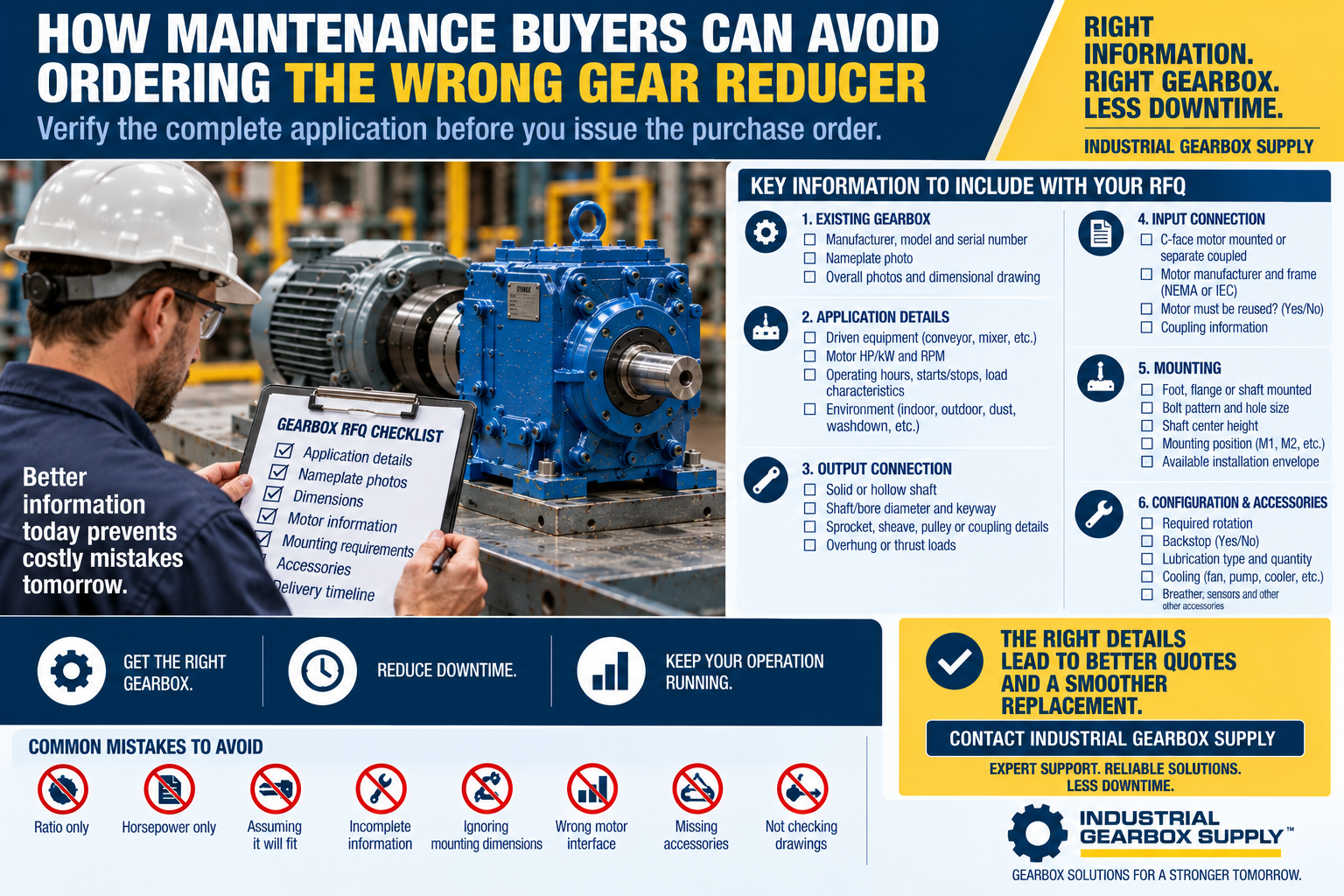
How Maintenance Buyers Can Avoid Ordering the Wrong Gear Reducer
The wrong gear reducer can turn a routine replacement into days of additional downtime. Learn how maintenance buyers can verify nameplate data, application requirements, shafts, motor interfaces, mounting dimensions, lubrication, accessories, drawings, and lead time before issuing the purchase order.
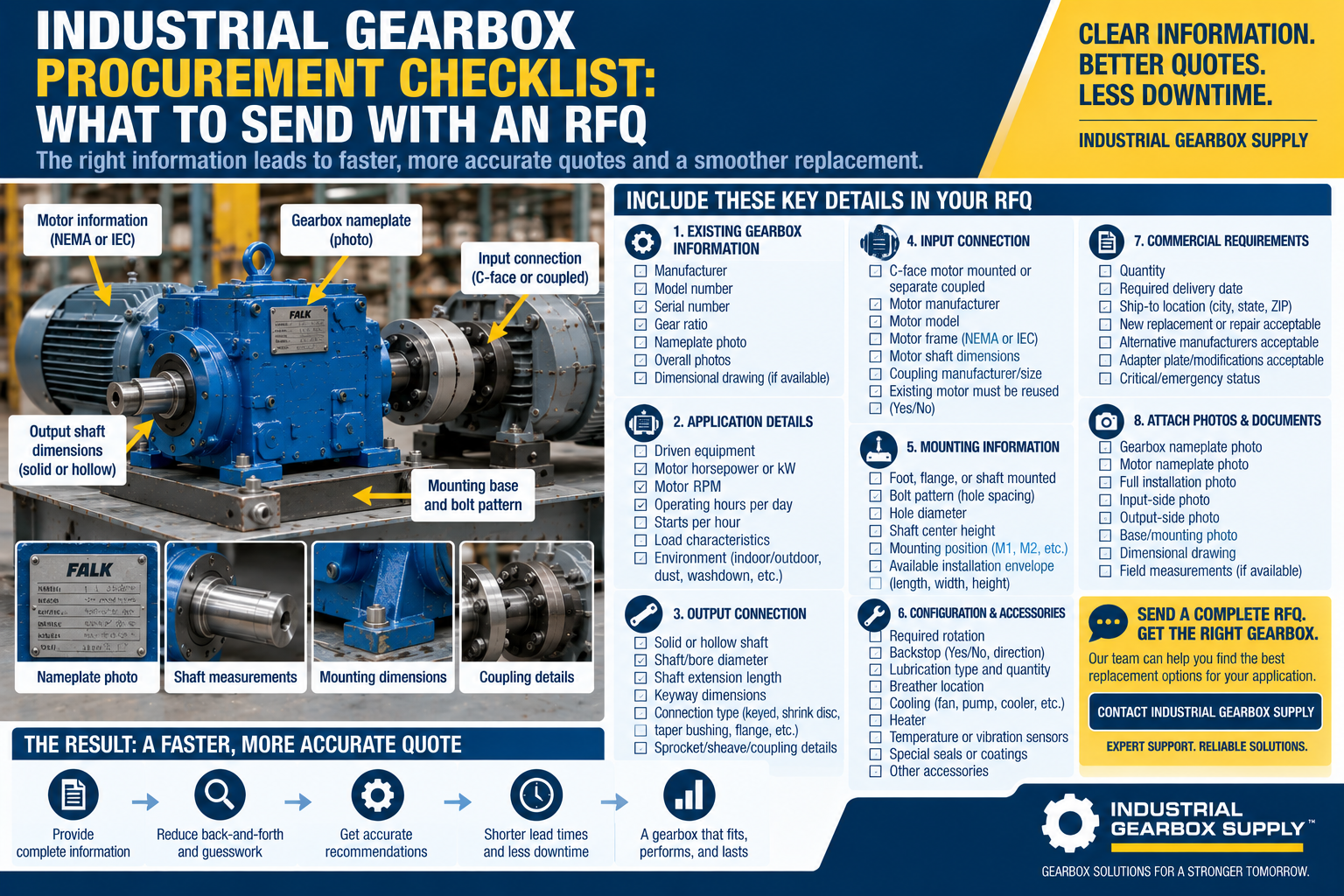
Industrial Gearbox Procurement Checklist: What to Send With an RFQ
A good industrial gearbox RFQ does more than list horsepower and ratio. Use this procurement checklist to send suppliers the nameplate, motor data, application, shaft dimensions, mounting details, photos, accessories, and delivery requirements needed to quote the right gearbox the first time.
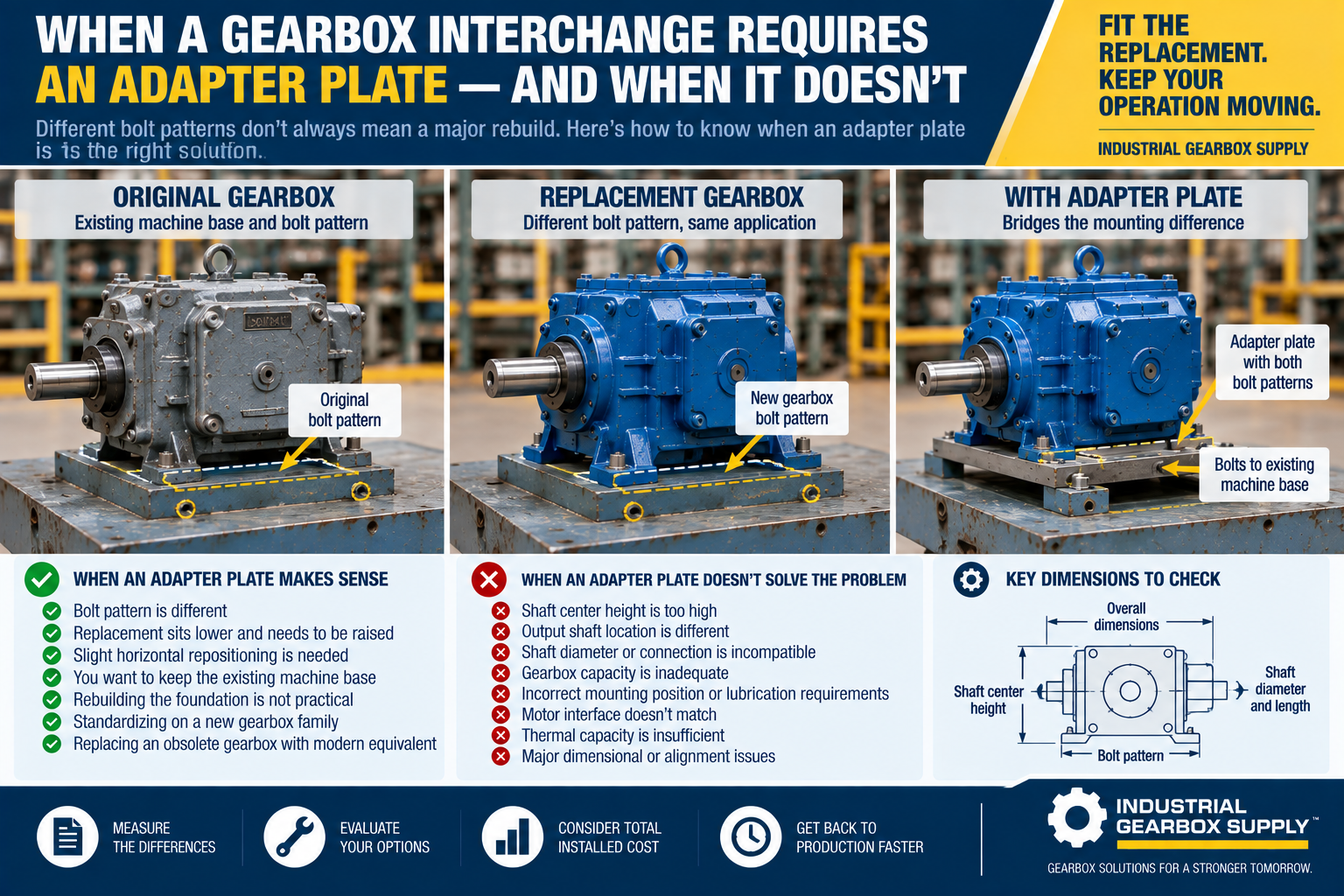
When a Gearbox Interchange Requires an Adapter Plate—and When It Doesn't
A replacement gearbox with a different bolt pattern doesn't always require rebuilding the machine base. Learn when an adapter plate can solve gearbox mounting and center-height differences—and when shaft location, alignment, capacity, or other mismatches mean you need a different replacement solution.
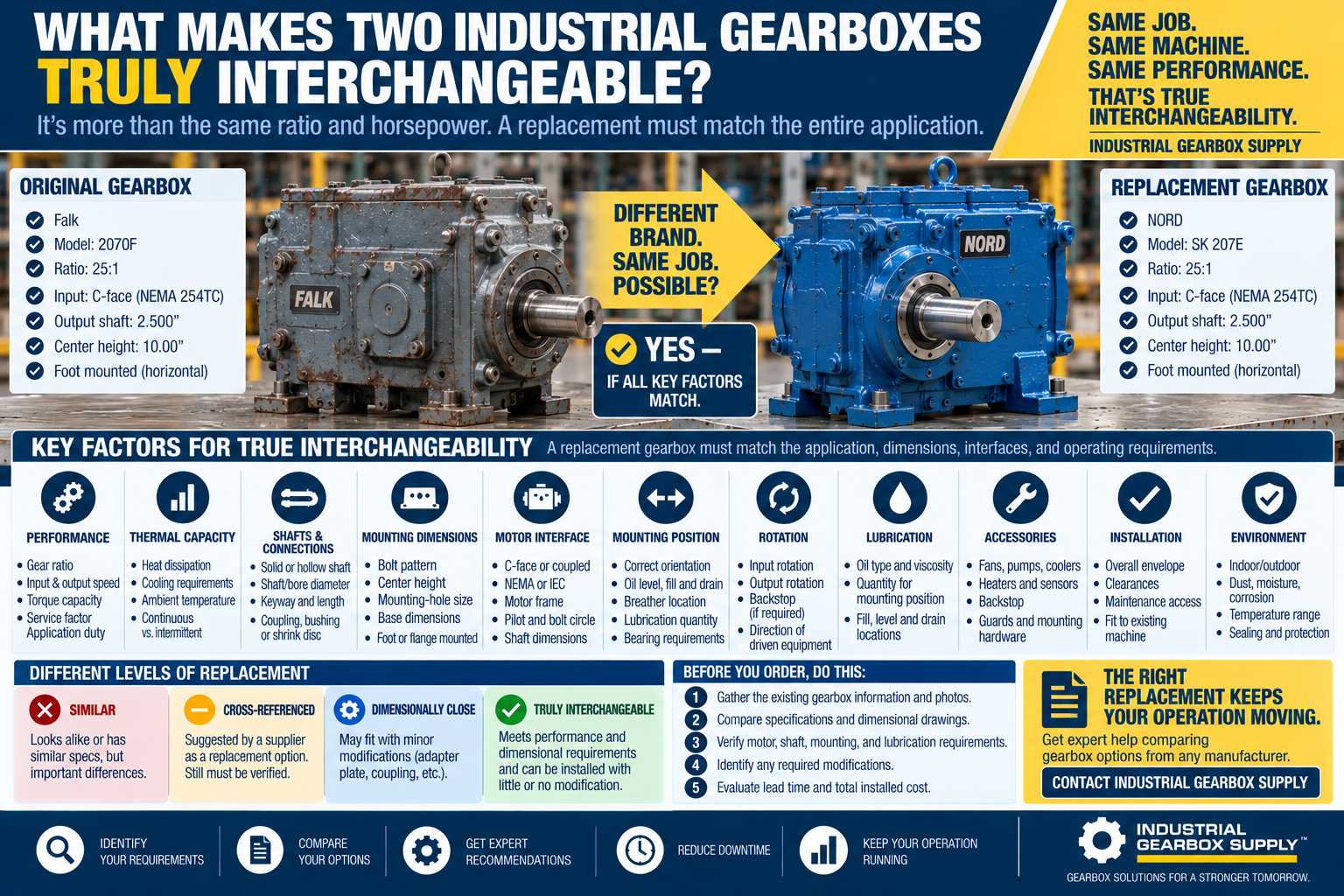
What Makes Two Industrial Gearboxes Truly Interchangeable?
Two industrial gearboxes can have the same ratio and horsepower and still not be interchangeable. Learn the performance, shaft, mounting, dimensional, motor-interface, lubrication, and installation requirements that must align before a replacement can truly be considered interchangeable.

Can You Replace One Gearbox Brand With Another?
Yes, one industrial gearbox brand can often replace another—but matching horsepower and ratio isn't enough. Learn how to evaluate torque, shafts, mounting dimensions, center height, motor interfaces, lubrication, accessories, and total installation requirements before approving a cross-brand gearbox replacement.
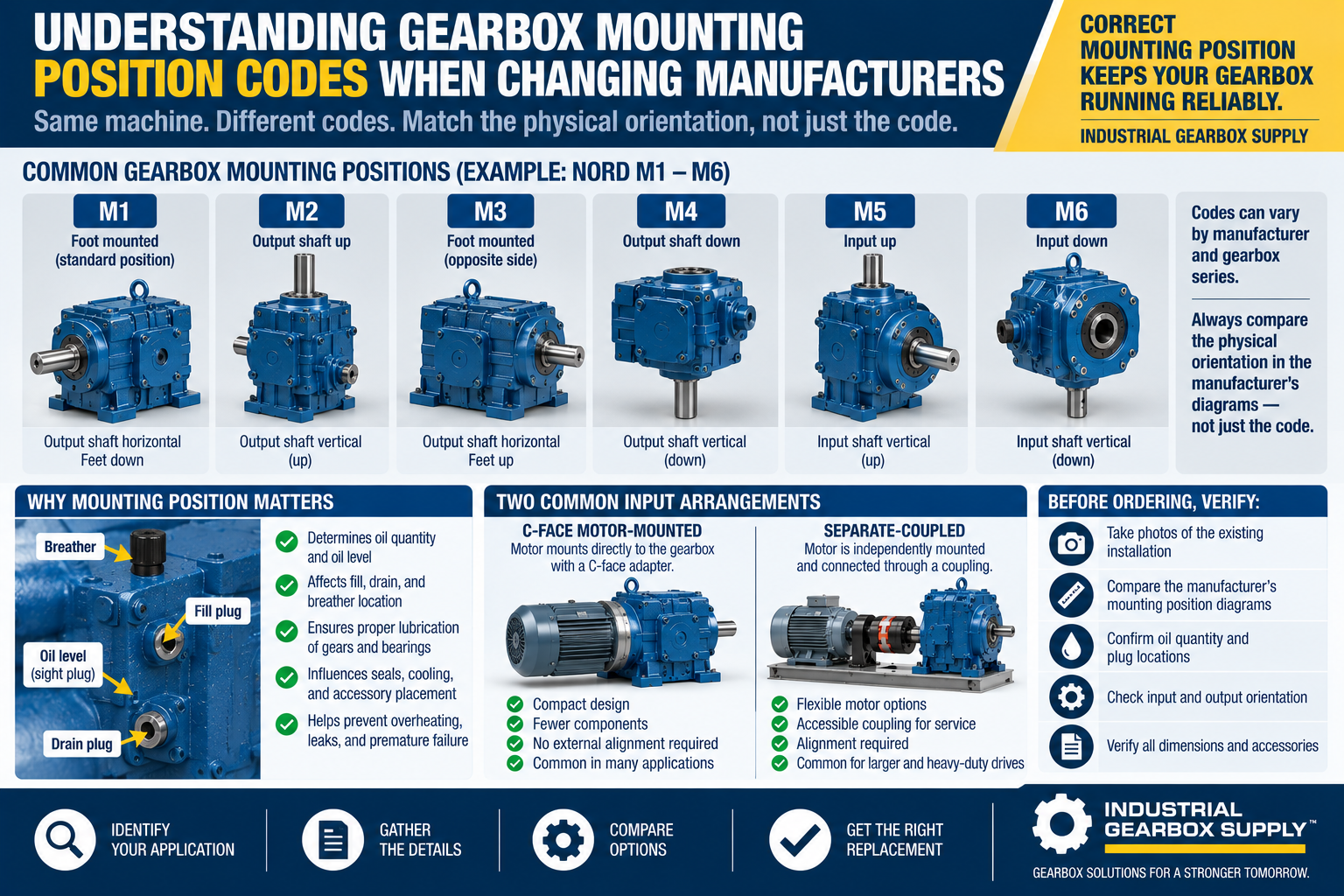
Understanding Gearbox Mounting Position Codes When Changing Manufacturers
Gearbox mounting-position codes may look interchangeable across manufacturers, but the physical orientation—and its lubrication, breather, drain, bearing, and accessory requirements—must be verified before ordering a replacement. Learn how to cross-reference the actual installation instead of relying on the code alone.
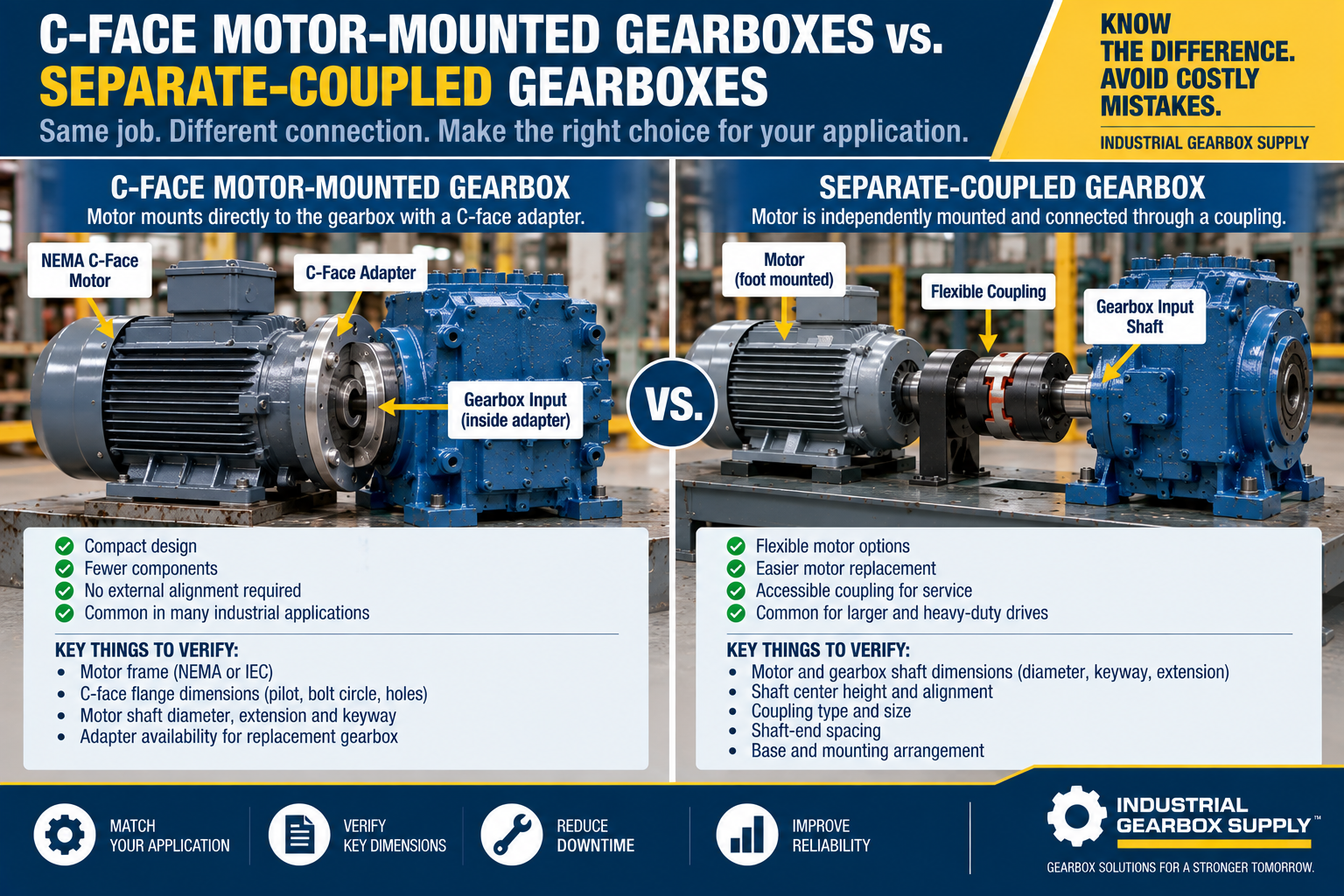
C-Face Motor-Mounted Gearboxes vs. Separate-Coupled Gearboxes
C-face motor-mounted and separate-coupled gearboxes perform the same basic job but connect to the motor in very different ways. Learn how motor frames, adapters, shaft dimensions, couplings, center height, alignment, and overall layout affect gearbox replacement.
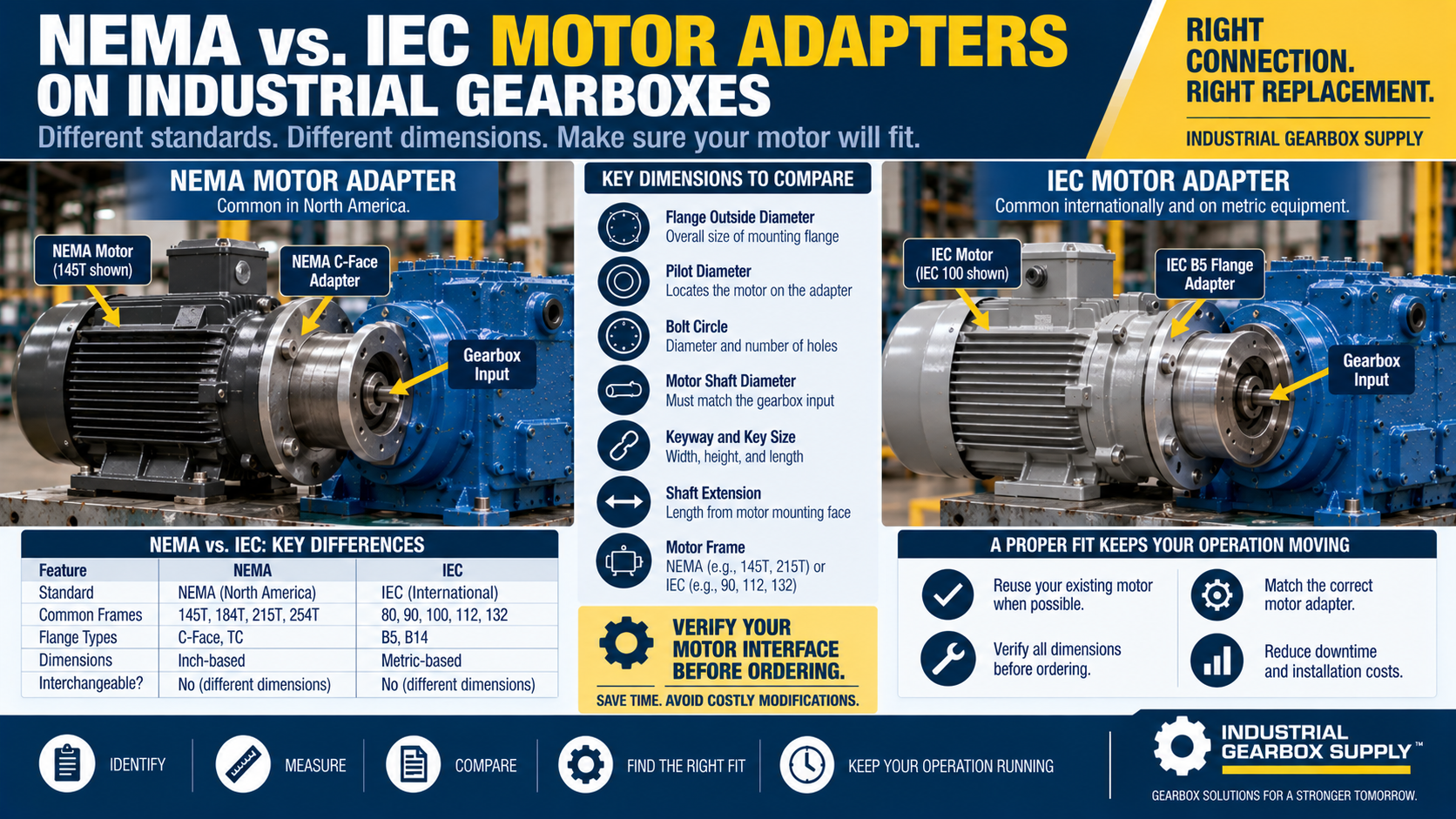
NEMA vs. IEC Motor Adapters on Industrial Gearboxes: What Buyers Need to Know Before Replacement
A replacement gearbox can match the ratio, output shaft, and mounting dimensions and still fail to accept your existing motor. Learn how NEMA and IEC motor adapters differ and what motor frame, flange, pilot, shaft, keyway, and input dimensions should be verified before ordering.
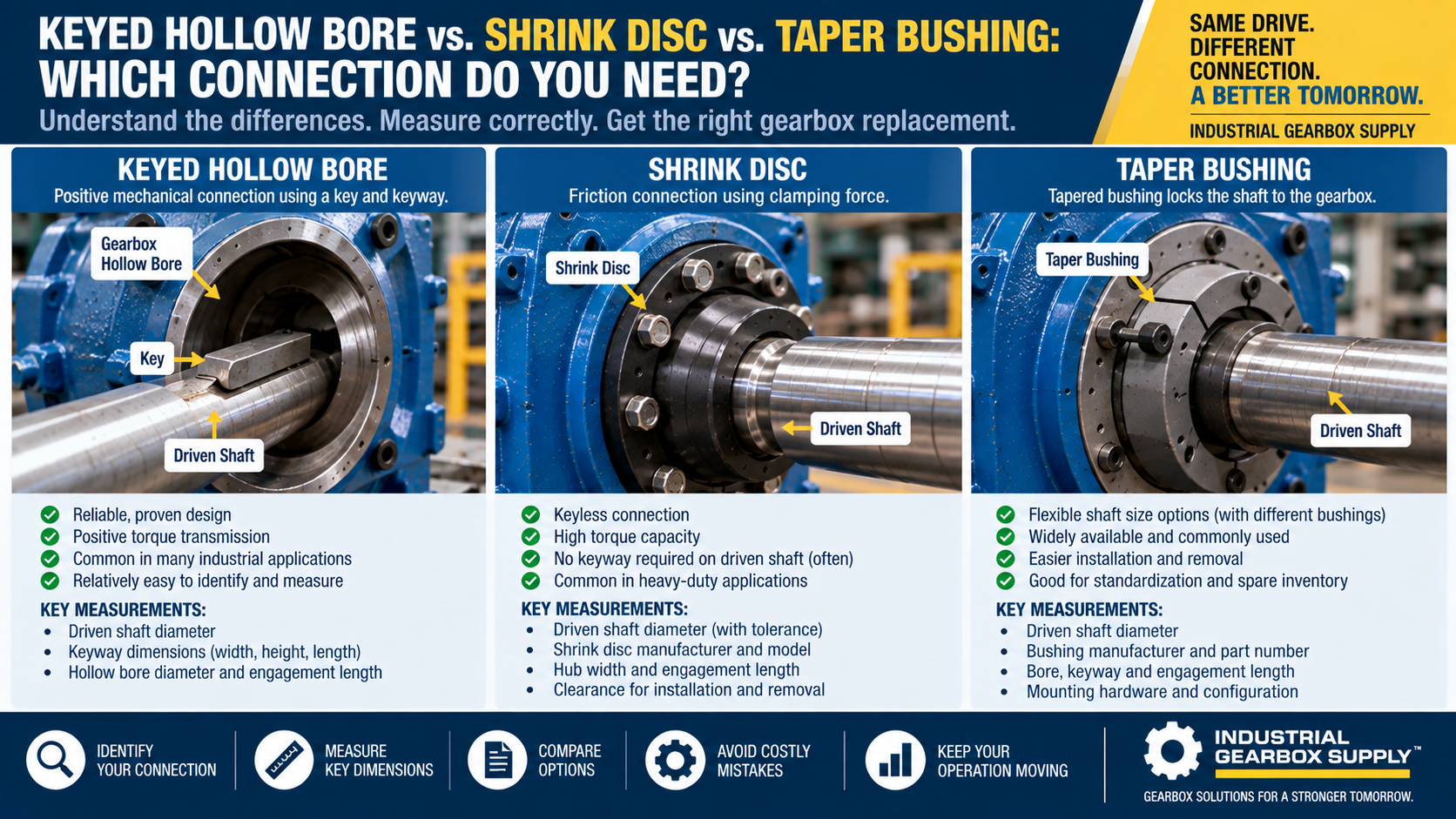
Keyed Hollow Bore vs. Shrink Disc vs. Taper Bushing: Which Connection Do You Need?
A hollow-shaft gearbox may connect to the driven shaft with a keyed bore, shrink disc, or taper bushing—and matching bore diameter alone doesn't guarantee compatibility. Learn how the three systems differ and what shaft, key, bushing, engagement, and torque-arm information to verify before ordering a replacement.
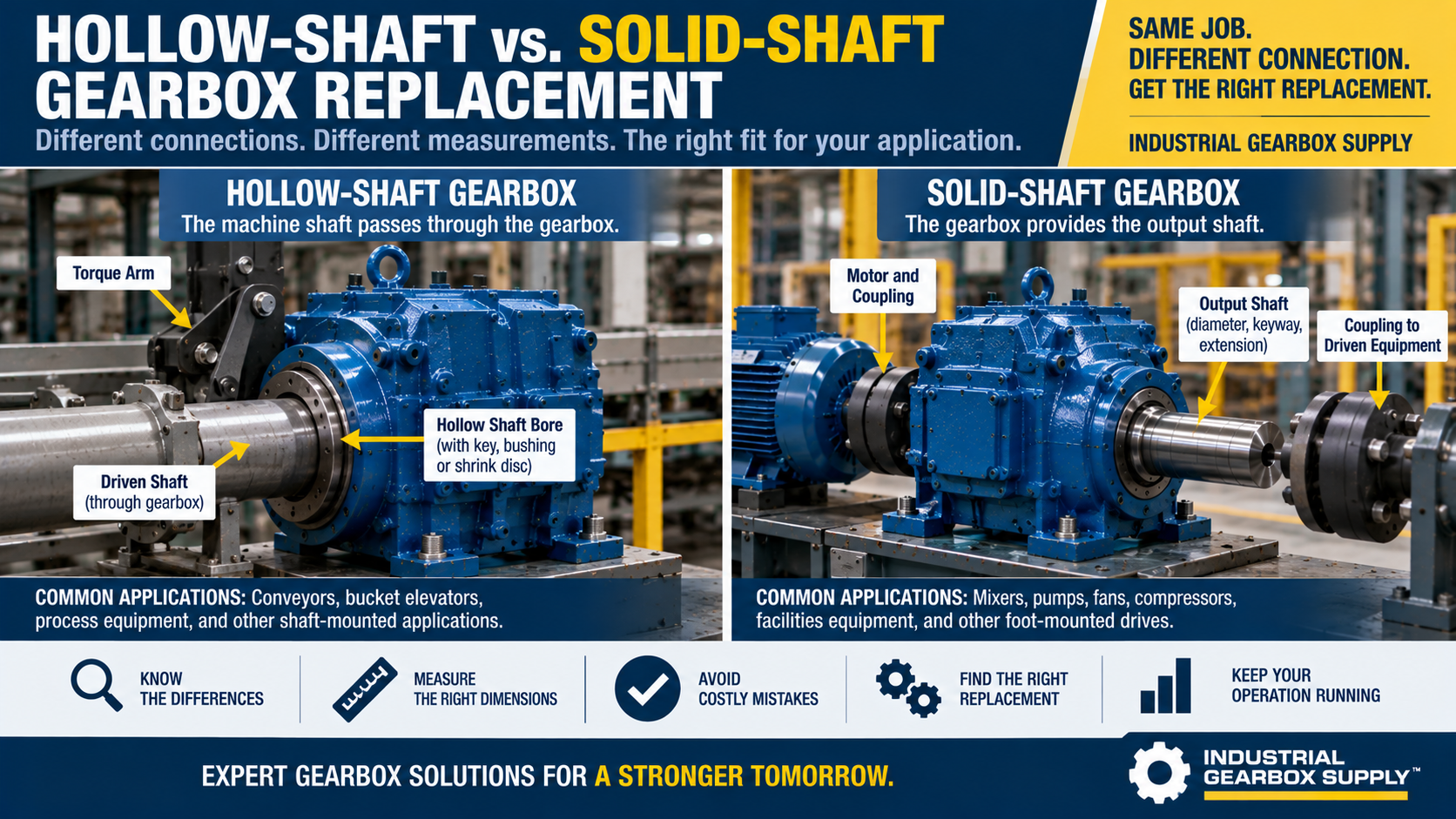
Hollow-Shaft vs. Solid-Shaft Gearbox Replacement: What You Need to Know Before Ordering
Hollow-shaft and solid-shaft gearboxes can provide similar ratios and torque while connecting to equipment in completely different ways. Learn what to measure and verify before ordering a replacement, including shafts, bores, keyways, couplings, torque arms, mounting, and clearances.
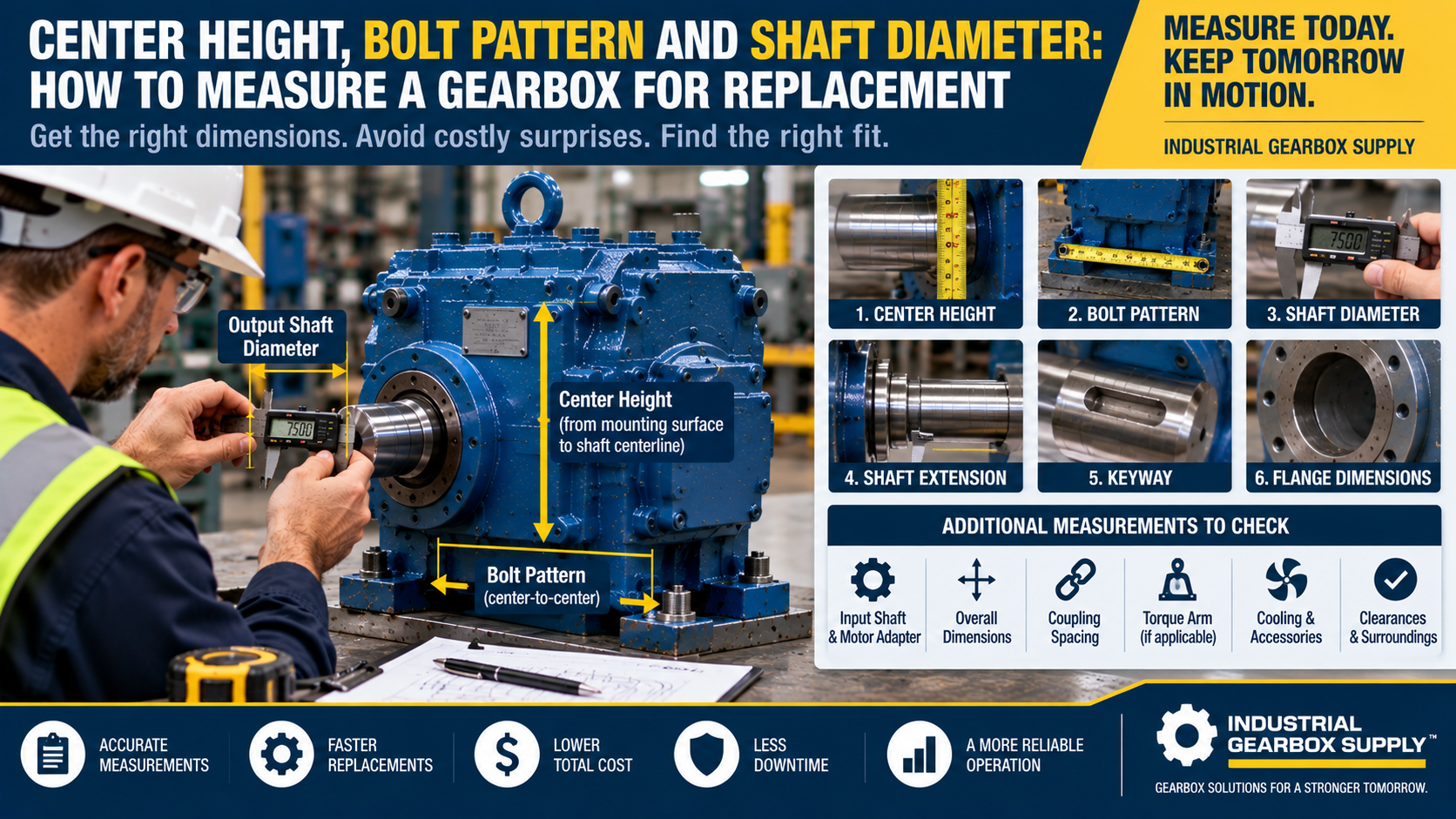
Center Height, Bolt Pattern and Shaft Diameter: How to Measure a Gearbox for Replacement
Need to measure an industrial gearbox for replacement? Learn how to accurately document shaft center height, mounting bolt pattern, shaft diameter, keyway, base dimensions, and other critical measurements before ordering a replacement reducer.
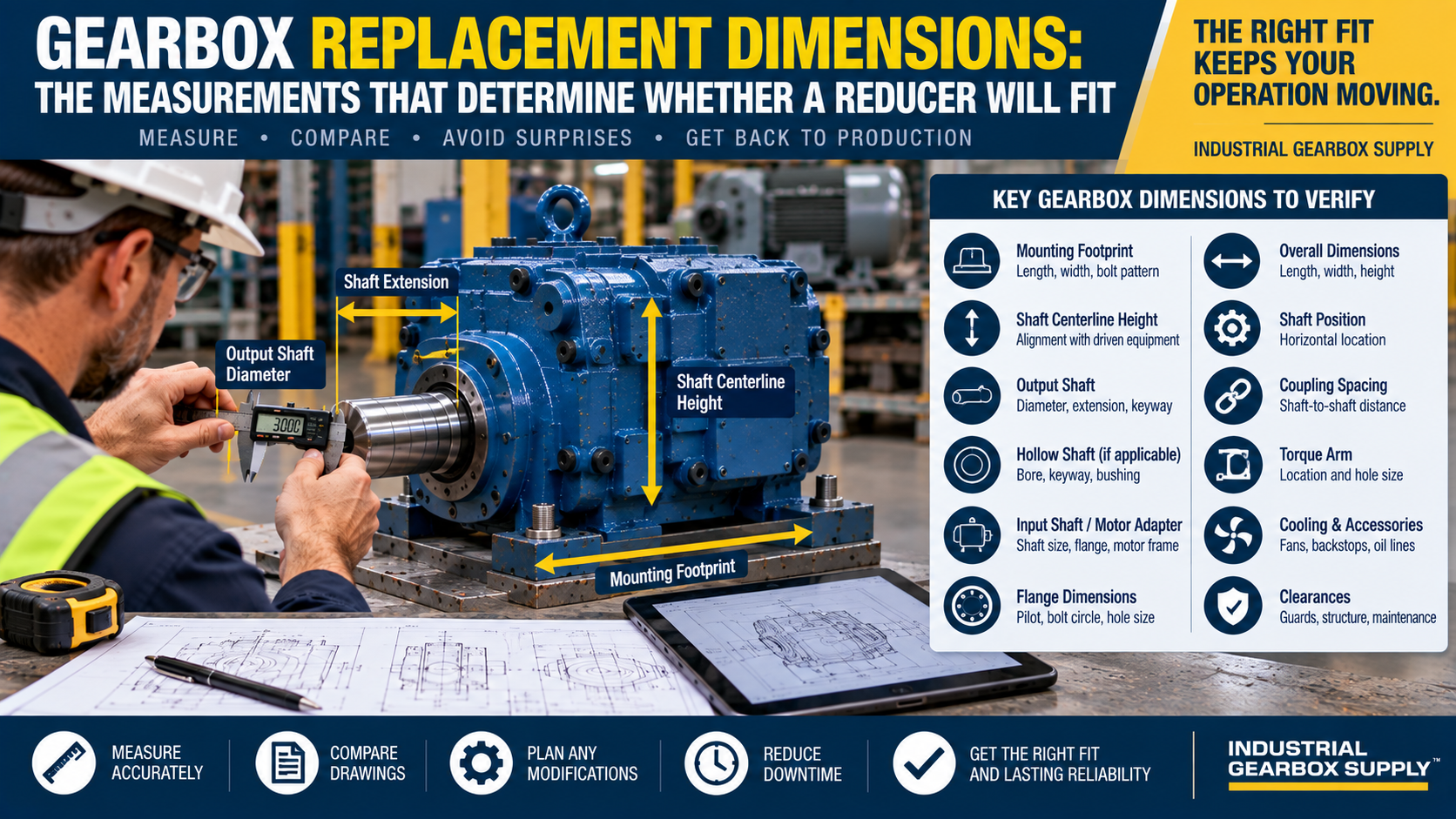
Gearbox Replacement Dimensions: The Measurements That Determine Whether a Reducer Will Fit
A replacement gearbox can have the correct ratio and torque rating and still not fit your machine. Learn the critical gearbox replacement dimensions to verify—including mounting footprint, shaft centerline, shaft dimensions, flanges, couplings, and installation clearances—before ordering.
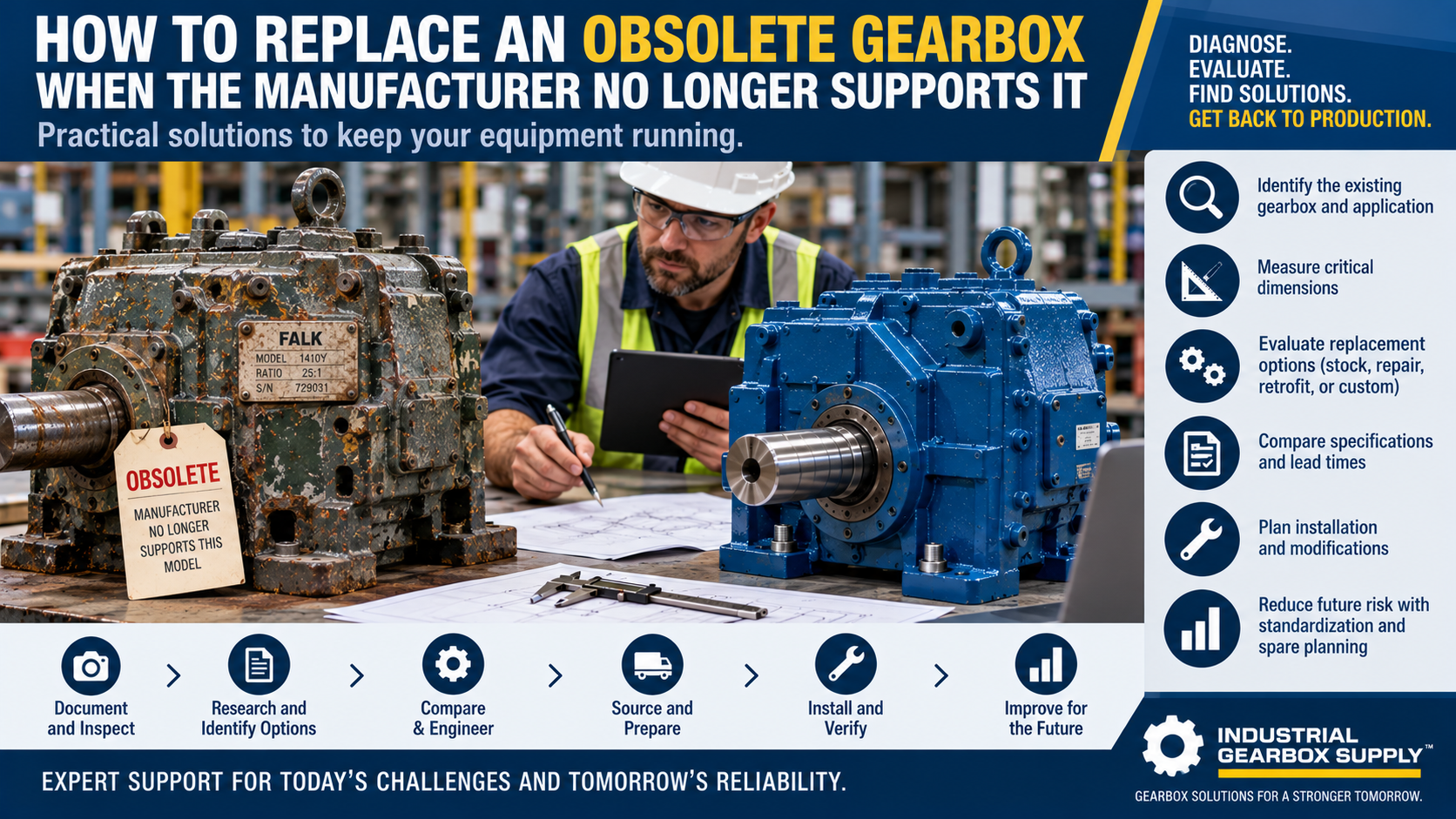
How to Replace an Obsolete Gearbox When the Manufacturer No Longer Supports It
An obsolete industrial gearbox doesn't necessarily mean replacing the entire machine. Learn how to identify replacement options when the original manufacturer no longer supports the gearbox, including old stock, repair, dimensional replacements, modified units, and modern retrofits.
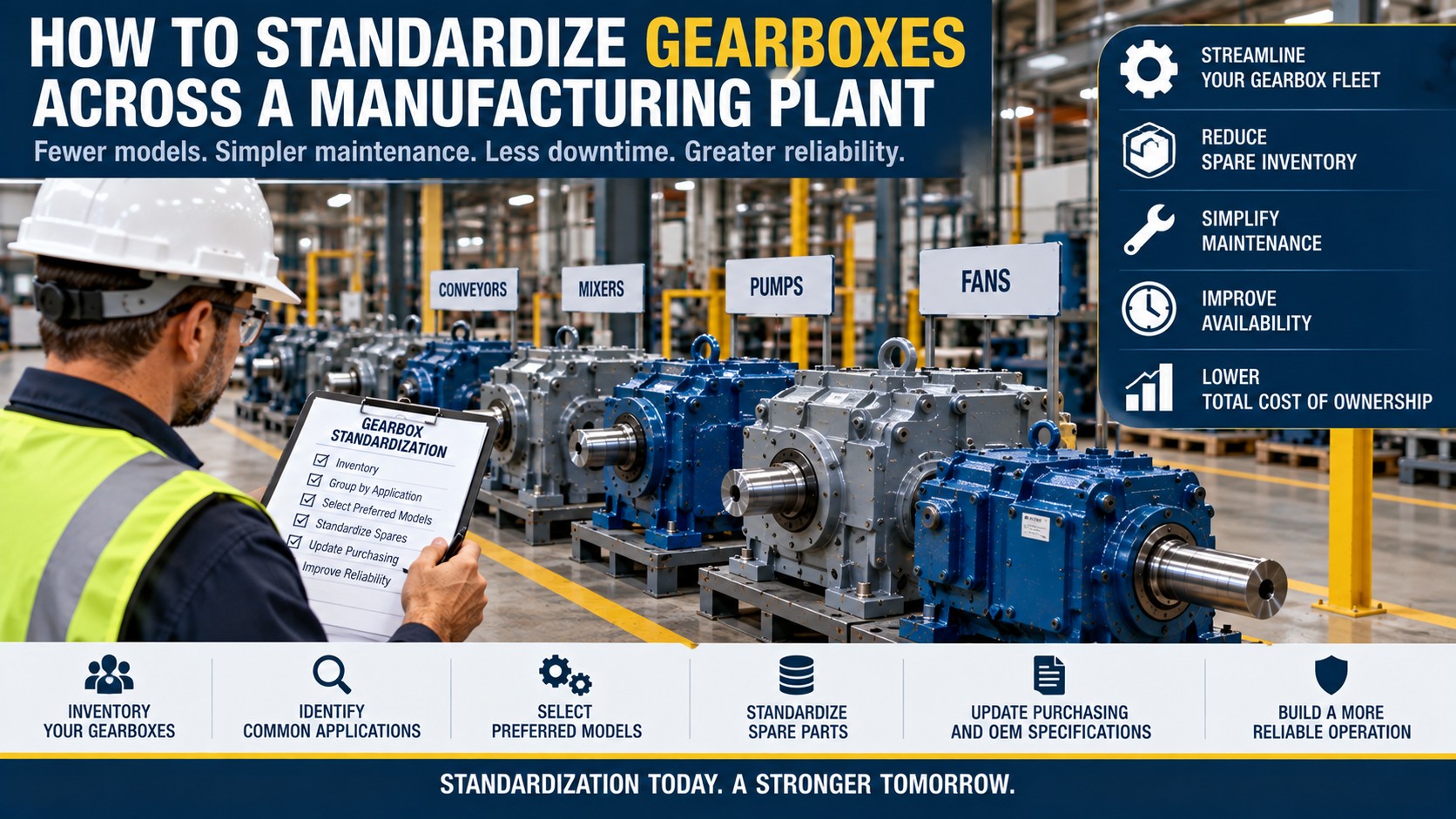
How to Standardize Gearboxes Across a Manufacturing Plant
Too many gearbox models can increase spare inventory, maintenance complexity, and downtime risk. Learn how to standardize gearboxes across a manufacturing plant by consolidating compatible applications, preferred configurations, spares, suppliers, and replacement strategies.