

How to Choose the Best Gearbox for Heavy-Duty Applications
Selecting the right gearbox for heavy-duty industrial applications is a critical decision that impacts operational performance, reliability, and long-term maintenance costs.
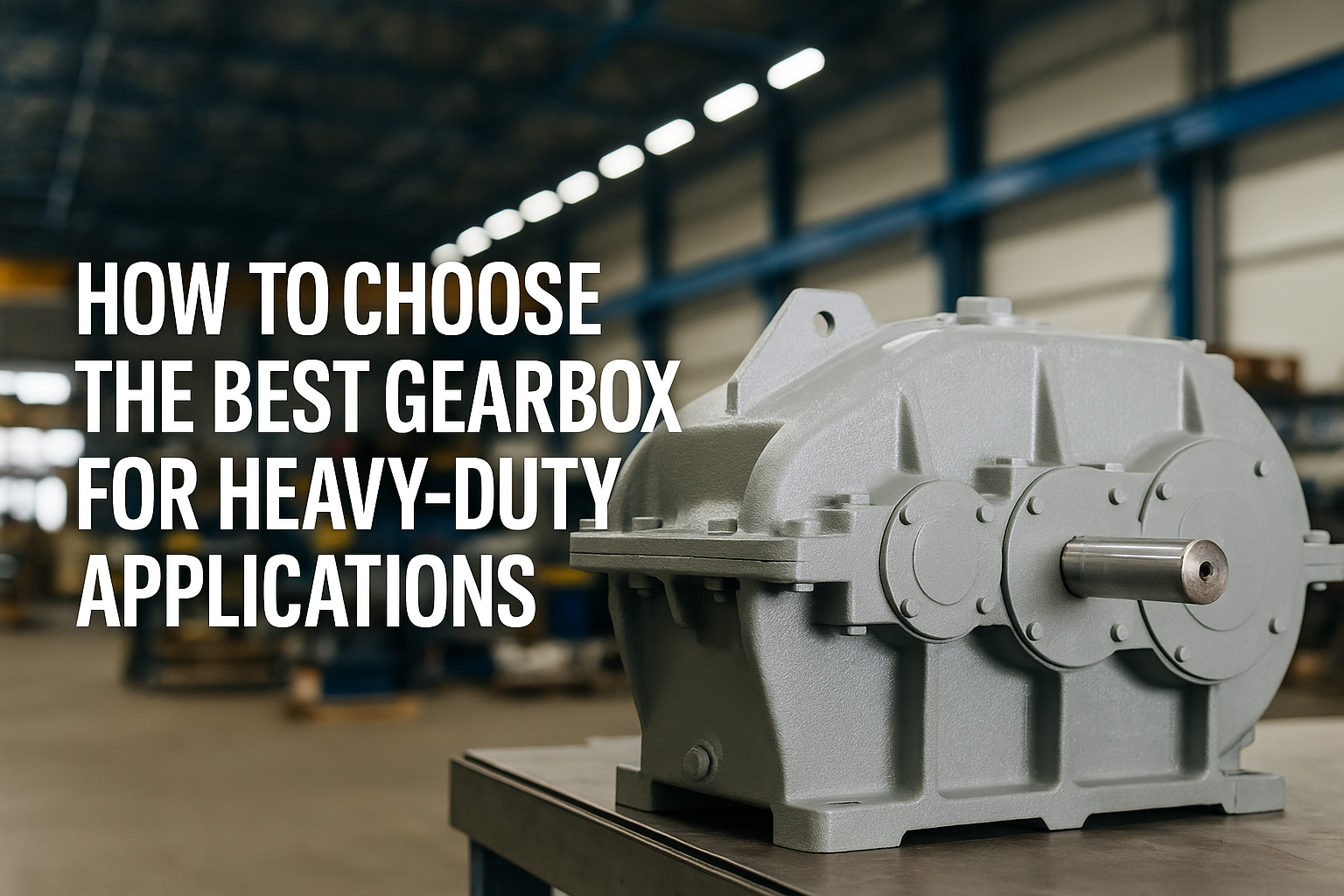
Large industrial gearbox chosen for heavy duty applications sitting on a steel industrial table.
Heavy-duty gearboxes must withstand extreme torque, handle high loads, and operate in harsh environments with minimal downtime.
Whether you're involved in mining, construction, power generation, or manufacturing, choosing the best gearbox requires understanding application demands, torque requirements, gearbox configurations, and efficiency standards.
In this article, we break down the essential criteria for choosing the best gearbox for heavy-duty use, compare different types of gearboxes, and outline expert tips for selection and maintenance.
What Is a Heavy-Duty Gearbox?
A heavy-duty gearbox is a power transmission system designed to handle high torque, large loads, or continuous duty cycles. These gearboxes are built using robust materials and precision engineering to withstand stress, shock loads, vibration, and temperature extremes. Common industries using heavy-duty gearboxes include:
Mining and quarrying
Steel mills
Oil and gas
Cement plants
Marine propulsion
Power plants
Industrial conveyor systems
Heavy-duty gearboxes are often custom-engineered or modularly assembled to match specific operational needs, including vertical or horizontal orientation, motor compatibility, and environmental sealing.
Key Factors to Consider When Choosing a Gearbox
1. Torque and Load Requirements
Torque is the most critical factor in gearbox selection. Calculate both the continuous torque and the peak torque expected during operation. Underrated gearboxes can result in premature wear, overheating, or catastrophic failure.
Continuous torque: Must match or exceed the system's operational load.
Peak torque: Gearboxes should handle short-term torque spikes without damage.
Pro tip: Choose a gearbox with at least 20–30% more rated torque than your system requires to accommodate unexpected load fluctuations.
2. Gear Ratio and Speed Requirements
The gear ratio defines how much the gearbox reduces the speed and increases the torque. A higher ratio means slower output speed but more torque.
Low-speed, high-torque applications benefit from worm or planetary gearboxes.
High-speed applications may use helical or bevel gear configurations.
Select a gearbox that optimally balances speed reduction and torque multiplication based on your application’s operating parameters.
3. Duty Cycle and Operating Environment
Consider how often and how long the gearbox will operate:
Intermittent duty: Gearboxes that rest between cycles can use standard-duty ratings.
Continuous duty: Requires heat-resistant components and superior lubricant flow.
Shock or overload-prone applications: Look for gearboxes with built-in torque limiters or dampeners.
Also assess:
Ambient temperature
Dust, water, or chemical exposure
Indoor vs. outdoor use
Mounting orientation (horizontal/vertical)
Ingress Protection (IP) ratings and sealed housings are essential in harsh or washdown environments.
4. Gearbox Type and Configuration
There are multiple types of gearboxes suited for heavy-duty use, each with unique strengths:
Helical Gearbox
Use: Conveyors, crushers, mixers
Advantages: High efficiency, low noise, strong torque handling
Mounting: Inline or parallel shaft
Bevel Gearbox
Use: Right-angle drives, elevators
Advantages: Precise motion transfer, robust design
Mounting: 90-degree shaft orientation
Worm Gearbox
Use: Lifts, hoists, packaging
Advantages: High gear reduction, self-locking capability
Drawbacks: Lower efficiency, more heat
Planetary Gearbox
Use: Heavy machinery, mobile equipment
Advantages: Compact size, high torque density, multi-tooth contact
Mounting: Coaxial, offset, or right angle
Each gearbox type has trade-offs in terms of efficiency, size, cost, and maintenance. For extremely demanding loads, planetary gearboxes often outperform others in torque-to-size ratio.
5. Efficiency and Power Loss
Heavy-duty applications must minimize energy loss and maximize efficiency. Gearboxes vary in mechanical efficiency:
Helical gearboxes: ~95–98% efficiency
Bevel gearboxes: ~90–95%
Worm gearboxes: ~60–80% due to sliding contact
Planetary gearboxes: ~95–97%
In energy-intensive operations, a 5% difference in efficiency can result in significant savings over time. Choose a gearbox that meets both performance and energy goals.
6. Service Factor and Safety Margins
The service factor (SF) adjusts for real-world operating conditions like start/stop frequency, shocks, or overloads. Always verify that the gearbox has a service factor appropriate for:
Load variability
Start-stop cycles
Reversing loads
Application criticality
Example: A conveyor under consistent load may have an SF of 1.25, but a rock crusher may require 2.0+.
7. Mounting and Integration Compatibility
Evaluate whether the gearbox is motor-ready (with input flanges or couplings) and whether it fits into the existing footprint. Consider:
Shaft orientation
Mounting position (vertical, horizontal, wall-mounted)
Coupling types (solid shaft, hollow shaft, keyed, splined)
Lubrication type (grease, oil bath, forced lubrication)
Some gearboxes are pre-filled and sealed for life, while others require regular oil changes.
8. Cost vs. Lifecycle Value
While upfront cost is important, total cost of ownership (TCO) includes:
Energy efficiency
Maintenance intervals
Downtime risks
Replacement availability
Investing in a high-quality gearbox with superior materials, precision machining, and good documentation reduces long-term headaches.
Common Mistakes to Avoid
Underrating torque: Leads to gearbox stripping or overheating.
Overlooking ambient conditions: Dust or heat can degrade seals and bearings.
Choosing based on price alone: Cheaper gearboxes may lack the metallurgy, seals, or machining precision for heavy-duty tasks.
Ignoring lubrication type: Wrong lubricant or lube schedule shortens gearbox life.
Selecting a Gearbox Supplier
Work with a trusted gearbox manufacturer or distributor who can:
Provide engineering support
Validate torque and gear ratio calculations
Offer CAD models for system integration
Support you with replacements, spare parts, and service manuals
Look for ISO-certified quality assurance and references from other heavy-duty industrial users.
Conclusion
Choosing the best gearbox for heavy-duty applications is about more than matching horsepower and torque. It’s about evaluating real-world load conditions, environmental challenges, efficiency goals, and total life expectancy. With the right selection process, your gearbox will provide years of reliable service even under the most demanding conditions.
Key Takeaways:
Always overspec torque and consider safety margins.
Choose gearbox type based on space constraints and duty cycle.
Factor in mounting, maintenance, and integration compatibility.
Opt for high-efficiency designs when energy costs matter.
Work with suppliers who offer technical and after-sales support.
Need help choosing the best gearbox? Contact the specialists atPowerDriveSystems.com or call (517) 787-8990 for expert guidance tailored to your industry.