

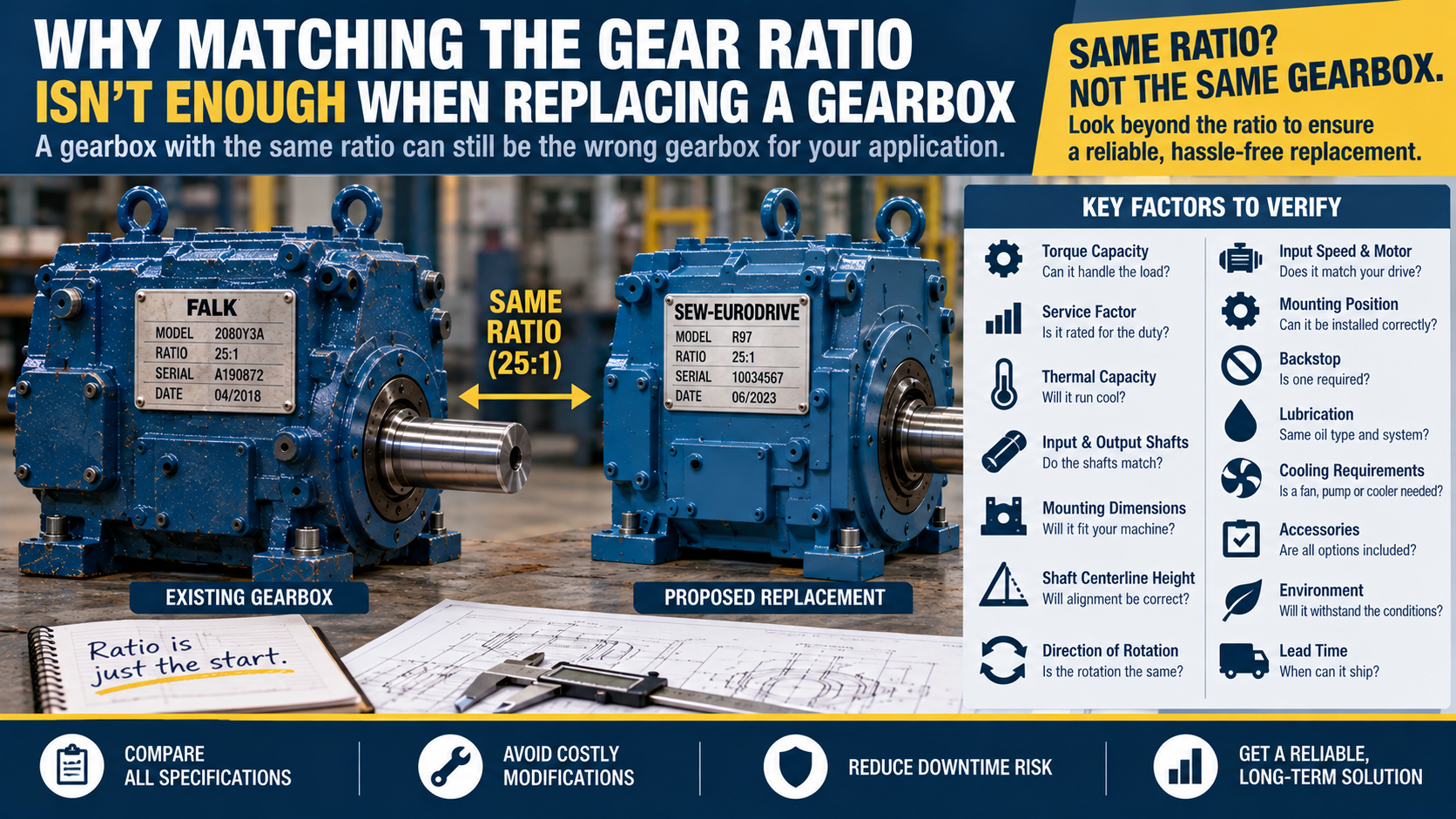
Why Matching the Gear Ratio Isn't Enough When Replacing a Gearbox
A replacement gearbox can have exactly the same gear ratio and still be completely wrong for the application. Learn why buyers must also verify torque, service factor, thermal capacity, shafts, mounting dimensions, rotation, lubrication, and accessories before ordering.
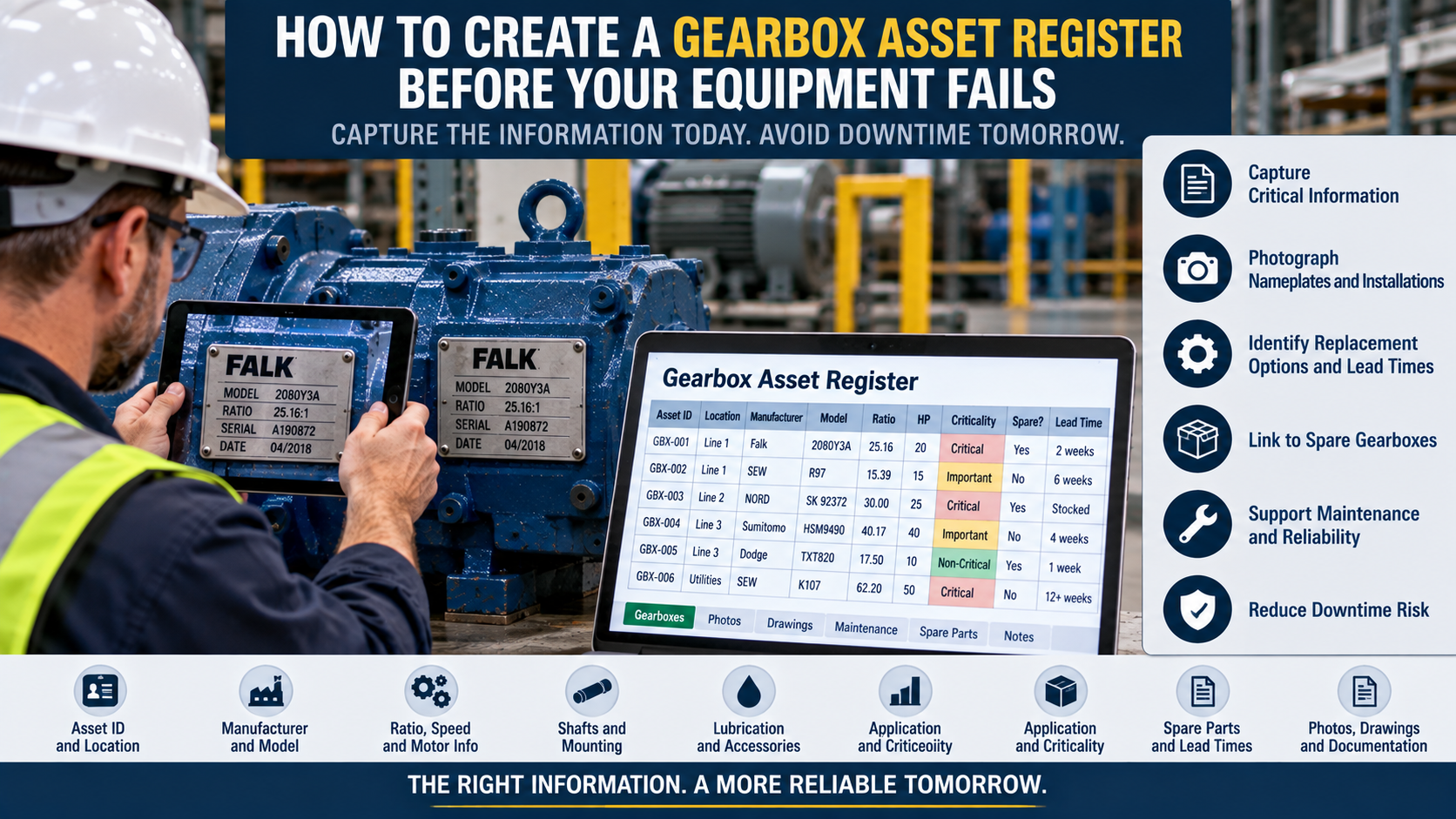
How to Create a Gearbox Asset Register Before Your Equipment Fails
Don't wait for a gearbox failure to identify critical equipment. Learn how to build a gearbox asset register with nameplate data, ratios, shafts, mounting details, spares, replacement options, and lead times before an outage occurs.
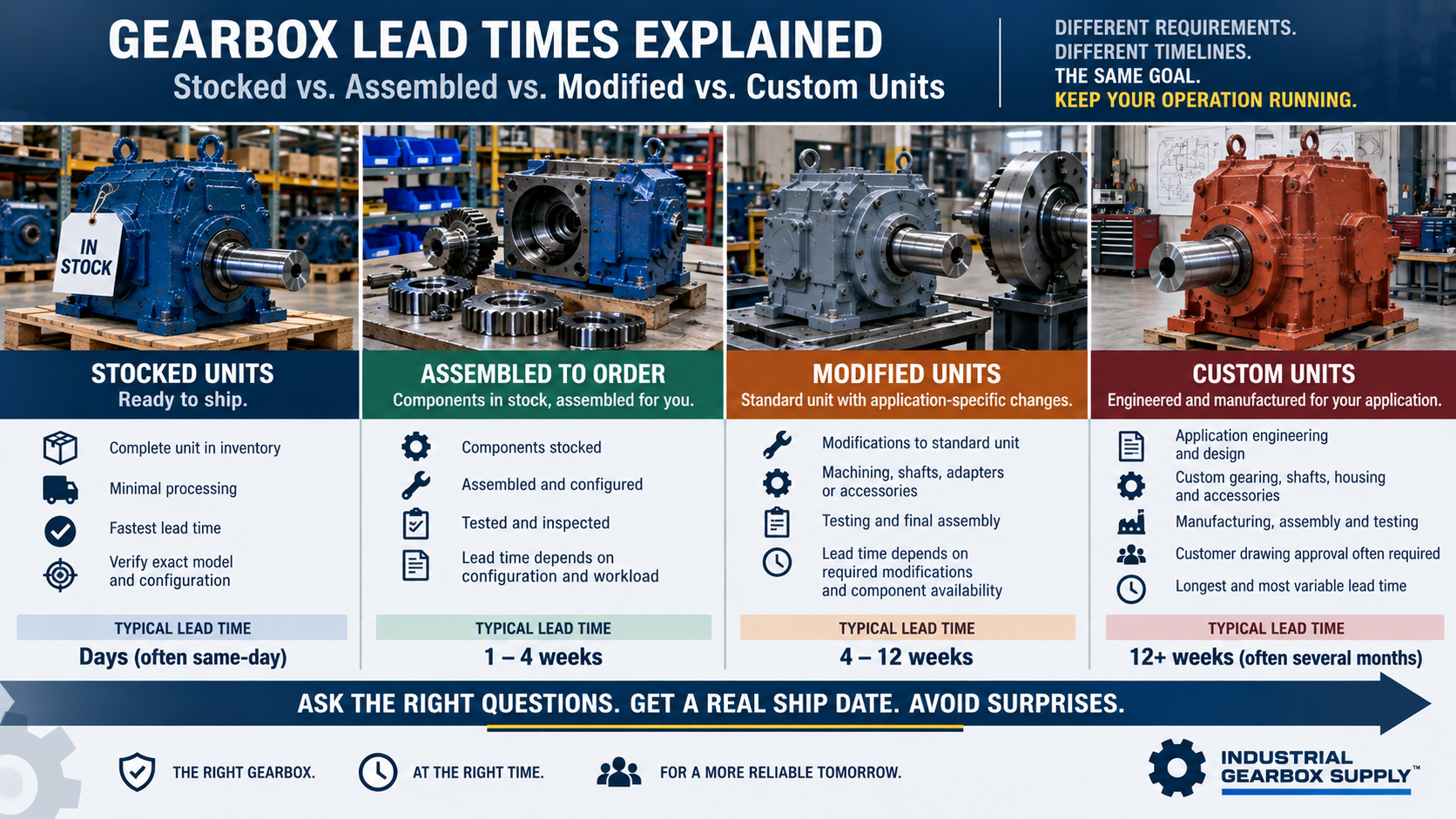
Gearbox Lead Times Explained: Stocked vs. Assembled vs. Modified vs. Custom Units
Why can one gearbox ship today while another takes weeks or months? Learn how industrial gearbox lead times differ for stocked, assembled, modified, and custom units—and what buyers should verify before placing an order.
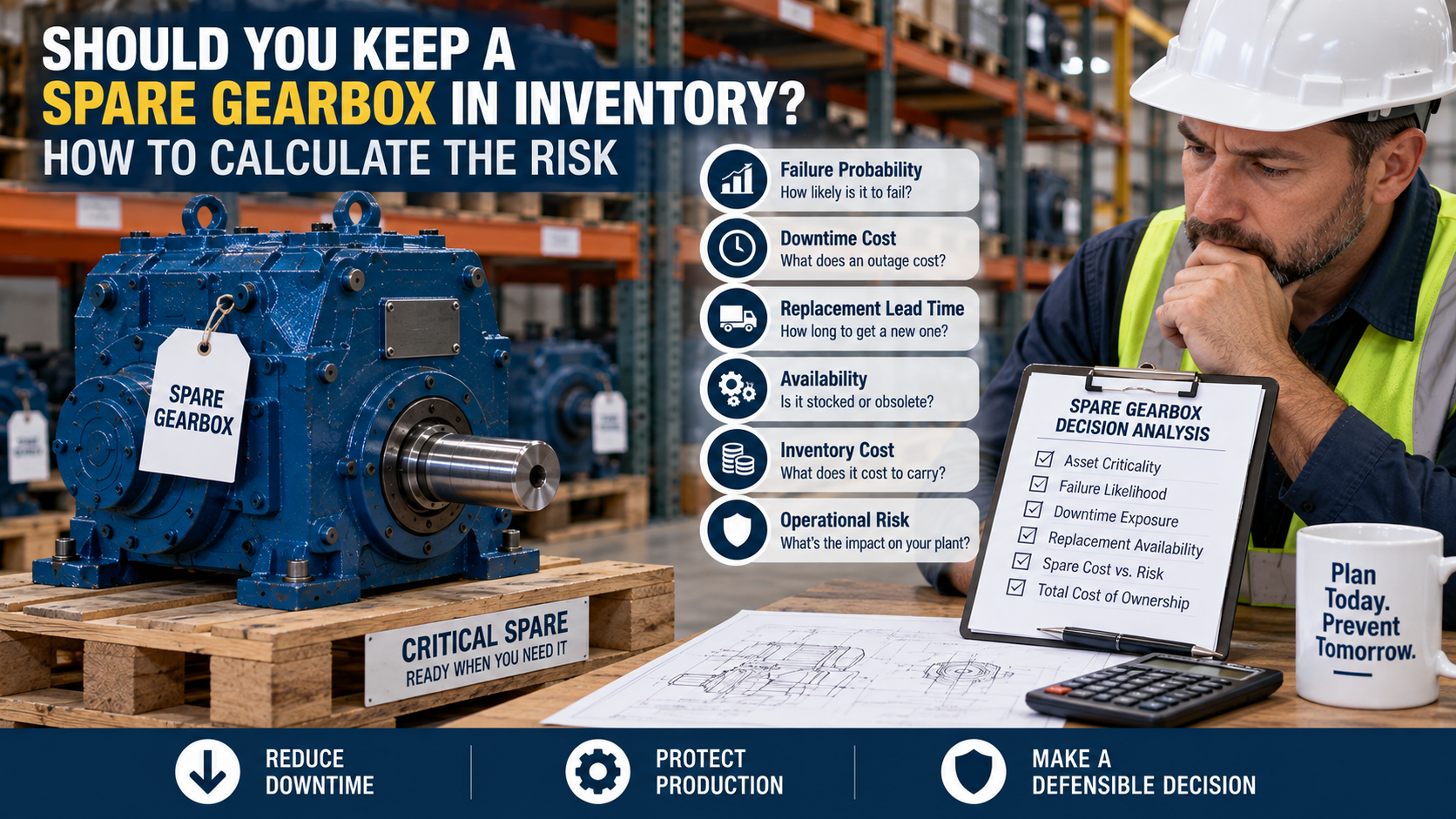
Should You Keep a Spare Gearbox in Inventory? How to Calculate the Risk
Should your plant keep a spare gearbox in inventory? Learn how to compare spare cost against downtime exposure, failure likelihood, replacement lead time, and operational risk to make a defensible inventory decision.
What Does “Drop-In Gearbox Replacement” Actually Mean?
What does “drop-in gearbox replacement” really mean? Learn what to verify—including dimensions, ratio, torque, shafts, mounting, lubrication, and accessories—before assuming a replacement will fit without modification.
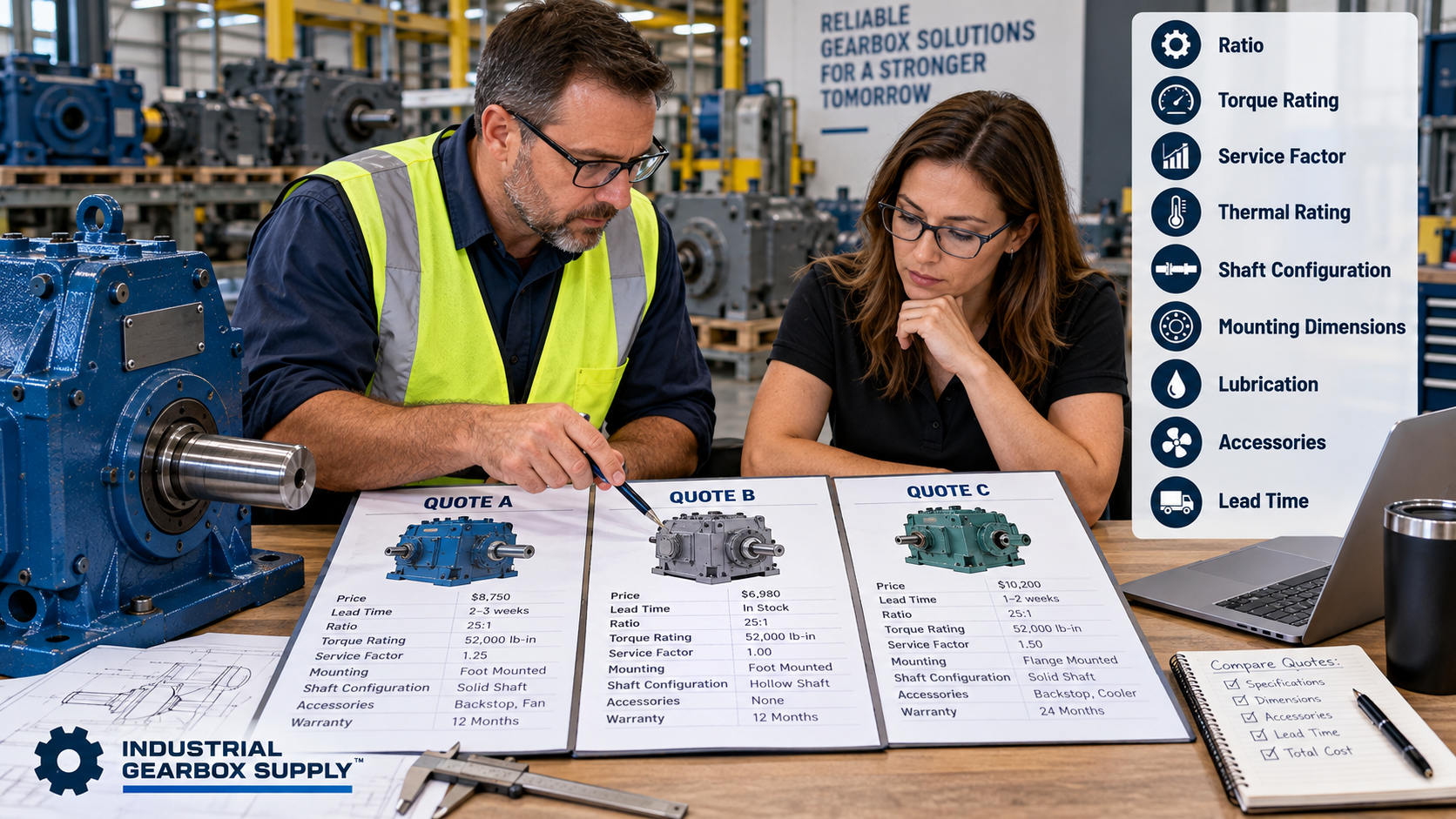
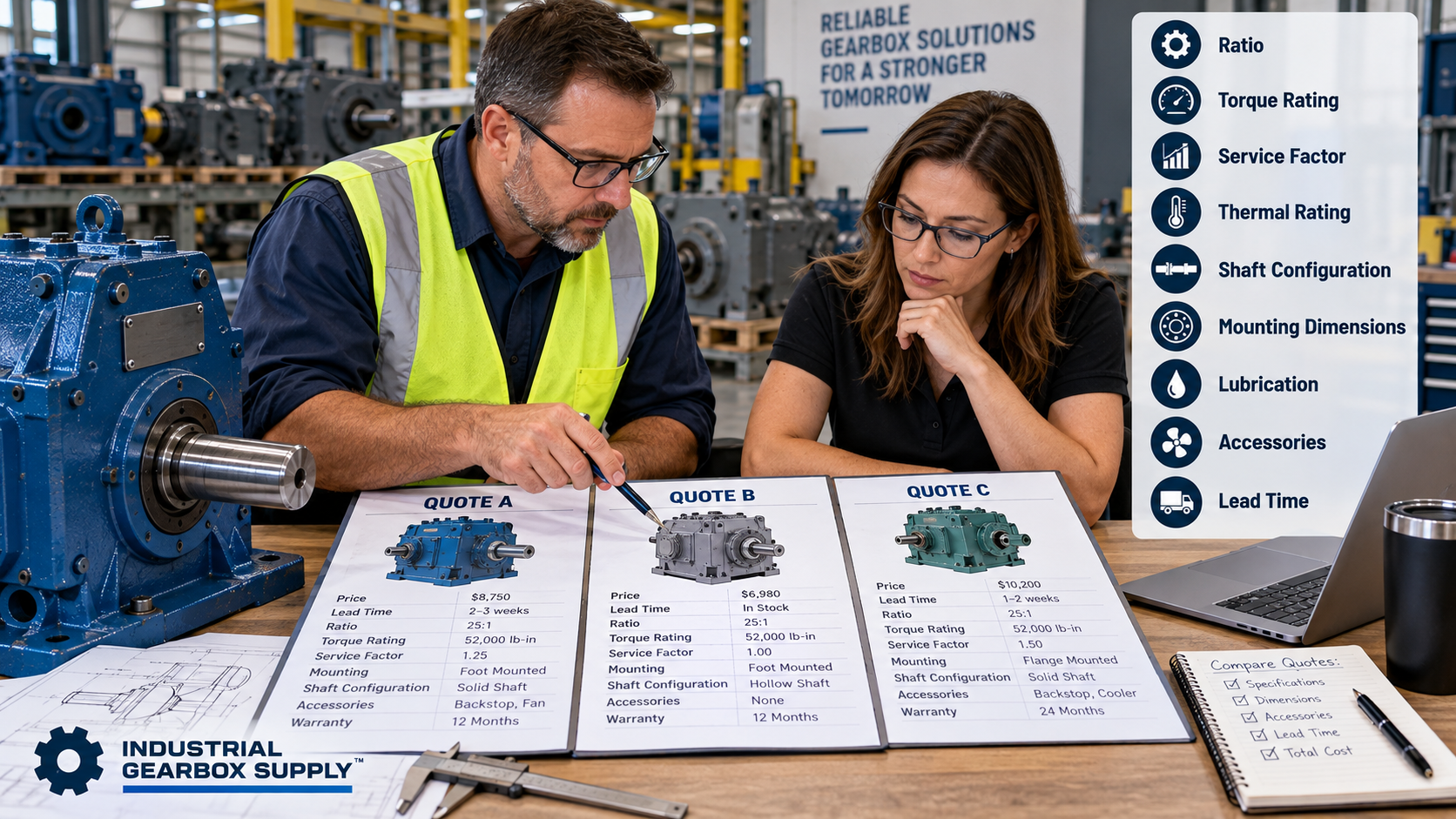
How to Compare Industrial Gearbox Quotes: 12 Specifications Buyers Should Verify
Not all industrial gearbox quotes are equal. Learn the 12 specifications buyers should verify before comparing price, including ratio, torque, service factor, thermal rating, shafts, mounting, accessories, and lead time.
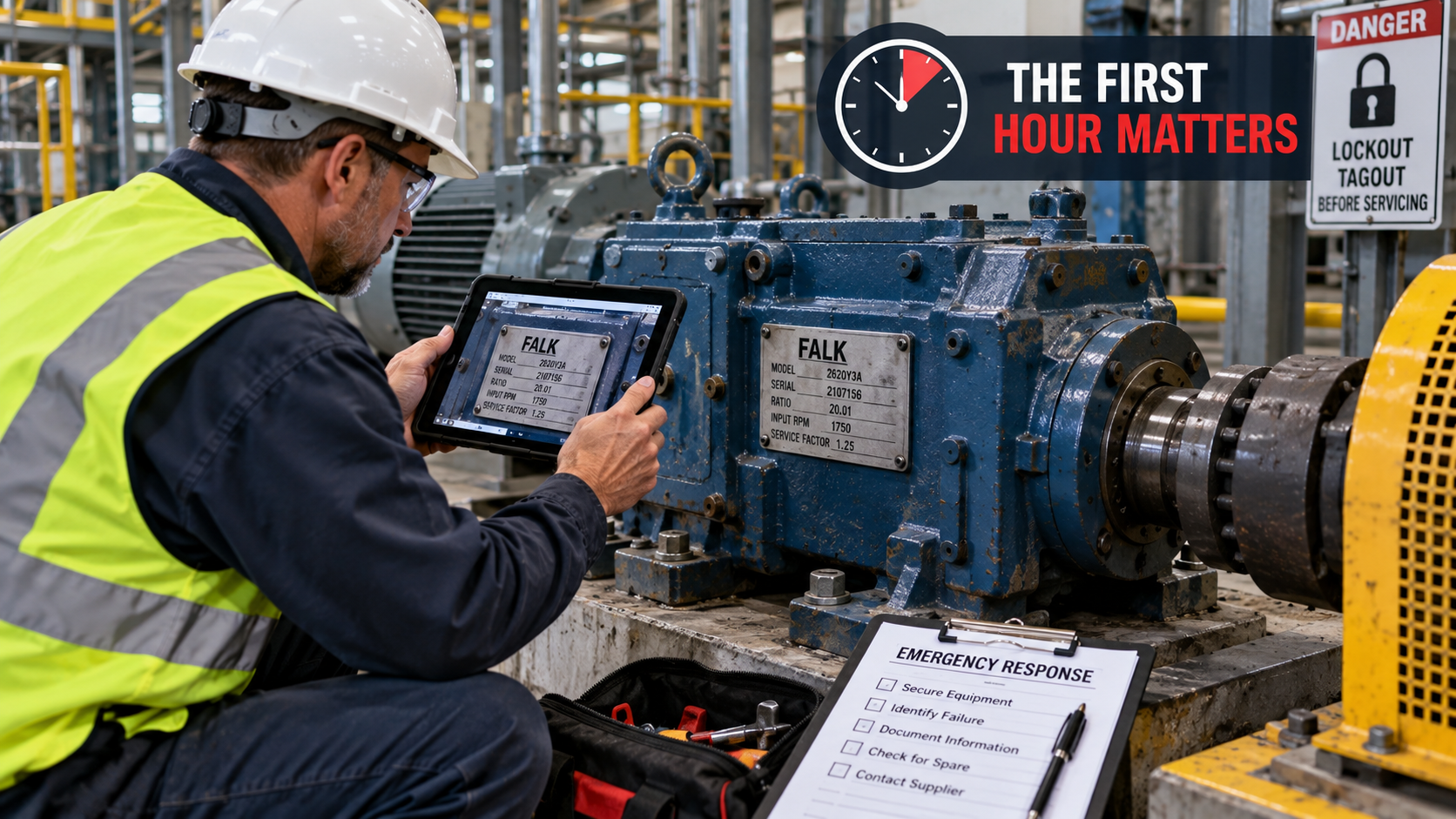
Emergency Gearbox Replacement: What to Do in the First Hour After a Failure
When an industrial gearbox fails, the first hour matters. Learn the critical steps for safe shutdown, gearbox identification, documentation, spare verification, and sourcing an emergency gearbox replacement quickly.
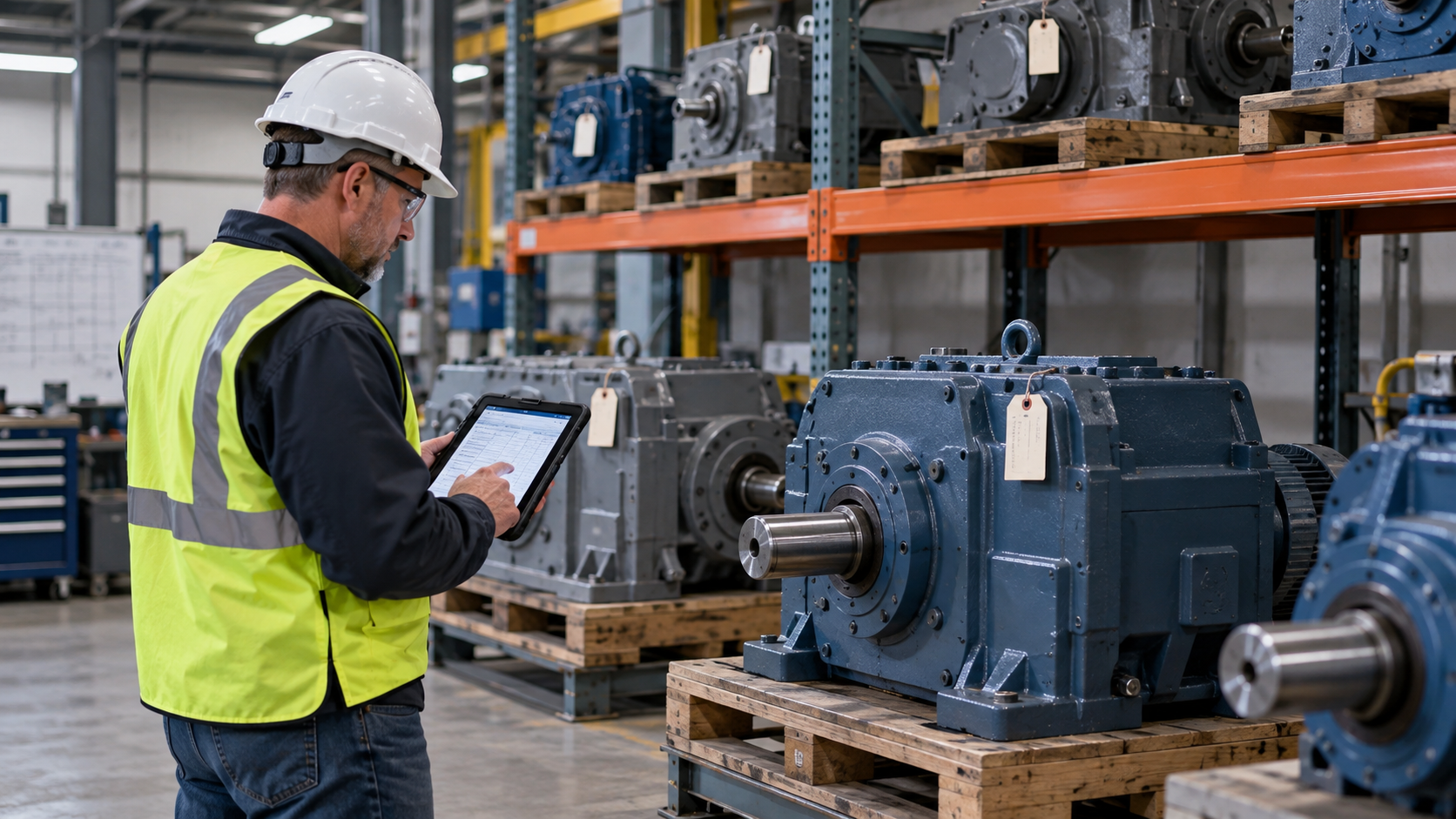
How to Build a Critical Gearbox Spare Strategy for Your Plant
Learn how to build a critical gearbox spare strategy that reduces downtime, prioritizes high-risk equipment, addresses obsolete gearboxes, and ensures the right replacement is available when your plant needs it most.

Helical Gear Ratios Explained: How Gear Reduction Changes Speed and Torque
Helical gear ratios determine how a gearbox changes rotational speed and torque to meet specific application requirements. Learn how gear reduction works, how gear ratios are calculated, and how choosing the right ratio improves equipment performance, efficiency, and reliability.
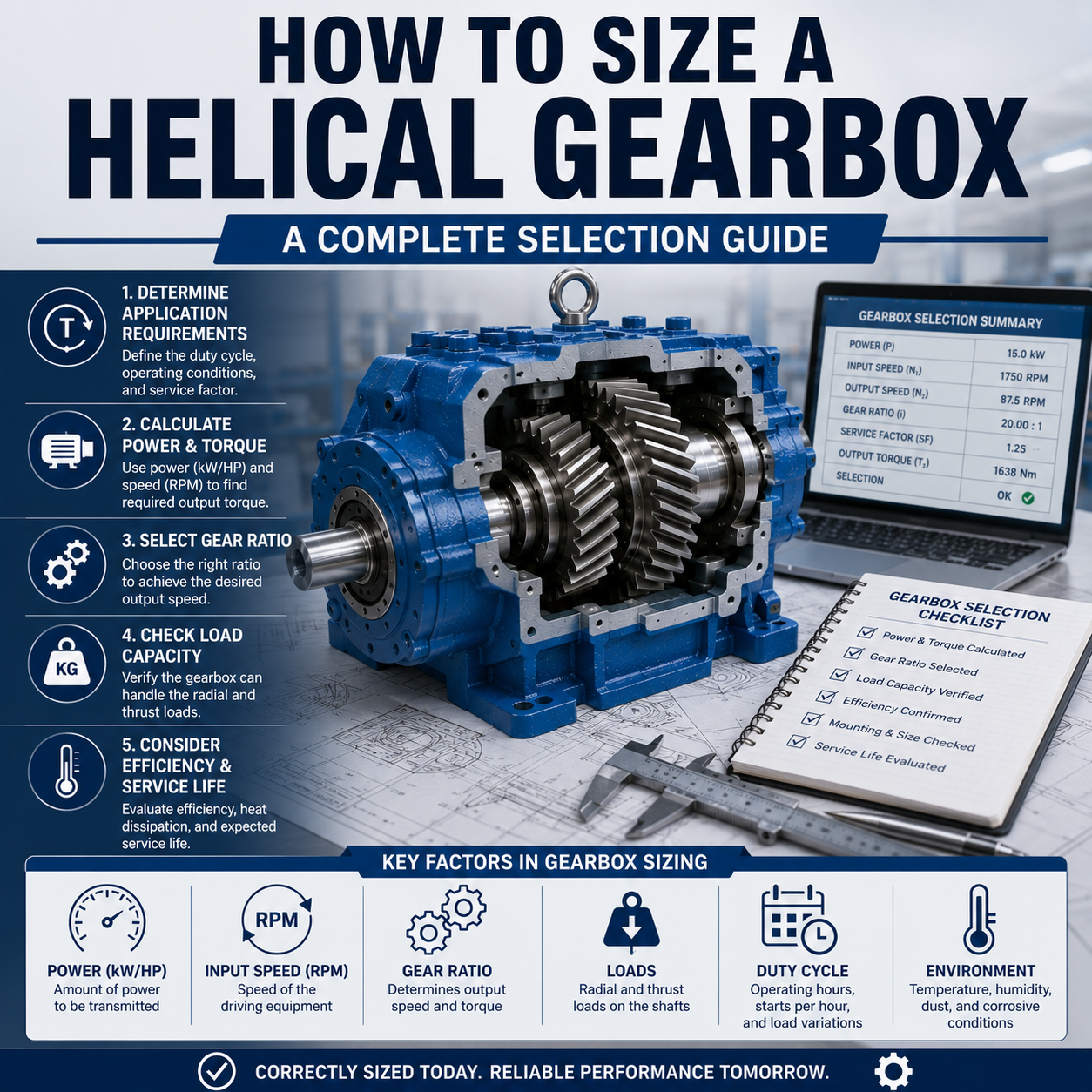
How to Size a Helical Gearbox: A Complete Selection Guide
Selecting the right helical gearbox requires more than matching horsepower. Learn how to calculate torque, gear ratio, service factor, input speed, output speed, and operating conditions to choose a gearbox that delivers reliable, long-lasting performance.

Helical Gearbox Failure Modes: Common Problems, Causes, and Solutions
Understanding common helical gearbox failure modes can help prevent costly downtime and unexpected equipment damage. Learn the most frequent gearbox problems, their root causes, warning signs, and practical solutions to improve reliability and extend service life.
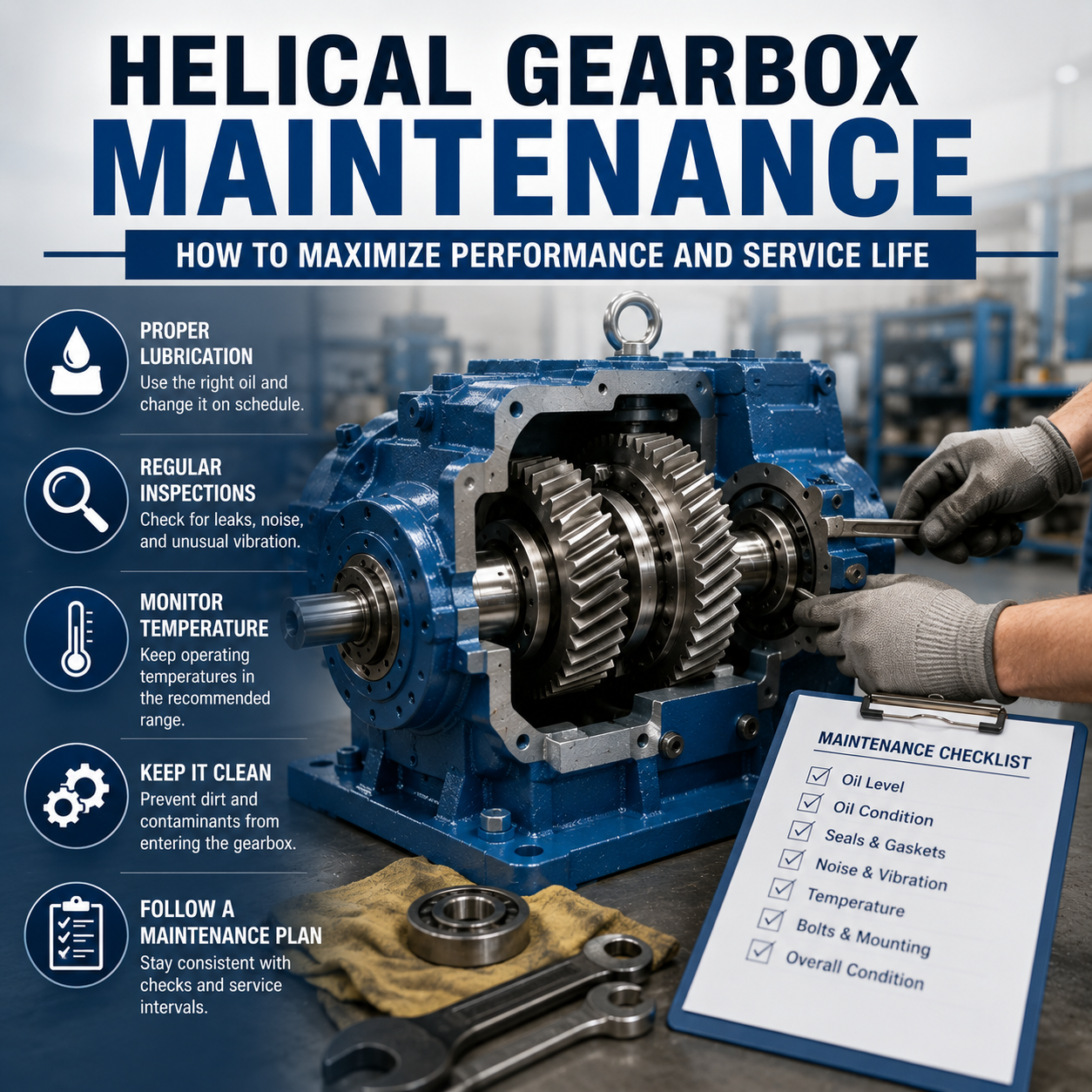
Helical Gearbox Maintenance: How to Maximize Performance and Service Life
Proper helical gearbox maintenance is essential for maximizing efficiency, reducing downtime, and extending equipment life. Learn the best practices for lubrication, inspections, alignment, temperature monitoring, and preventive maintenance to keep your gearbox operating at peak performance.

Helical Gearbox vs Planetary Gearbox: Which One Should You Choose?
Choosing between a helical gearbox and a planetary gearbox depends on your application's torque, efficiency, space constraints, and performance requirements. Compare the advantages, limitations, and ideal use cases of each gearbox type to determine which solution best fits your industrial equipment.
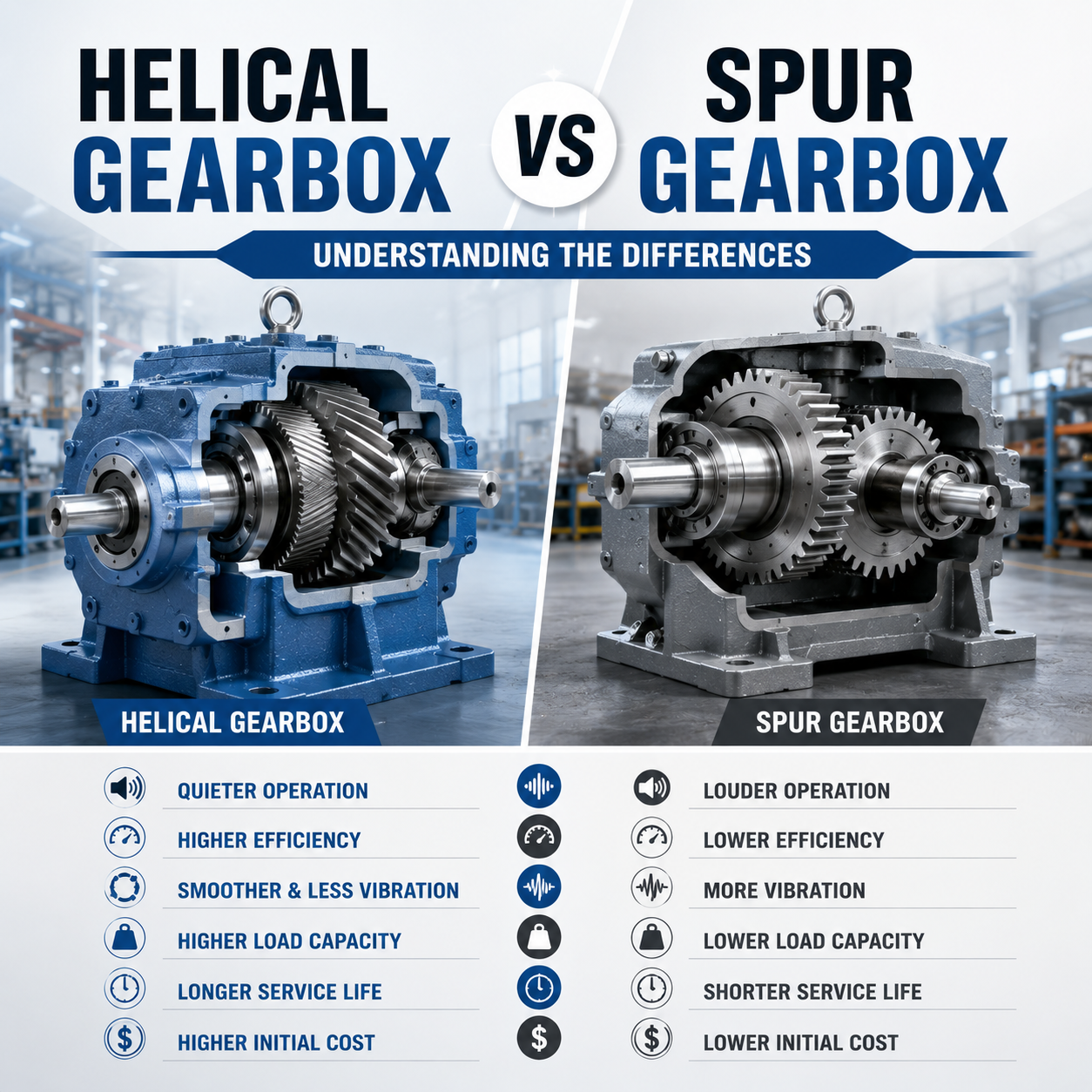
Helical Gearbox vs Spur Gearbox: Understanding the Differences
Helical and spur gearboxes are two of the most common industrial gear reducer designs, but each offers distinct advantages. Learn the key differences in efficiency, noise, load capacity, maintenance, cost, and ideal applications to choose the right gearbox for your equipment.
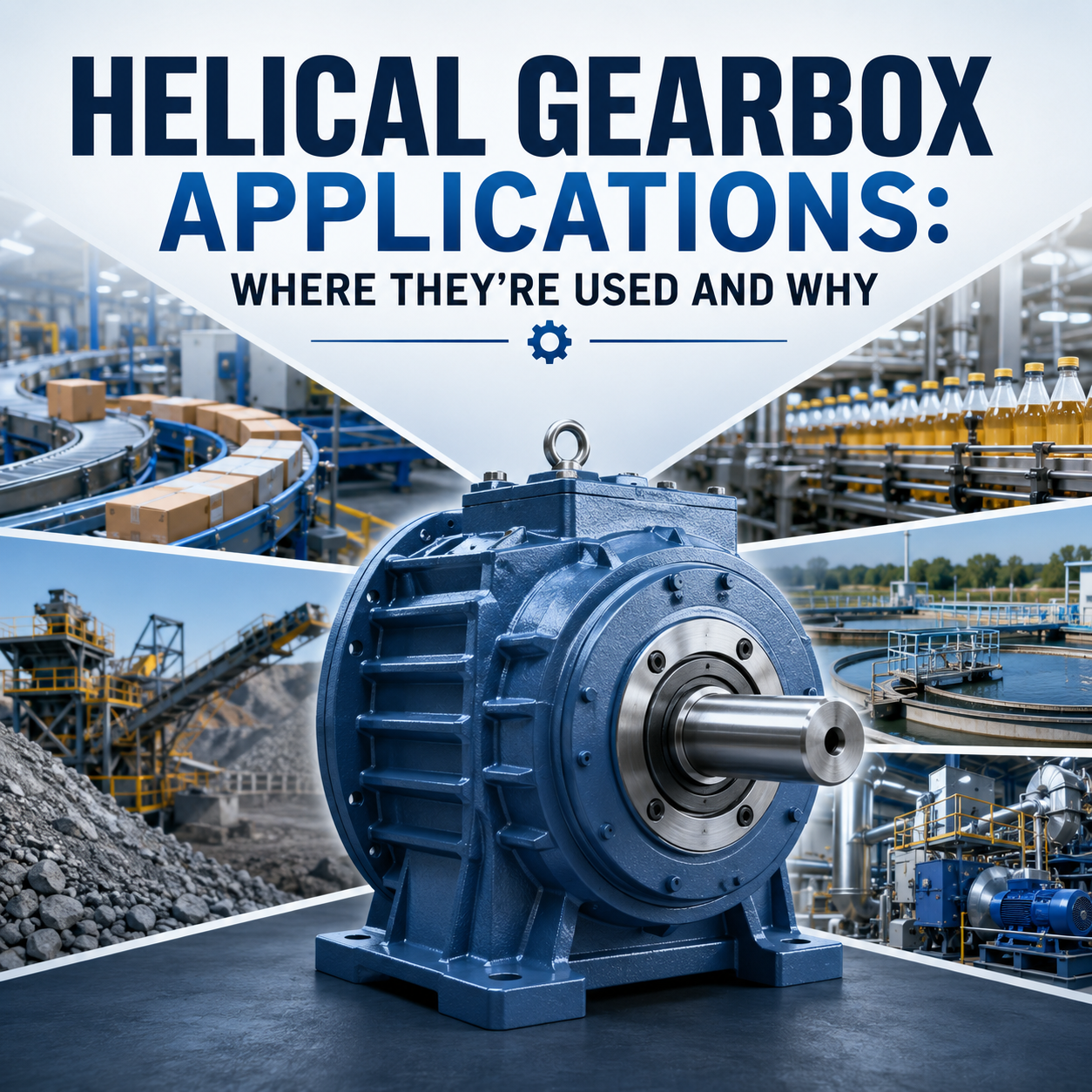
Helical Gearbox Applications: Where They're Used and Why
Helical gearboxes are trusted across countless industries because they deliver smooth, efficient, and reliable power transmission. Discover where these gearboxes are commonly used, why they outperform many alternatives, and how choosing the right application can improve equipment performance, reduce maintenance, and extend the life of your machinery.
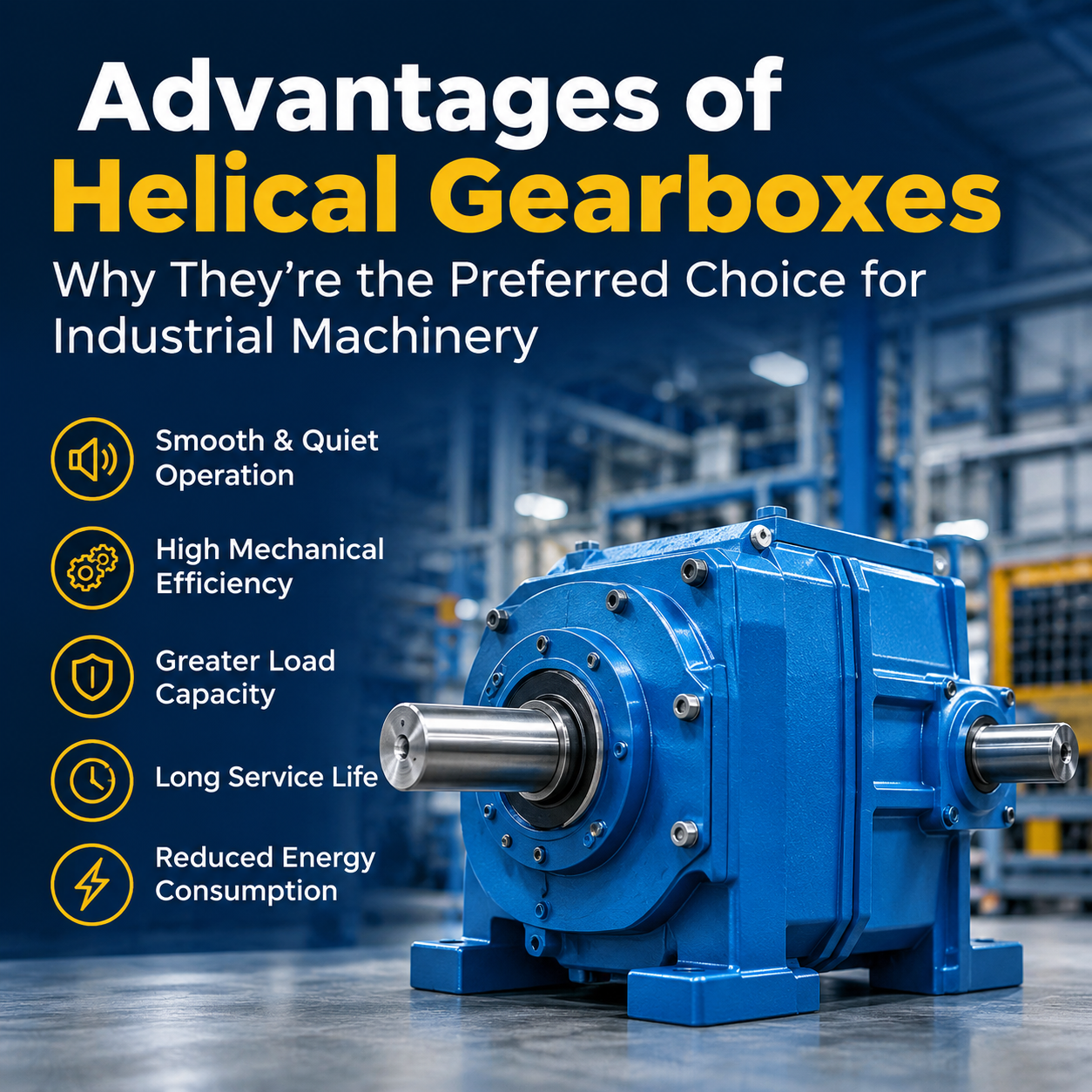
Advantages of Helical Gearboxes: Why They're the Preferred Choice for Industrial Machinery
Discover the key advantages of helical gearboxes, from smooth and quiet operation to high efficiency, excellent load capacity, and long service life. Learn why these industrial gear reducers are the preferred choice for manufacturing, conveyors, mining, food processing, and other demanding applications.
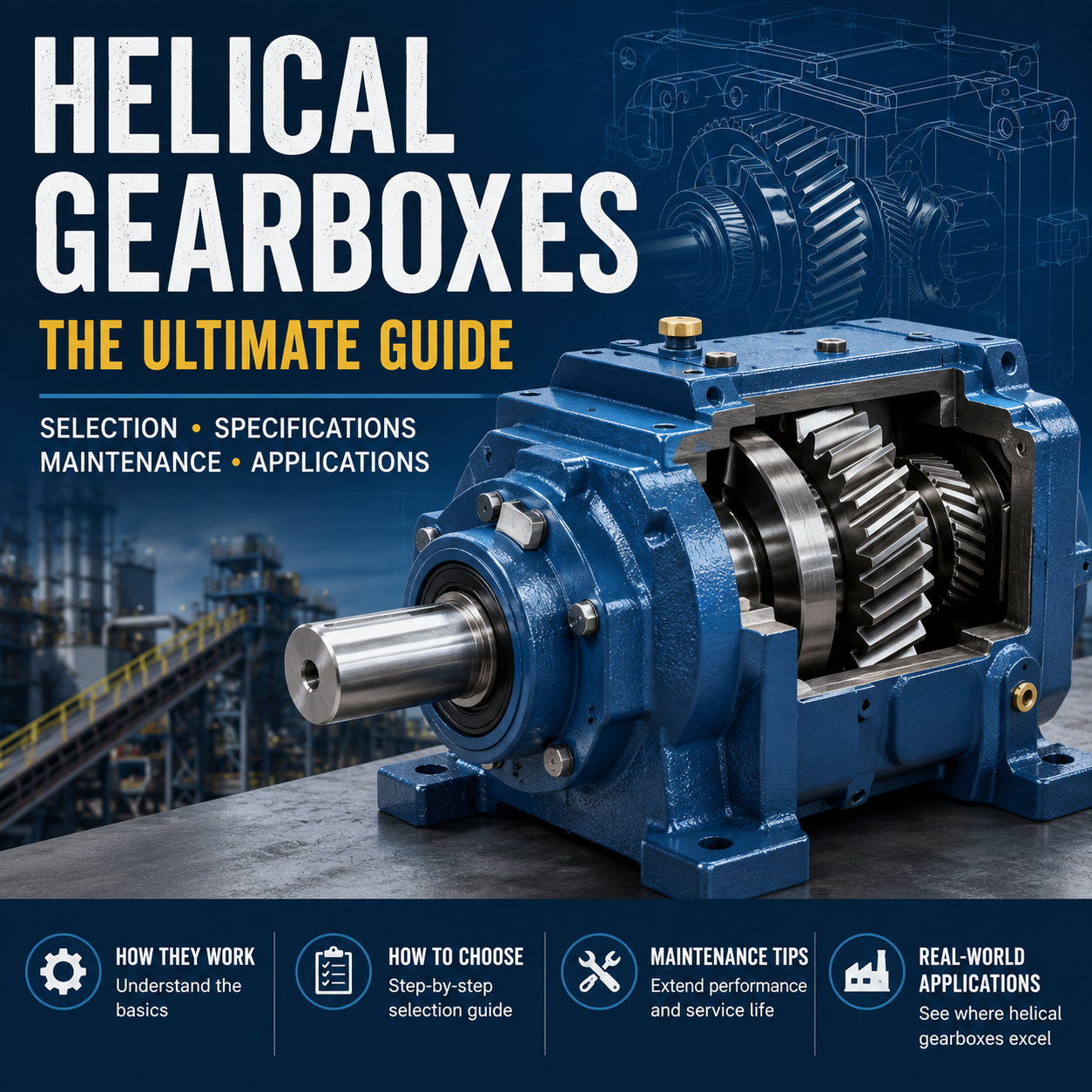
Helical Gearbox Buying Guide: How to Choose the Right Industrial Gear Reducer
Learn how to choose the right helical gearbox for your industrial application. This guide covers gearbox types, torque, gear ratios, service factors, mounting options, maintenance requirements, common failure signs, and the key specifications that influence performance and service life.
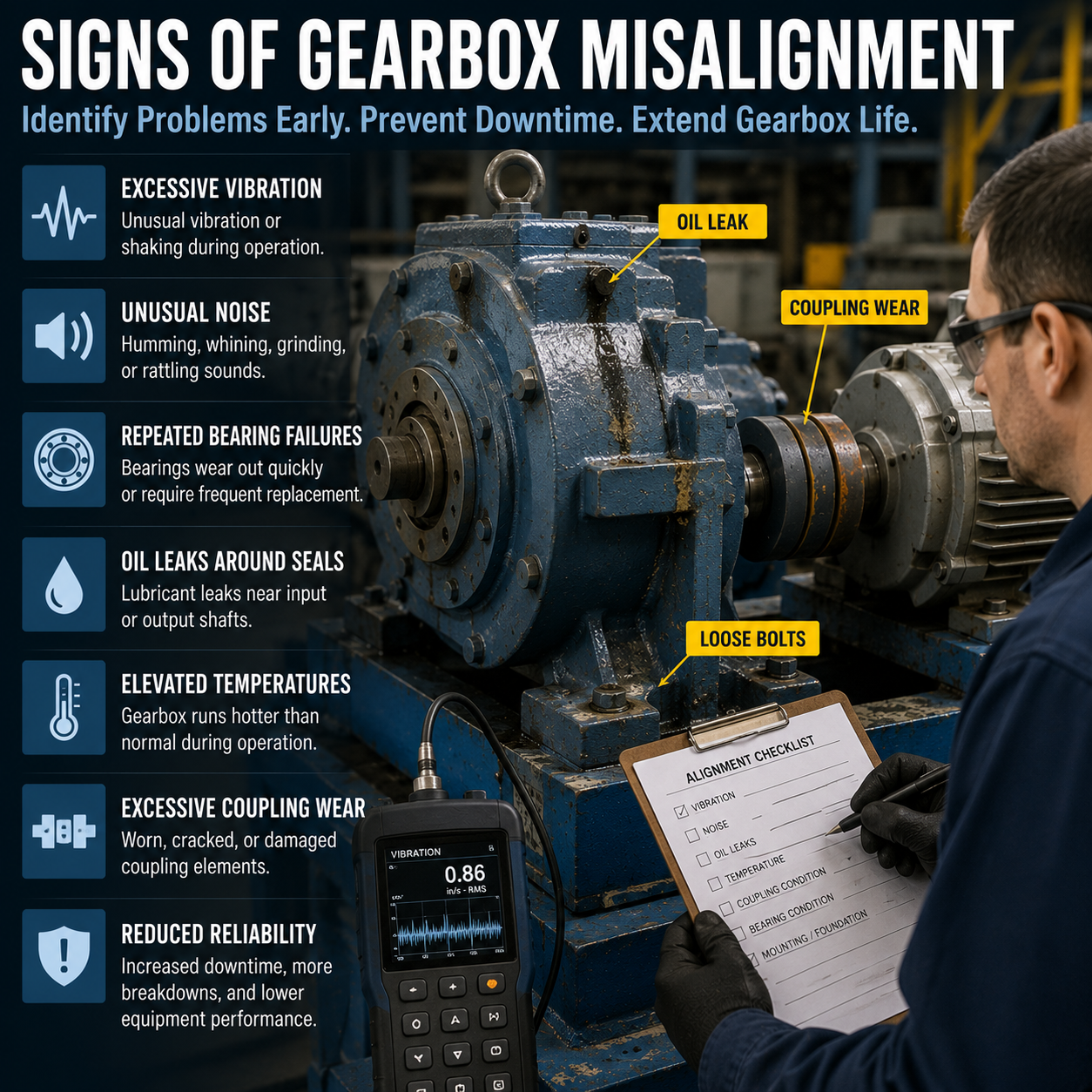
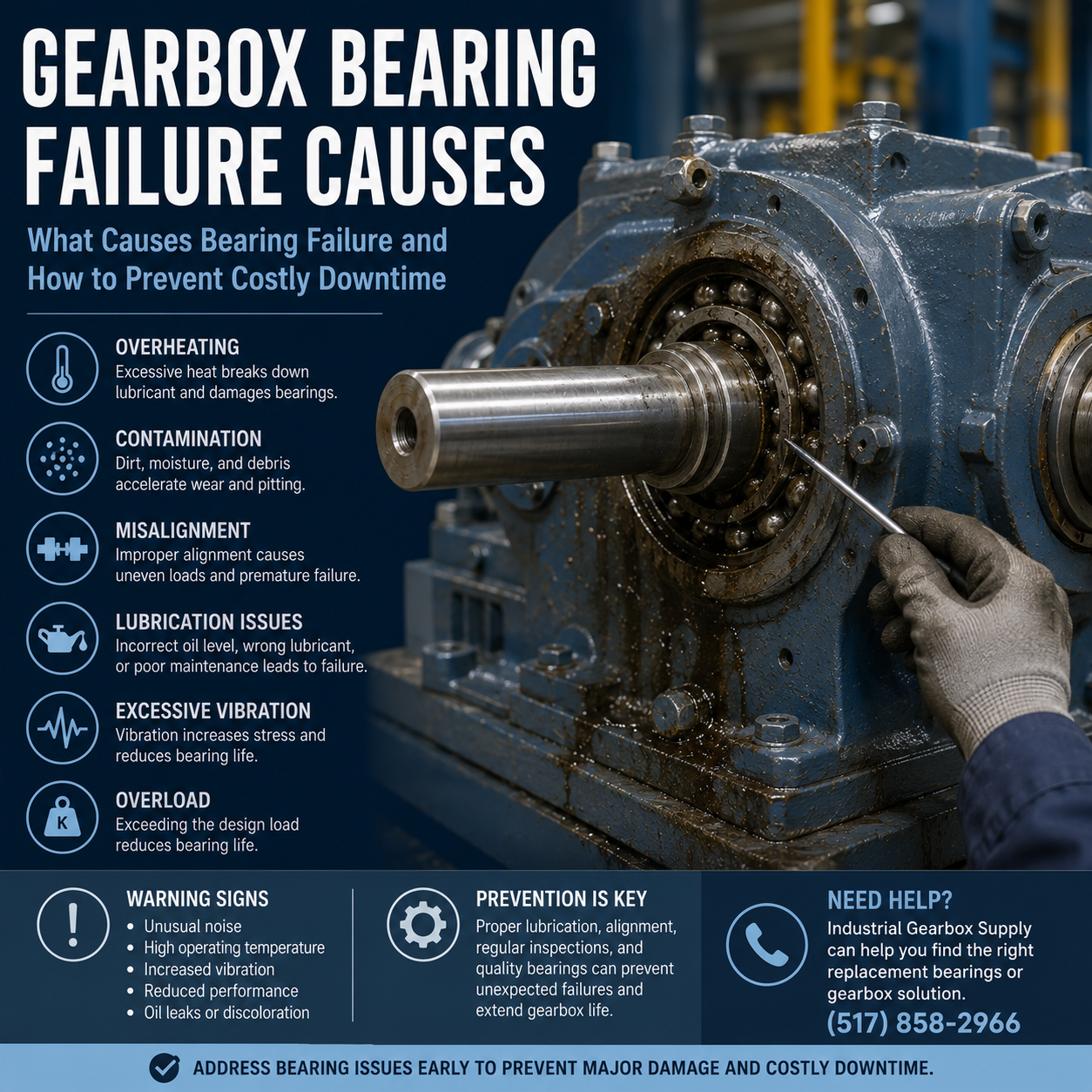
Gearbox Bearing Failure Causes
Gearbox Bearing Failure Causes: Common Problems and Prevention