

Industrial Gearbox Preventive Maintenance Checklist
An industrial gearbox preventive maintenance checklist is one of the most effective tools for extending gearbox life, reducing downtime, and preventing unexpected failures. Most gearbox problems develop gradually and can be detected early through routine inspection and monitoring.
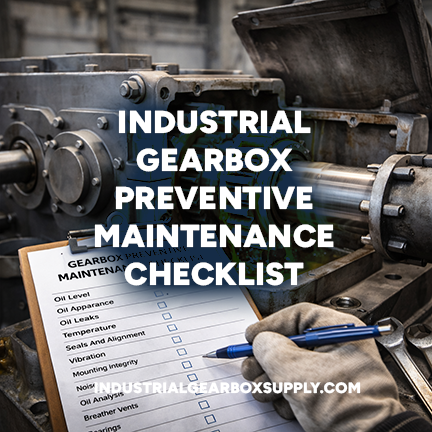
Preventive maintenance focuses on identifying small issues before they become major failures. When performed consistently, it improves reliability, efficiency, and overall system performance.
This checklist outlines the key preventive maintenance steps every industrial gearbox should follow.
Why Preventive Maintenance Matters for Industrial Gearboxes
Industrial gearboxes operate under constant load, speed variation, and environmental stress. Over time, wear, contamination, misalignment, and lubrication breakdown can significantly shorten service life.
Preventive maintenance helps identify developing problems early, reduces repair costs, minimizes unplanned downtime, and protects connected equipment such as motors, couplings, and driven machinery.
Daily or Shift-Level Gearbox Checks
Basic visual and operational checks should be performed regularly, especially in continuous-duty applications.
Check for unusual noise such as grinding, whining, or knocking. Listen for changes compared to normal operation.
Monitor operating temperature by touch or infrared thermometer if available. Sudden increases often indicate lubrication or load issues.
Inspect for visible oil leaks around seals, covers, and shaft exits. New or worsening leaks should be investigated promptly.
Observe vibration levels. Excessive vibration or new vibration patterns may indicate misalignment, bearing wear, or gear issues.
Weekly Gearbox Inspection Checklist
Weekly inspections focus on lubrication condition and mounting integrity.
Verify oil level using sight glass or dipstick. Oil level should match manufacturer specifications.
Inspect oil appearance if accessible. Cloudy, darkened, or foaming oil may indicate contamination or breakdown.
Check mounting bolts and fasteners for looseness. Loose mounting can cause misalignment and vibration.
Inspect cooling fins and housing surfaces. Clean dirt, dust, or debris that may restrict heat dissipation.
Monthly Preventive Maintenance Tasks
Monthly checks allow for more detailed evaluation of gearbox condition.
Measure operating temperature under normal load and compare it to baseline readings.
Inspect seals for wear, cracking, or leakage. Seal failure often leads to lubricant loss and contamination.
Check shaft alignment and coupling condition. Misalignment accelerates gear and bearing wear.
Listen for changes in noise during startup, shutdown, and load changes.
Quarterly or Scheduled Maintenance Tasks
Quarterly inspections help identify internal wear trends.
Perform oil analysis if applicable. Oil analysis can reveal metal particles, contamination, and lubricant degradation before failure occurs.
Inspect breather vents and replace clogged or damaged breathers. Blocked breathers can cause pressure buildup and seal failure.
Check bearing condition through vibration monitoring or condition-based diagnostics.
Review operating conditions for changes in load, speed, or duty cycle that may affect gearbox health.
Annual Preventive Maintenance Checklist
Annual maintenance focuses on long-term reliability.
Drain and replace lubricant according to manufacturer recommendations or oil analysis results.
Inspect internal components if the gearbox design allows access during scheduled downtime.
Verify gearbox alignment and foundation condition. Structural settling can affect alignment over time.
Review maintenance records to identify recurring issues or trends.
Environmental and Operating Condition Checks
Environmental factors play a major role in gearbox longevity.
Ensure the gearbox is protected from excessive dust, moisture, and contaminants.
Verify ambient temperature conditions remain within design limits.
Confirm ventilation and airflow are adequate, especially in enclosed installations.
Signs That Preventive Maintenance Is Being Missed
Skipping preventive maintenance often leads to clear warning signs.
Frequent overheating, repeated oil leaks, rising vibration, unusual noise, and declining efficiency all indicate maintenance gaps.
Addressing these symptoms early can prevent costly repairs or replacement.
When Preventive Maintenance Is No Longer Enough
In some cases, preventive maintenance reveals damage that cannot be corrected through routine service.
Replacement should be considered when gear wear is advanced, bearings are severely damaged, or when recurring problems persist despite proper maintenance.
Selecting a properly sized replacement gearbox helps prevent future failures.
Final Thoughts
An industrial gearbox preventive maintenance checklist is a simple but powerful way to protect critical equipment. Consistent inspections, proper lubrication, and early detection of issues significantly extend gearbox life and reduce downtime.
Preventive maintenance costs far less than emergency repairs or unexpected failure.
If you need help selecting maintenance components or evaluating gearbox condition, IndustrialGearboxSupply.com can help guide you toward the right solution.