

How Often Should You Change Gearbox Oil?
Knowing how often to change gearbox oil is critical to protecting gears, bearings, and internal components from premature wear. Gearbox oil does more than lubricate—it reduces friction, dissipates heat, prevents corrosion, and carries away contaminants.
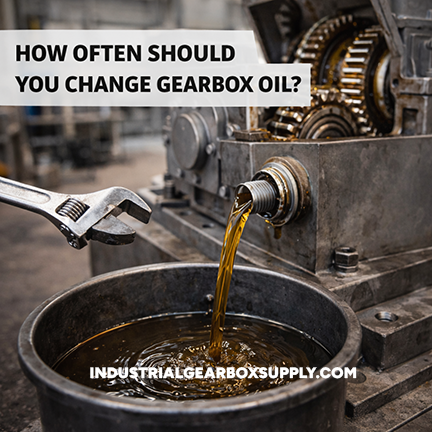
Changing gearbox oil too late can lead to overheating, efficiency loss, and failure. Changing it too early wastes time and money. The correct interval depends on operating conditions, gearbox type, lubricant selection, and maintenance practices.
This guide explains how often gearbox oil should be changed and how to determine the right interval for your application.
Why Gearbox Oil Change Intervals Matter
Over time, gearbox oil degrades due to heat, load, contamination, and oxidation. As oil breaks down, it loses viscosity, additive effectiveness, and its ability to protect metal surfaces.
Degraded oil increases friction, accelerates gear and bearing wear, raises operating temperature, and shortens gearbox life. Proper oil change intervals are one of the most cost-effective ways to prevent gearbox failure.
General Gearbox Oil Change Guidelines
While manufacturer recommendations should always be followed first, general industry guidelines provide a useful baseline.
For mineral-based gearbox oils, oil changes are typically recommended every 2,000 to 4,000 operating hours under normal conditions.
For synthetic gearbox oils, intervals often extend to 8,000 to 10,000 operating hours, and in some cases longer, depending on operating temperature and contamination control.
These intervals assume proper oil selection, normal loads, and clean operating environments.
Factors That Affect How Often Gearbox Oil Should Be Changed
Operating Temperature
Temperature is one of the biggest factors influencing oil life.
Higher operating temperatures accelerate oxidation and additive depletion. As a general rule, for every 18°F (10°C) increase above normal operating temperature, oil life is reduced by roughly half.
Gearboxes that consistently run hot require more frequent oil changes.
Load and Duty Cycle
Heavy loads, frequent starts and stops, shock loading, and reversing duty cycles place additional stress on gearbox oil.
High-load or continuous-duty applications typically require shorter oil change intervals than lightly loaded or intermittent systems.
Contamination Exposure
Dust, moisture, water, and process contaminants significantly shorten oil life.
Gearboxes operating in dirty, humid, or washdown environments require more frequent oil changes. Even small amounts of contamination can degrade oil rapidly and damage internal components.
Oil Type and Quality
Oil formulation plays a major role in service life.
High-quality synthetic oils resist oxidation, maintain viscosity, and perform better at elevated temperatures than conventional mineral oils. Lower-quality or incorrect oils may require much shorter change intervals.
Gearbox Design and Speed
Gearbox type affects oil stress levels.
Worm gearboxes typically generate more heat and shear oil more aggressively than helical or bevel gearboxes. High-speed gearboxes also experience greater oil churning and degradation.
Signs That Gearbox Oil Needs to Be Changed
Oil condition often provides clear warning signs before failure occurs.
Common indicators include darkened or cloudy oil, a burnt odor, sludge formation, foaming, visible metal particles, rising operating temperatures, increased noise, or declining efficiency.
If any of these symptoms appear, oil should be inspected and replaced as needed—even if the scheduled interval has not been reached.
Using Oil Analysis to Optimize Oil Change Intervals
Oil analysis is one of the most effective tools for determining how often to change gearbox oil.
Routine oil analysis can identify contamination, metal wear particles, oxidation levels, and additive depletion. This allows maintenance teams to extend oil change intervals safely or shorten them when conditions require.
Oil analysis helps avoid both premature oil changes and dangerous overextended intervals.
Recommended Oil Change Intervals by Application Type
Light-duty or intermittent applications often follow standard manufacturer intervals.
Continuous-duty, high-load, or high-temperature applications typically require reduced intervals.
Gearboxes in harsh environments—such as food processing, mining, aggregate handling, or washdown areas—often require more frequent oil changes regardless of oil type.
Each application should be evaluated individually rather than relying on generic schedules.
What Happens If Gearbox Oil Is Not Changed Often Enough
Failure to change gearbox oil at proper intervals leads to progressive internal damage.
Lubrication film breakdown causes metal-to-metal contact, gear tooth wear, bearing failure, overheating, efficiency loss, and eventually catastrophic gearbox failure.
Oil changes cost far less than emergency repairs or replacement.
Best Practices for Changing Gearbox Oil
Always follow manufacturer oil specifications for type, viscosity, and additives.
Drain oil while warm to help remove contaminants. Clean or replace breathers and filters during oil changes.
Record oil change dates, operating hours, and oil condition to track trends over time.
After refilling, verify proper oil level and monitor gearbox performance closely.
Final Thoughts
How often you should change gearbox oil depends on temperature, load, contamination, oil type, and gearbox design. Manufacturer recommendations provide a starting point, but real-world conditions ultimately determine the correct interval.
Regular oil changes, combined with oil analysis and condition monitoring, are one of the most effective ways to extend gearbox life and prevent failure.
If you need help selecting the correct gearbox oil or establishing an oil change schedule for your application, IndustrialGearboxSupply.com can help guide you toward the right solution.