

Gear Reducer vs Gearbox: What’s the Difference and Which One Do You Need?
In the world of industrial equipment, terms like “gear reducer” and “gearbox” are often used interchangeably. But are they actually the same thing? Not quite.
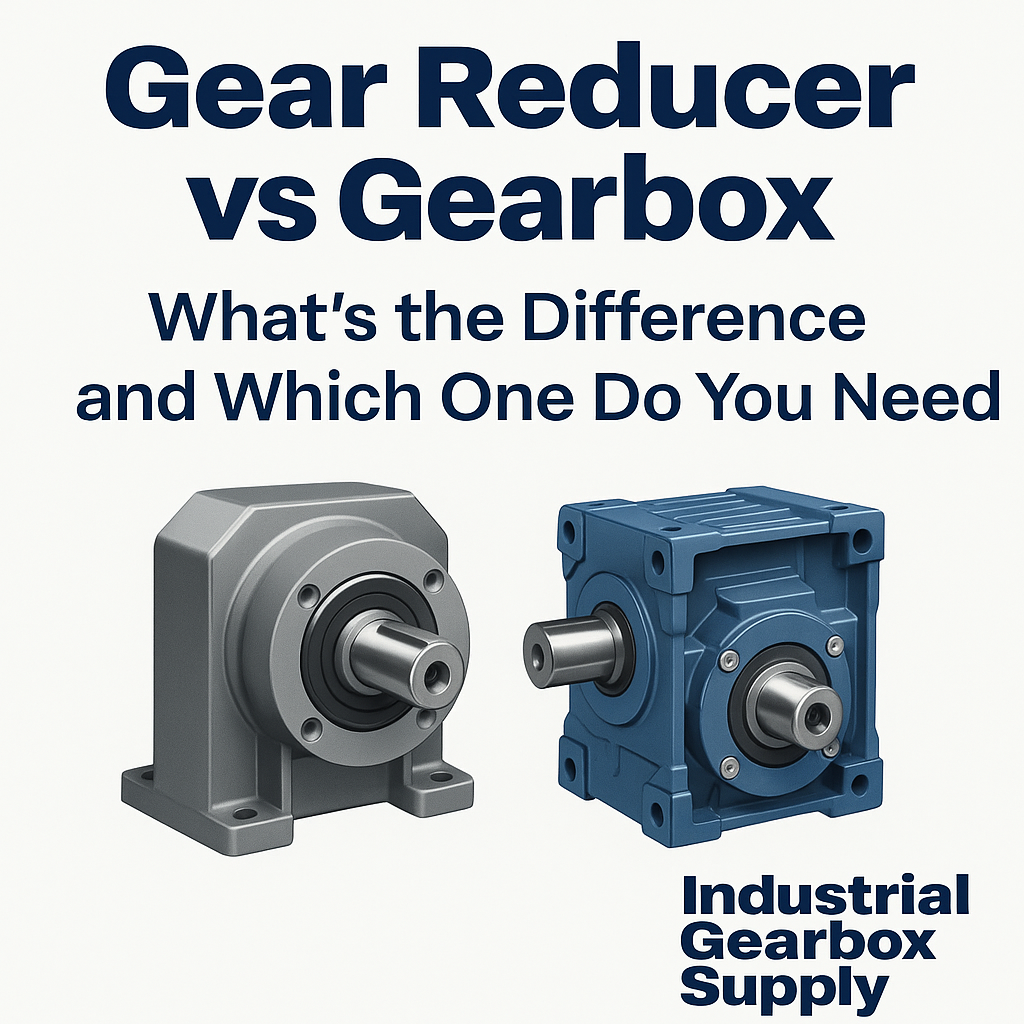
While closely related, there are subtle (yet important) differences between a gear reducer and a gearbox—especially when it comes to terminology, functionality, and application. Whether you're sourcing parts, replacing a unit, or just learning more about how your equipment works, this guide will clear up the confusion.
What Is a Gearbox?
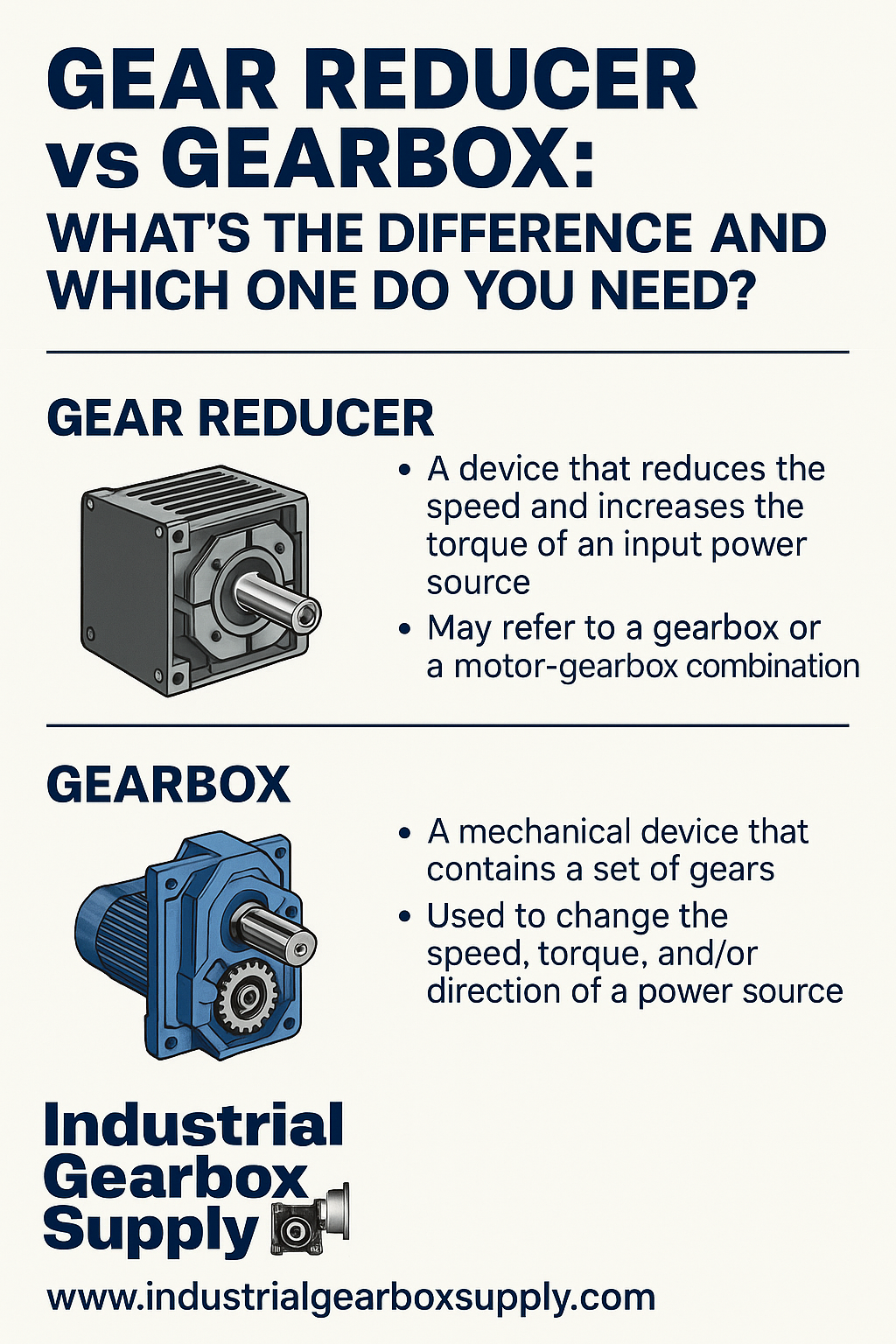
A gearbox is a mechanical device that houses a series of gears designed to transmit power between a driving component (like a motor) and a driven component (like a conveyor or machine).
Core functions of a gearbox:
Transmits rotational power
Changes torque and speed
Adjusts direction of rotation (in some designs)
Gearboxes come in many configurations—helical, bevel, worm, planetary—and can be inline or right angle. Their design depends on load, space, orientation, and performance requirements.
What Is a Gear Reducer?
A gear reducer is a type of gearbox specifically designed to reduce the speed of an input shaft while increasing torque. It’s also known as a speed reducer.
So while all gear reducers are gearboxes, not all gearboxes are reducers. For example, some gearboxes can increase speed (gear increasers), or only change direction without reducing speed.
Core function of a gear reducer:
Reduce speed
Multiply torque
Match motor RPM to load requirements
Key Differences: Gear Reducer vs Gearbox
| Feature | Gearbox | Gear Reducer |
|---|---|---|
| Definition | General term for a gear housing | Gearbox designed to reduce speed |
| Primary Function | Transfers power and motion | Reduces speed and increases torque |
| Speed Change | May reduce, increase, or maintain | Always reduces speed |
| Common Use | General machinery, motors | Motors needing high torque output |
| Alternate Names | Gearhead, gear unit | Speed reducer, torque multiplier |
| Industry Use | Broad range | Focused on power transmission |
Why the Confusion?
Manufacturers, engineers, and distributors often use these terms based on their industry standard. For example:
OEMs may list “gear reducer” on motor assembly drawings.
End-users may refer to the entire unit as a “gearbox.”
Distributors often use the term that matches search demand (gearbox or reducer).
At Industrial Gearbox Supply, we understand both terms and help you find exactly what your application needs—no confusion required.
When to Choose a Gear Reducer
✔ You need high torque at low speeds
✔ You’re pairing a motor with high RPM to a slow-moving machine
✔ You want to extend equipment life by reducing mechanical load
✔ You're replacing a worn-out reducer and want an exact-match unit
When to Choose a Gearbox
✔ You need a general mechanical power transfer device
✔ You're replacing or upgrading a gearbox unit without changing motor RPM
✔ You're dealing with directional change (e.g., bevel or worm gear)
✔ You need flexibility with gear ratios, shafts, or mounting types
Industries That Use Gearboxes and Reducers
Food & Beverage
Pulp & Paper
Water Treatment
Agriculture
Chemical Processing
Packaging
Mining & Aggregates
Material Handling
Both gearbox types are used across industries, with gear reducers often playing a critical role in applications requiring heavy loads and precise torque control.
Still Unsure? Let Us Help.
Whether you’re searching for a gear reducer, a gearbox, or not sure which one you need—Industrial Gearbox Supply is here to assist.
✅ Fast Identification & Matching
✅ Wide Inventory of Gearboxes & Reducers
✅ Custom Mounts, OEM Interchanges & Shaft Options
✅ Expert Support with Real Engineers
📞 Call us at 1-877-465-9108
🌐 Visit: https://industrialgearboxsupply.com
📧 Email: support@industrialgearboxsupply.com