

Worm Gears Explained: Design, Benefits, and Industrial Applications
🛠️ What Is a Worm Gear?
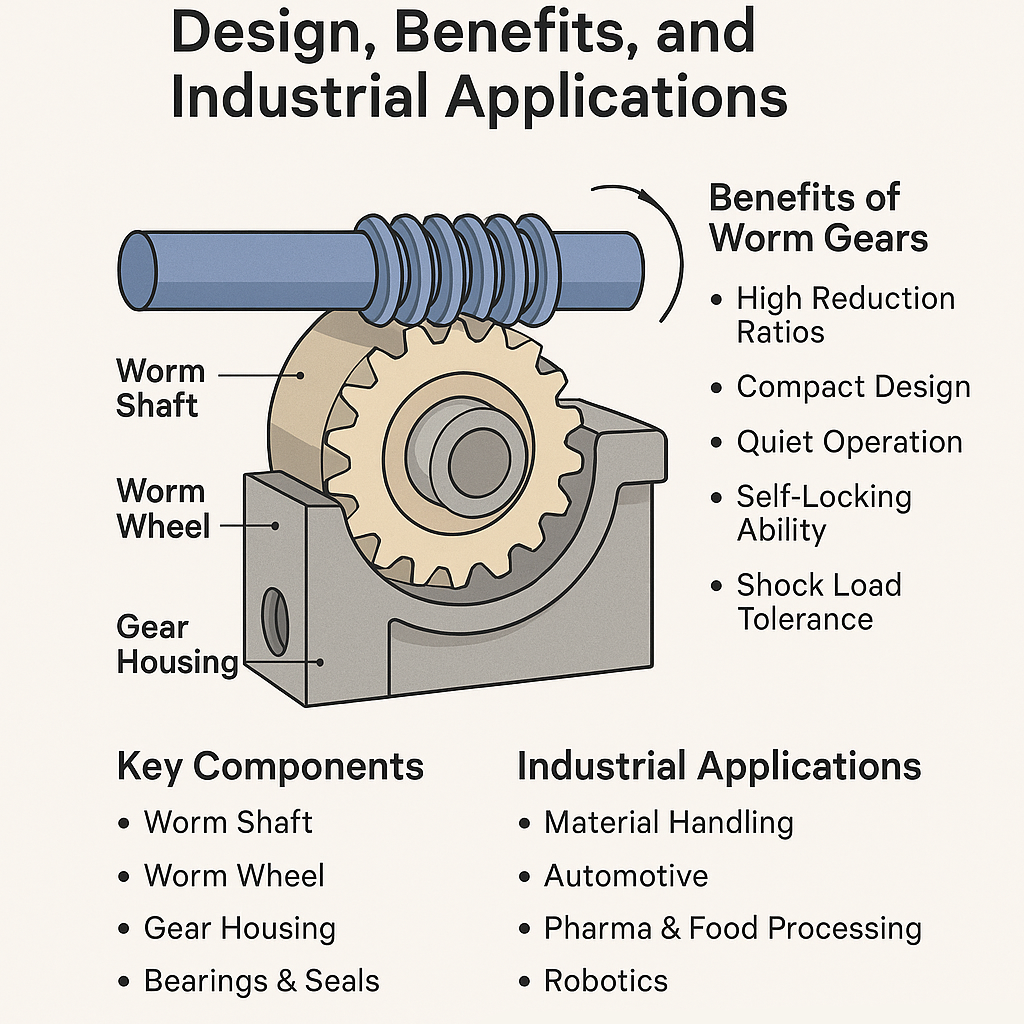
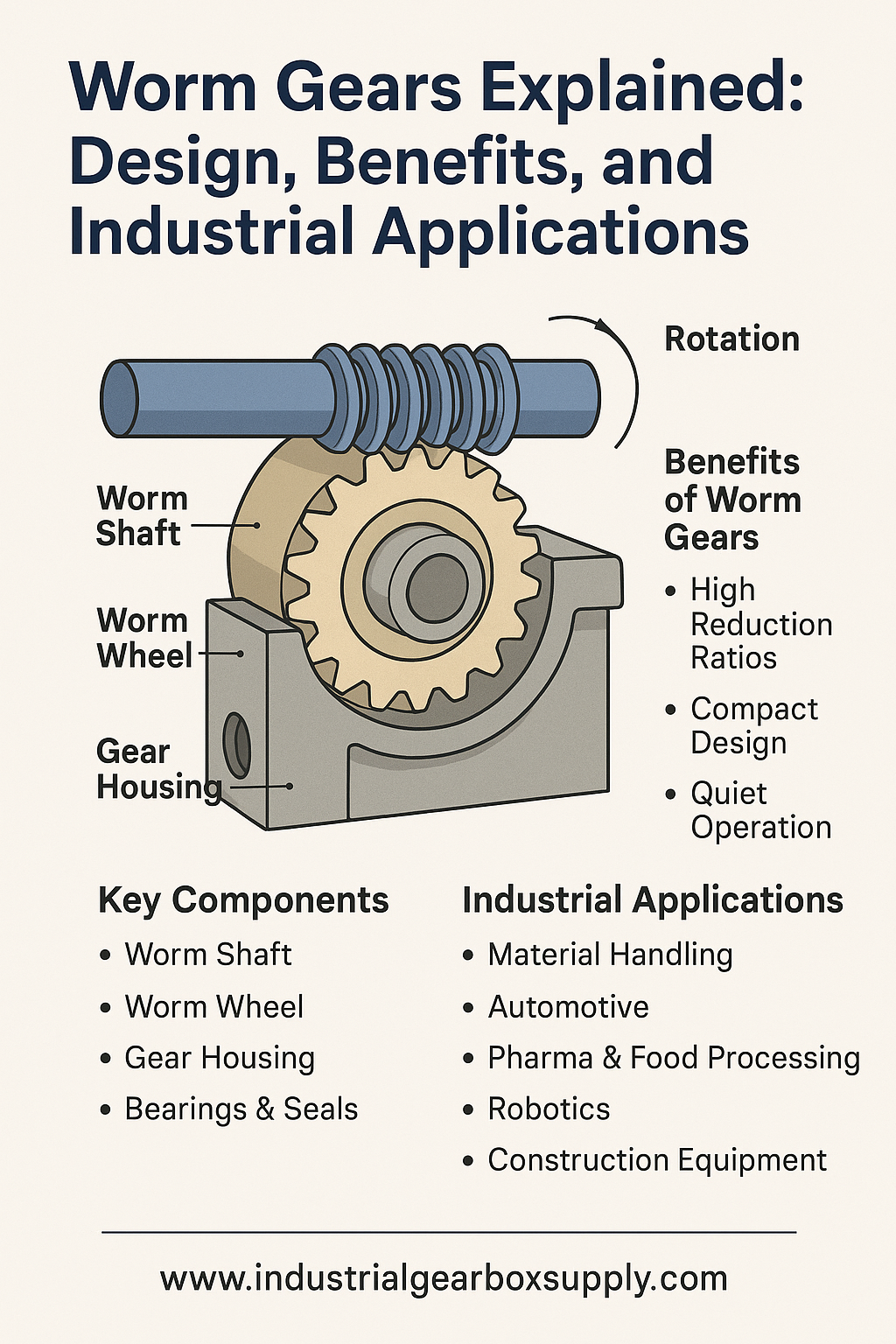
A worm gear is a type of mechanical gear system consisting of a worm (screw-like shaft) and a worm wheel (gear). When the worm rotates, it turns the worm wheel to transmit motion and torque at a right angle. This setup is ideal for high reduction ratios and precise, quiet operation.
⚙️ How Worm Drives Work
The worm meshes with the teeth of the worm wheel, typically at a 90-degree angle. As the worm turns, it gradually pushes the teeth of the wheel, resulting in smooth and controlled motion.
This mechanism is known as a worm drive and is unique because:
It offers high gear reduction in a compact form
The worm can drive the wheel, but the wheel usually cannot drive the worm (non-backdrivable), adding a braking effect
It provides shock absorption and vibration dampening
📐 Key Components
Worm Shaft: A threaded cylindrical shaft (like a screw)
Worm Wheel: A gear that meshes with the worm’s threads
Gear Housing: Often lubricated and enclosed to reduce wear and noise
Bearings & Seals: Ensure stability and smooth rotation
✅ Benefits of Worm Gears
| Benefit | Explanation |
|---|---|
| High Reduction Ratios | Achieve 20:1, 40:1, or even 100:1 in a single stage |
| Compact Design | Perfect for space-constrained systems |
| Quiet Operation | Low noise and vibration, ideal for sensitive environments |
| Self-Locking Ability | Prevents back-driving in many applications |
| Shock Load Tolerance | Excellent for applications with sudden force or motion changes |
🔄 Worm Gear Motor: Integrated Power
A worm gear motor combines a worm gear reducer with an electric motor, delivering compact power for:
Conveyor systems
Lifts and hoists
Packaging equipment
Automotive jacks
Robotics and automation
This integration simplifies assembly and improves system efficiency.
🧰 Industrial Applications
Worm gears are used across industries where high torque and low speed are required:
🏭 Material Handling: Conveyors, hoists, and cranes
🚘 Automotive: Steering systems, windshield wipers
🧪 Pharma & Food Processing: Where quiet and clean operation is crucial
🤖 Robotics: Controlled movement with minimal backlash
🏗️ Construction Equipment: Elevation control systems and winches
🆚 Worm Gear vs. Other Gear Types
| Gear Type | Key Traits | Best For |
|---|---|---|
| Worm Gear | Compact, self-locking, high ratio | Precise control, tight spaces |
| Helical | Smooth, quiet, high efficiency | Continuous power systems |
| Bevel | Right-angle shafts, conical gears | Differential systems |
| Spur | Simple, loud, efficient | Cost-sensitive applications |
🔍 How to Select a Worm Gear
When choosing a worm gear or worm gear motor, consider:
Torque Requirements
Reduction Ratio
Mounting Configuration
Shaft Orientation
Lubrication Needs
Duty Cycle (continuous or intermittent use)
Industrial Gearbox Supply can help you size and select the right worm gear solution for your system.
🧪 Maintenance and Longevity Tips
Use proper lubrication to reduce friction and wear
Avoid overloading — worm gears are strong but can wear with excessive torque
Check for backlash or unusual noise
Replace seals and bearings as needed
Keep the housing clean to avoid contamination
📞 Need Help With Worm Gears?
If you're replacing or sourcing a worm gear, worm wheel, or worm gear motor, we can help. Our specialists can match specs, provide equivalents, or suggest better-fit options from top brands.
Contact Industrial Gearbox Supply:
📍 3590 Scheele Dr, Jackson, MI 49202
📞 Call Us: (517) 858-2966
📧 Email: sales@industrialgearboxsupply.com
🌐 www.industrialgearboxsupply.com