

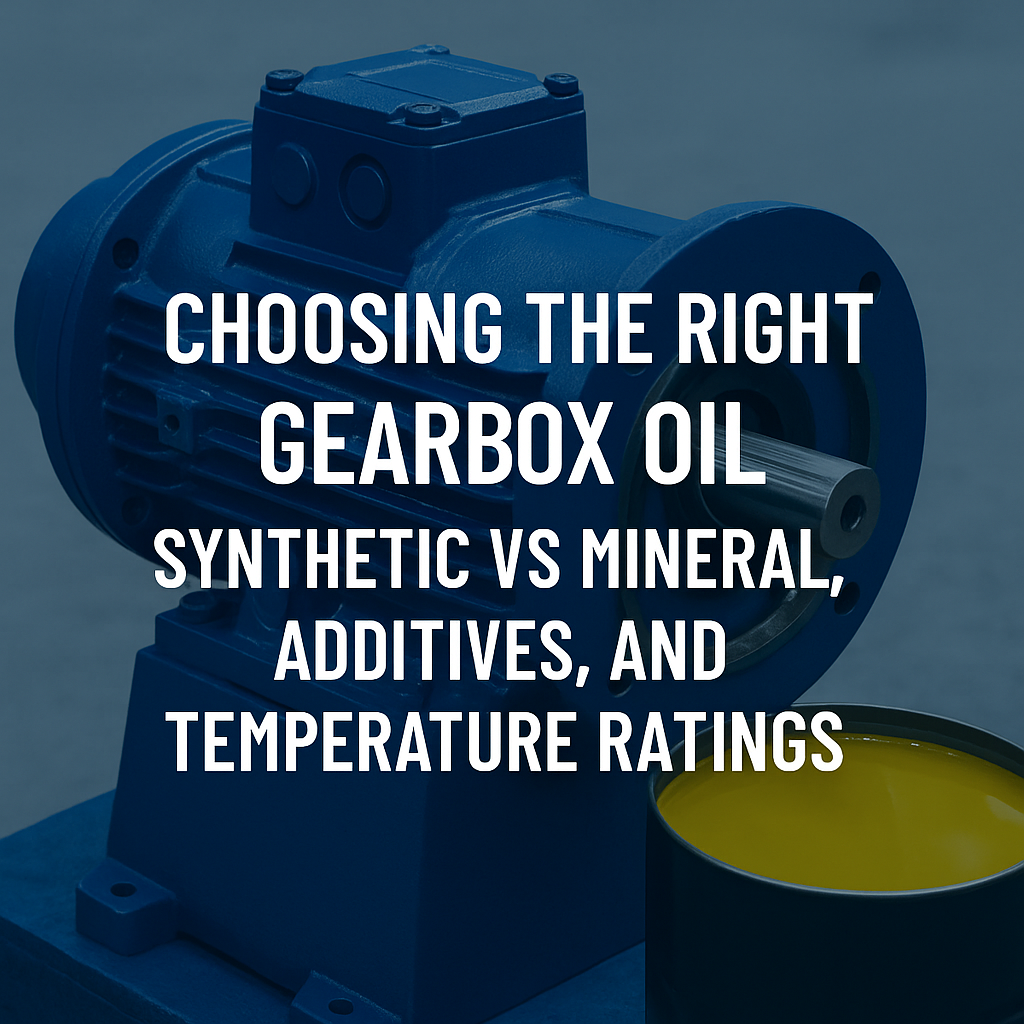
Choosing the Right Gearbox Oil: Synthetic vs Mineral, Additives, and Temperature Ratings
The right oil can make the difference between years of reliable gearbox performance and premature failure. Selecting the correct lubricant isn’t just about viscosity—it’s about understanding your operating environment, load conditions, and maintenance intervals. Let’s explore how to choose the ideal gearbox oil to maximize lifespan and efficiency.
Understanding Gearbox Oil Basics
Gearbox oil serves three primary functions: lubrication, cooling, and protection. It reduces metal-to-metal contact, removes heat generated during operation, and prevents rust or corrosion inside the housing. The key to longevity is matching the oil’s properties to your gearbox’s operating environment and load profile.
Synthetic vs Mineral Gearbox Oils
Both synthetic and mineral oils can perform well—but each offers unique advantages:
Mineral Gear Oils:
Derived from refined crude oil
Cost-effective and easy to source
Ideal for standard-duty applications and lower operating temperatures
Synthetic Gear Oils:
Engineered for high-performance and extreme conditions
Maintain viscosity better across temperature ranges
Resist oxidation and breakdown, allowing longer service intervals
Typically reduce energy loss and friction
For high-torque or high-temperature applications, synthetic oil generally delivers superior performance and extended drain intervals—offsetting its higher upfront cost.
Why Additives Matter
Additives enhance oil performance under tough conditions. Common types include:
Anti-wear agents: Prevent gear tooth scuffing under heavy load
Extreme pressure (EP) additives: Improve film strength to handle shock loads
Rust and oxidation inhibitors: Extend oil life and prevent corrosion
Foam suppressants: Prevent air bubbles that cause lubrication failure
Choosing the right additive package is just as important as selecting the base oil type. For example, worm gearboxes often need EP additives, while food-grade gearboxes require NSF H1-approved lubricants.
Temperature Ratings and Operating Conditions
Temperature plays a critical role in oil selection. At high temperatures, oil thins out, reducing protection. In cold conditions, it thickens, restricting flow.
Ideal Viscosity Selection:
Refer to the manufacturer’s recommended ISO viscosity grade.
For hot environments or continuous high-load use, choose higher-viscosity or synthetic oils.
For low temperatures, use low-pour-point synthetic oils for smoother startups.
Maintaining proper temperature control prevents premature oxidation and ensures efficient film strength between gear teeth.
Maintenance and Oil Change Intervals
Even the best oil breaks down over time. Monitor:
Color changes (darkening indicates oxidation)
Metal particles (sign of wear)
Viscosity changes (indicating contamination or breakdown)
Standard mineral oils often need replacement every 2,000–4,000 hours. Synthetics can extend intervals up to 8,000 hours or more, depending on the application.
Conclusion
Choosing the right gearbox oil involves understanding your system’s mechanical and environmental demands. Synthetic oils provide superior protection and efficiency in most modern applications, but the right additive blend and viscosity are equally critical.
At Industrial Gearbox Supply, we help you source reliable gearboxes and provide expert recommendations for proper lubrication and maintenance—so your equipment operates smoothly and efficiently.
Call (517) 858-2966 or visit IndustrialGearboxSupply.com to get expert guidance for your gearbox setup.