

Gearbox Mounting Mistakes That Cause Premature Failure
Improper gearbox mounting is a leading cause of premature gearbox failure. Even a correctly sized and well-lubricated gearbox can fail early if it is mounted incorrectly. Mounting errors create misalignment, vibration, uneven loading, and excessive stress that accelerate wear on gears, bearings, seals, and shafts.
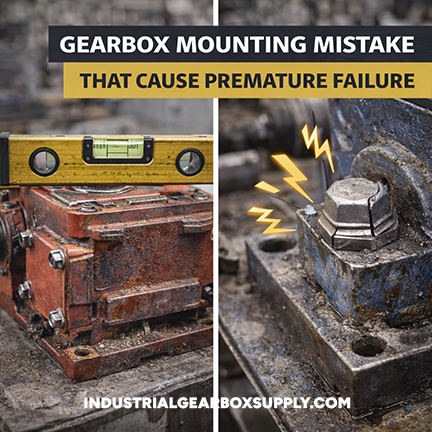
Many mounting-related failures develop slowly and are often misdiagnosed as lubrication or component defects. Understanding common gearbox mounting mistakes helps prevent avoidable damage and costly downtime.
This guide explains the most common gearbox mounting mistakes and how they lead to premature failure.
Why Proper Gearbox Mounting Matters
A gearbox is designed to operate with precise shaft alignment and controlled loading. Mounting errors distort this balance and introduce forces the gearbox was never designed to handle.
Improper mounting increases internal friction, raises operating temperature, accelerates bearing wear, and shortens service life—even under normal loads.
Mounting on an Uneven or Flexible Base
One of the most common gearbox mounting mistakes is installing the gearbox on an uneven, warped, or flexible mounting surface.
An uneven base causes housing distortion when mounting bolts are tightened. This distortion misaligns internal components and creates uneven gear tooth contact.
Flexible or insufficiently rigid bases allow movement during operation, leading to vibration, shifting alignment, and progressive internal damage.
Improper Shaft Alignment
Misalignment between the gearbox, motor, and driven equipment is a major contributor to premature failure.
Angular or parallel misalignment causes uneven load distribution across gears and bearings. This increases contact stress, vibration, and heat.
Even small alignment errors can significantly reduce bearing life and lead to seal failure and gear wear.
Over-Tightening or Uneven Bolt Torque
Incorrect bolt torque is an often-overlooked mounting mistake.
Over-tightening mounting bolts or tightening them unevenly can distort the gearbox housing. Housing distortion affects internal clearances, bearing preload, and gear mesh alignment.
Bolts should always be tightened evenly and to manufacturer-specified torque values.
Inadequate Mounting Hardware
Using undersized or incorrect mounting hardware compromises gearbox stability.
Bolts that stretch, loosen, or shear under load allow the gearbox to shift during operation. This movement increases misalignment and vibration.
Proper bolt grade, size, and washer selection are essential for secure mounting.
Ignoring Thermal Expansion
Thermal expansion is frequently overlooked during gearbox installation.
As equipment heats up during operation, shafts and mounting structures expand. If mounting does not allow for controlled thermal movement, stress builds up in the gearbox and connected components.
Rigid mounting without accounting for thermal growth can cause misalignment and seal damage over time.
Incorrect Orientation or Mounting Position
Some gearboxes are designed for specific mounting orientations.
Installing a gearbox in the wrong orientation can affect lubrication distribution, breather function, and seal performance. Oil levels may be incorrect for the installed position, leading to lubrication starvation or leakage.
Always verify that the gearbox is configured for the intended mounting position.
Poor Foundation or Structural Support
Gearboxes mounted on weak or improperly designed foundations are prone to vibration and movement.
Insufficient structural support allows dynamic loads to amplify vibration, increasing wear on internal components. Foundation issues often cause recurring alignment and seal problems.
A stable, rigid foundation is critical for long-term gearbox reliability.
Failure to Recheck Mounting After Installation
Mounting checks should not end after initial installation.
Bolts can settle, bases can shift, and alignment can change during initial operation. Failure to recheck mounting conditions after startup often allows small issues to escalate into major failures.
Post-installation inspections are essential.
Symptoms of Mounting-Related Gearbox Problems
Mounting-related failures often present consistent warning signs.
Common symptoms include excessive vibration, abnormal noise, repeated seal leaks, rising operating temperature, uneven gear wear, and frequent bearing failures.
If these symptoms persist despite proper lubrication, mounting conditions should be investigated.
Preventing Gearbox Mounting Mistakes
Preventing mounting-related failures begins with proper installation practices.
Ensure mounting surfaces are flat, rigid, and properly machined. Use proper alignment tools and verify alignment under operating conditions.
Torque mounting bolts evenly and to specification. Confirm correct mounting orientation and oil level.
Recheck alignment, bolt torque, and mounting condition after initial operation.
When Mounting Damage Requires Replacement
In some cases, mounting-related damage has already caused severe internal wear.
Replacement may be necessary when gear teeth, bearings, or housings are significantly damaged or when recurring failures persist despite corrective action.
Selecting a properly sized gearbox and ensuring correct mounting from the start helps prevent repeat failures.
Final Thoughts
Gearbox mounting mistakes are a preventable cause of premature failure. Uneven bases, misalignment, improper bolt torque, and poor structural support all place unnecessary stress on gearboxes.
Correct mounting practices protect internal components, extend service life, and reduce downtime.
If you need help evaluating mounting conditions or selecting the correct gearbox for your application, IndustrialGearboxSupply.com can help guide you toward the right solution.