

Gearboxes for Washdown Environments
Washdown environments are among the most challenging operating conditions for industrial gearboxes. Frequent exposure to water, chemicals, and high-pressure cleaning systems dramatically increases the risk of corrosion, seal failure, lubricant contamination, and premature gearbox failure.
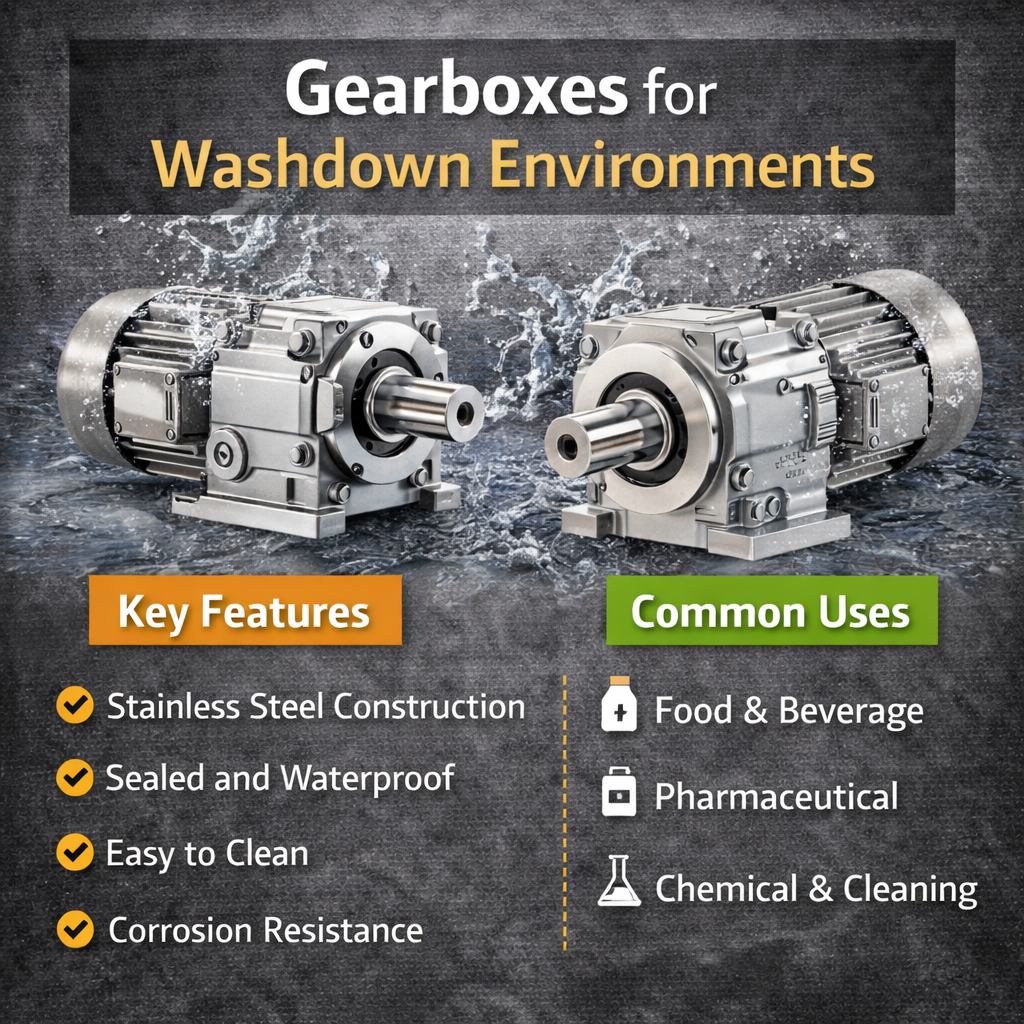
This article explains how to properly select gearboxes for washdown environments and outlines the most common failure modes seen in these demanding applications.
What Is a Washdown Environment?
A washdown environment is any industrial setting where equipment is regularly cleaned using water, steam, or chemical solutions. These cleanings may involve high pressure, elevated temperatures, or aggressive sanitizing agents.
Common washdown environments include:
Food and beverage processing
Dairy and meat processing facilities
Pharmaceutical manufacturing
Breweries and bottling plants
Chemical processing areas
Sanitary packaging operations
Gearboxes in these environments must withstand repeated exposure without compromising performance or hygiene.
Why Standard Gearboxes Fail in Washdown Applications
Many standard industrial gearboxes are not designed for washdown conditions.
Common vulnerabilities include:
Porous or rough housing surfaces
Unsealed fasteners
Standard shaft seals not rated for high-pressure water
Inadequate corrosion protection
Improper breathers allowing moisture ingress
When exposed to washdown conditions, these weaknesses quickly lead to failure.
Key Gearbox Selection Factors for Washdown Environments
Selecting the correct gearbox requires attention to both mechanical performance and environmental protection.
Housing Material and Finish
Housing material is critical in washdown environments.
Common options include:
Stainless steel housings for aggressive or frequent washdowns
Aluminum housings with protective coatings for moderate washdown
Epoxy-coated or nickel-plated cast iron housings in limited washdown areas
Smooth, non-porous surfaces reduce bacteria buildup and make cleaning easier.
Sealing Systems
Seals are one of the most failure-prone components in washdown environments.
Gearboxes should use:
High-quality shaft seals rated for washdown
Multiple sealing stages where possible
Sealed fasteners and plugs
Poor sealing allows water and chemicals to enter the gearbox, contaminating lubricant and damaging bearings.
Breathers and Pressure Equalization
Standard open breathers allow moisture to enter during washdown or cooling cycles.
Washdown-rated gearboxes use:
Sealed or pressure-equalizing breathers
Hygienic breather designs
These prevent moisture ingress while allowing pressure relief.
Lubrication Requirements
Washdown environments often require food-grade lubricants.
Lubricants must:
Meet NSF H1 or H2 standards when required
Maintain viscosity in wet and temperature-variable conditions
Resist washout and emulsification
Incorrect lubricant selection accelerates wear and increases contamination risk.
Corrosion Resistance
Water and cleaning chemicals attack exposed metal surfaces.
Corrosion resistance is achieved through:
Stainless steel components
Protective coatings
Proper material selection for shafts and fasteners
Corrosion compromises seals, bearings, and structural integrity.
Mounting Orientation and Drainage
Gearboxes should be mounted to allow water to drain away naturally.
Sloped surfaces and proper orientation reduce standing water and prevent contamination buildup.
Common Gearbox Types Used in Washdown Environments
Several gearbox designs are commonly used in washdown applications.
Stainless Steel Gearboxes
Stainless steel gearboxes offer maximum corrosion resistance and cleanability.
They are commonly used in:
High-sanitation food processing
Pharmaceutical production
Dairy and meat processing
Helical and Helical-Bevel Gearboxes
These designs provide efficient, smooth operation and are available in washdown-rated configurations.
They are commonly used for conveyors and auxiliary equipment.
Shaft-Mounted Gearboxes
Shaft-mounted designs reduce alignment components but must be carefully sealed and protected for washdown use.
Planetary Gearboxes
Planetary gearboxes are used when high torque and compact size are required.
Washdown-rated planetary units must have robust sealing and corrosion protection.
Common Gearbox Failures in Washdown Environments
Washdown gearbox failures often follow predictable patterns.
Seal Failure
High-pressure water damages shaft seals.
Once seals fail, water enters the gearbox and contaminates lubricant.
Lubricant Contamination
Water ingress causes lubricant emulsification and loss of film strength.
Contaminated lubricant accelerates bearing and gear wear.
Corrosion Damage
Corrosion attacks housings, shafts, bearings, and fasteners.
Corrosion often begins at seals and progresses internally.
Bearing Failure
Water and chemical exposure degrade bearing surfaces.
Bearing failure leads to noise, vibration, and secondary gear damage.
Thermal Stress
Frequent washdowns followed by operation cause thermal cycling.
Temperature changes create pressure differentials that draw moisture into the gearbox.
Early Warning Signs of Washdown Gearbox Problems
Washdown gearbox failures often provide early indicators.
Common warning signs include:
Milky or cloudy lubricant
Oil leaks after washdown
Corrosion around seals or fasteners
Increased noise or vibration
Rising operating temperature
Prompt attention prevents catastrophic failure.
Best Practices for Preventing Washdown Gearbox Failures
Reliability improves significantly with proper selection and maintenance.
Best practices include:
Selecting gearboxes designed specifically for washdown environments
Using appropriate food-grade or washdown-rated lubricants
Inspecting seals regularly
Replacing breathers with sealed designs
Monitoring lubricant condition
Training cleaning crews to avoid direct high-pressure spray at seals
Preventive maintenance is critical in washdown applications.
When to Upgrade or Replace a Washdown Gearbox
A gearbox should be upgraded or replaced when:
Corrosion becomes persistent
Lubricant contamination is frequent
Seal failures occur repeatedly
Sanitation requirements increase
Downtime impacts production or compliance
Replacing a standard gearbox with a washdown-rated unit often dramatically improves reliability.
Final Thoughts
Washdown environments place extreme demands on gearboxes, requiring specialized design, materials, and sealing.
Most failures result from seal damage, moisture ingress, corrosion, or improper lubrication.
Selecting a gearbox specifically designed for washdown conditions helps protect equipment, improve uptime, and maintain sanitary compliance.
If you need help selecting or troubleshooting a gearbox for a washdown environment, IndustrialGearboxSupply.com can help guide you toward the right solution.