

Gearboxes for Heavy Shock Loads
Heavy shock loads are one of the most destructive forces an industrial gearbox can experience. Applications that involve sudden impacts, rapid load changes, or frequent starts and stops place extreme stress on gears, shafts, and bearings. Selecting a gearbox that is not designed to handle shock loading is a leading cause of cracked gear teeth, bearing failure, and catastrophic breakdowns.
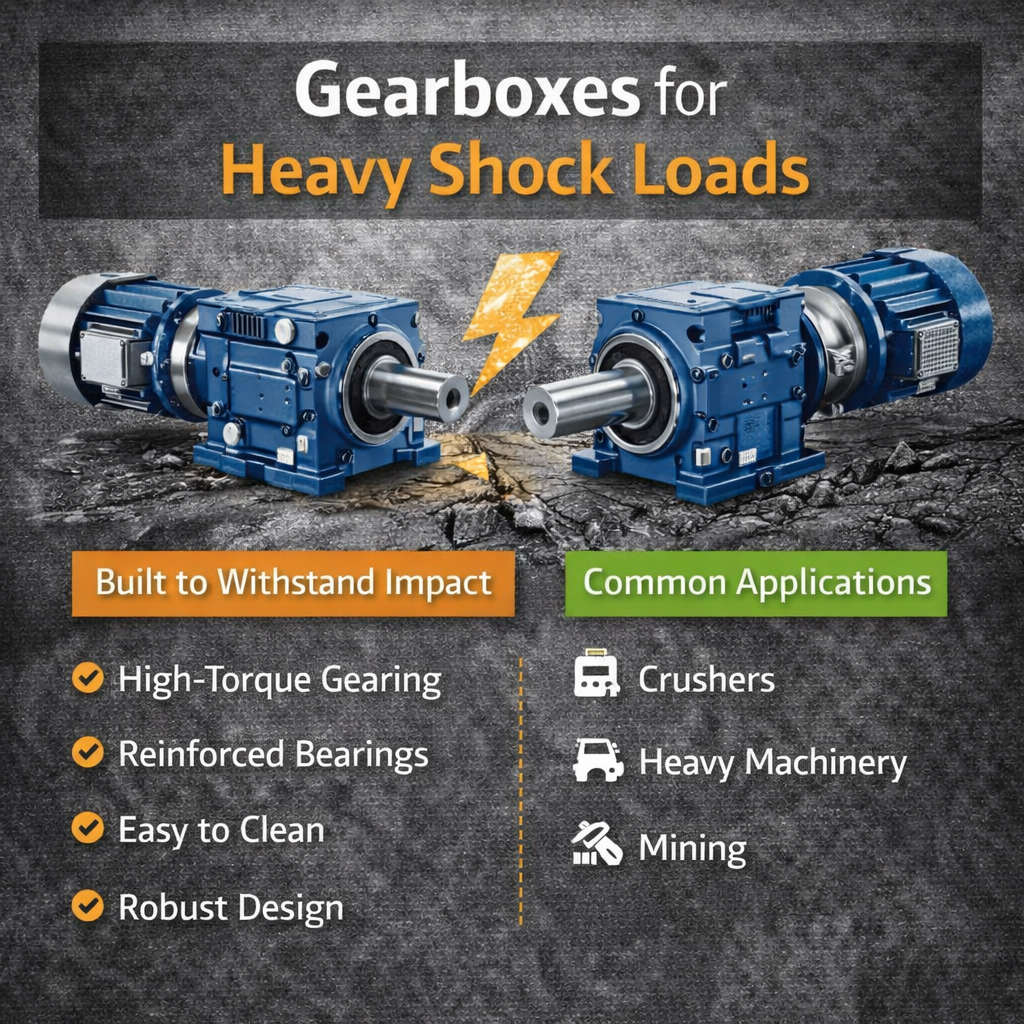
This article explains how to select gearboxes for heavy shock load applications and outlines the most common failure modes seen in these demanding environments.
What Is a Shock Load?
A shock load occurs when torque is applied suddenly or exceeds normal operating levels for a short duration. Unlike steady-state loads, shock loads create instantaneous stress spikes that can far exceed rated torque.
Shock loads commonly occur during:
Sudden starts or stops
Jamming or plugging events
Material impacts
Reversing operation
Emergency stops
Load drops or surges
Even brief shock events can significantly shorten gearbox life if not properly accounted for.
Common Applications with Heavy Shock Loads
Many industrial applications regularly experience shock loading.
Common examples include:
Crushers and shredders
Mixers and agitators
Extruders
Conveyors with heavy bulk material
Bucket elevators
Metal processing equipment
Mining and aggregate machinery
Recycling equipment
These applications require gearboxes specifically selected for impact resistance and durability.
Why Standard Gearboxes Fail Under Shock Loads
Standard gearboxes are typically designed for relatively smooth, predictable loads. When exposed to shock loading, several failure mechanisms occur.
Common vulnerabilities include:
Insufficient service factor
Inadequate gear tooth strength
Bearings not rated for impact loads
Shafts undersized for bending stress
Rigid mounting with no shock absorption
Repeated shock loading causes cumulative damage even if the gearbox appears to operate normally at first.
Key Gearbox Selection Factors for Heavy Shock Loads
Selecting the right gearbox for shock loads requires conservative design and careful analysis.
Service Factor
Service factor is critical in shock load applications.
Gearboxes exposed to heavy shock loads often require service factors significantly higher than steady-duty applications. Underestimating service factor is one of the most common causes of early failure.
Torque Capacity
Gearboxes must be rated for peak torque, not just average running torque.
Peak torque during shock events can be several times higher than normal operating torque. Gearboxes should be selected based on worst-case conditions.
Gear Type and Tooth Design
Gear geometry plays a major role in shock resistance.
Helical gears distribute load across multiple teeth, reducing stress concentration. Planetary gearboxes provide excellent load sharing and high torque density, making them well suited for shock loading.
Worm gearboxes are generally less suitable for heavy shock loads due to lower efficiency and higher heat generation.
Shaft and Bearing Design
Shock loads place extreme stress on shafts and bearings.
Gearboxes must have:
Oversized shafts
Bearings rated for impact and radial loads
Proper support for overhung loads
Bearing failure is often the first sign of shock load damage.
Housing Strength
Shock loading transmits force through the entire gearbox structure.
Robust housings made from cast iron or steel help absorb impact forces and prevent cracking or deformation.
Lubrication and Film Strength
Shock loads momentarily disrupt the lubricant film.
Lubricants must have sufficient viscosity and extreme-pressure additives to protect gear teeth during impact events. Improper lubrication accelerates wear under shock loading.
Shock Absorption and Coupling Selection
Flexible couplings, torque limiters, or fluid couplings can significantly reduce shock loading transmitted to the gearbox.
In many cases, proper coupling selection is just as important as gearbox selection.
Gearbox Types Commonly Used for Heavy Shock Loads
Certain gearbox designs are better suited for shock loading.
Helical Gearboxes
Helical gearboxes provide smooth load distribution and high efficiency. They are widely used in moderate to heavy shock applications.
Helical-Bevel Gearboxes
Helical-bevel designs combine strength with right-angle power transmission and are common in crushers and heavy conveyors.
Planetary Gearboxes
Planetary gearboxes excel in high shock load applications due to:
Load sharing across multiple gears
High torque density
Compact, rigid design
They are commonly used in mining, recycling, and heavy processing equipment.
Custom-Built Gearboxes
In extreme shock load applications, custom gearboxes may be required to meet specific torque, mounting, and durability requirements.
Common Gearbox Failures Caused by Shock Loads
Shock load failures often follow predictable patterns.
Gear Tooth Cracking or Breakage
Repeated shock loading leads to fatigue cracks that eventually cause gear teeth to fracture.
Bearing Damage
Impact loads cause brinelling, spalling, and premature bearing failure.
Shaft Fatigue
Sudden torque spikes create bending stress that leads to shaft cracking or deformation.
Seal Failures
Shock loads increase shaft movement, damaging seals and causing lubricant leaks.
Overheating
Inefficient load transfer and increased friction raise operating temperatures and degrade lubricant.
Early Warning Signs of Shock Load Damage
Shock-related damage often provides warning signs before catastrophic failure.
Common indicators include:
Loud banging or knocking noises
Increased vibration
Oil leaks
Metal particles in lubricant
Rising operating temperature
Reduced performance or efficiency
Monitoring these signs allows corrective action before failure occurs.
Preventing Gearbox Failures in Shock Load Applications
Proper selection and maintenance dramatically reduce failure risk.
Best practices include:
Selecting gearboxes with high service factors
Sizing for peak torque, not average torque
Using shock-absorbing couplings
Selecting robust gear designs
Using proper lubrication with EP additives
Monitoring vibration and oil condition
Avoiding repeated overload events
Preventive maintenance is especially important in shock load applications.
When to Upgrade or Replace a Gearbox
A gearbox should be upgraded or replaced when:
Shock loading increases
Failures become frequent
Load conditions change
Gearbox shows signs of fatigue damage
Downtime becomes costly
Upgrading to a shock-rated gearbox often significantly improves reliability.
Final Thoughts
Heavy shock loads are one of the most challenging conditions for industrial gearboxes.
Most failures result from undersizing, insufficient service factor, improper gear selection, or lack of shock absorption.
Understanding shock load characteristics and selecting a gearbox designed to handle impact forces helps prevent catastrophic failure and extend equipment life.
If you need help selecting or troubleshooting a gearbox for heavy shock load applications, IndustrialGearboxSupply.com can help guide you toward the right solution.