

How Long Do Industrial Gearboxes Last?
One of the most common questions asked by plant managers and maintenance teams is how long an industrial gearbox should last. The short answer is: it depends. Gearbox lifespan varies widely based on application, load conditions, maintenance practices, and operating environment.
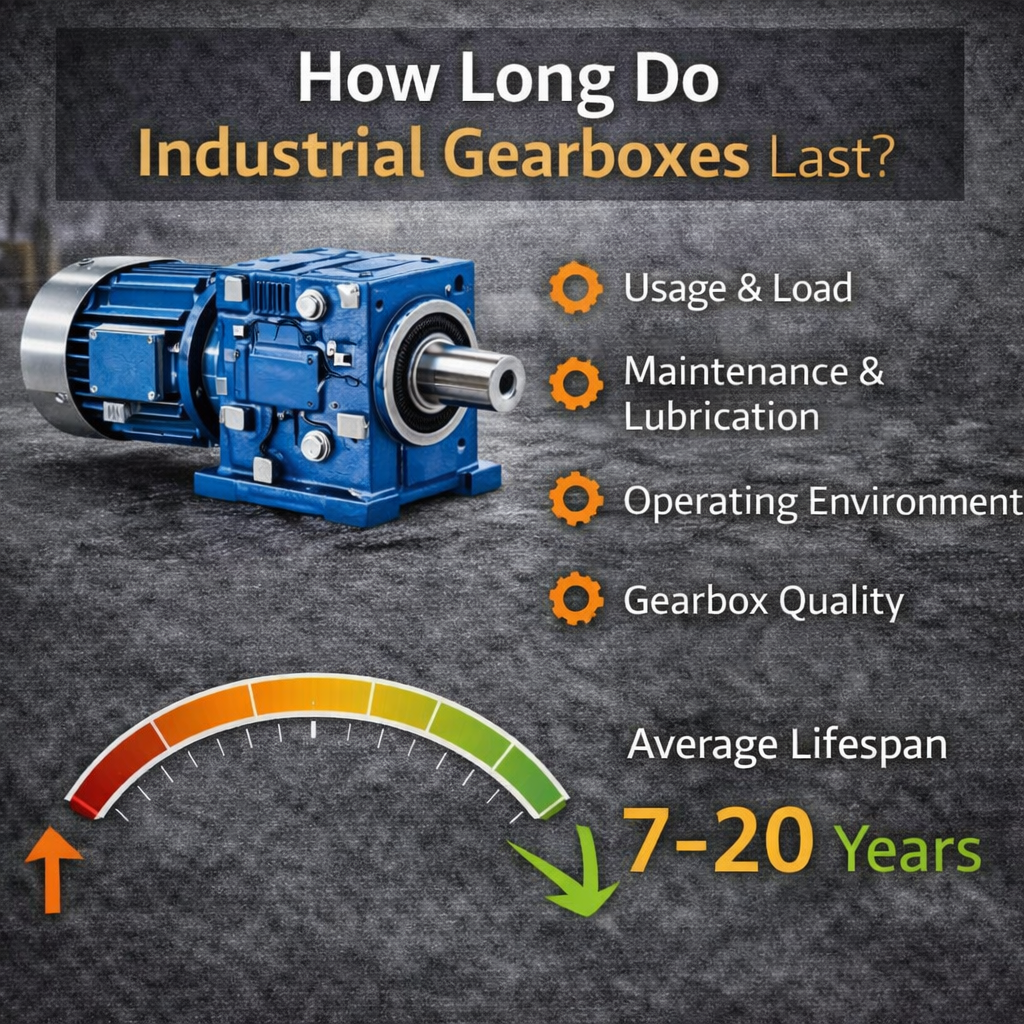
This article explains what determines gearbox life expectancy, realistic service life ranges, and how to extend the life of an industrial gearbox.
Typical Lifespan of an Industrial Gearbox
Under ideal conditions, many industrial gearboxes are designed to last 20 to 30 years. In real-world applications, service life is often shorter.
Typical lifespan ranges include:
Light-duty applications: 15–30 years
Moderate-duty industrial use: 10–20 years
Heavy-duty or shock-load applications: 5–15 years
Poorly maintained or misapplied gearboxes: Less than 5 years
These ranges assume the gearbox is properly selected, installed, lubricated, and maintained.
What Determines How Long a Gearbox Lasts
Gearbox life is influenced by multiple factors working together.
Application Load and Service Factor
The most significant factor affecting gearbox life is load.
Gearboxes that operate:
Near or above rated torque
Under frequent shock loads
With inadequate service factor
will experience accelerated wear. Undersized gearboxes fail far sooner than properly sized units.
Duty Cycle and Operating Hours
Gearboxes designed for intermittent duty will not last as long if operated continuously.
Key considerations include:
Hours of operation per day
Number of starts and stops
Reversing operation
Variable speed operation
Higher duty cycles reduce gearbox life unless accounted for during selection.
Lubrication Quality and Maintenance
Lubrication plays a critical role in gearbox longevity.
Gearboxes last significantly longer when:
Correct lubricant type and viscosity are used
Oil is changed at recommended intervals
Contamination is controlled
Oil condition is monitored
Lubrication failures are one of the leading causes of premature gearbox failure.
Installation and Alignment
Improper installation dramatically shortens gearbox life.
Common installation-related issues include:
Misalignment
Improper mounting orientation
Incorrect torque on fasteners
Poor foundation support
Even small alignment errors can reduce bearing and gear life by years.
Operating Environment
Environmental conditions strongly affect gearbox lifespan.
Harsh environments include:
Washdown or high-moisture areas
Dusty or abrasive locations
Extreme temperatures
Corrosive chemicals
Gearboxes not designed for their environment deteriorate quickly.
Overhung and Axial Loads
External loads from belts, chains, or sprockets place additional stress on bearings and shafts.
If overhung or axial loads exceed gearbox ratings, bearing life is significantly reduced.
Quality of Design and Manufacturing
Gearbox lifespan also depends on:
Gear material and heat treatment
Bearing quality
Housing rigidity
Manufacturing tolerances
Higher-quality gearboxes generally last longer under similar conditions.
Common Reasons Gearboxes Fail Early
Most gearboxes that fail prematurely do so for predictable reasons.
Common causes include:
Undersizing
Ignoring peak or shock loads
Poor lubrication practices
Contamination
Overheating
Misalignment
Seal failures
Repeated overload events
Addressing these factors can dramatically extend service life.
Signs a Gearbox Is Reaching the End of Its Life
Gearboxes rarely fail without warning.
Common end-of-life indicators include:
Rising operating temperature
Increased noise or vibration
Metal particles in oil
Frequent oil leaks
Decreasing efficiency
Repeated bearing or seal failures
Early detection allows planned replacement instead of emergency downtime.
Can Gearbox Life Be Extended?
Yes, gearbox life can often be extended significantly.
Effective strategies include:
Proper sizing and service factor selection
Routine oil analysis
Scheduled oil changes
Monitoring temperature and vibration
Maintaining seals and breathers
Correct alignment and mounting
Avoiding overload conditions
Preventive maintenance is far less expensive than unplanned failure.
Repair, Rebuild, or Replace?
As gearboxes age, maintenance decisions become critical.
Repair may be sufficient for minor bearing or seal issues.
Rebuild can extend life if gears and housings remain in good condition.
Replacement is often the best option when internal damage is severe or failures are recurring.
Total cost of ownership should guide the decision.
Planning for Gearbox Replacement
Understanding expected gearbox life allows better planning.
Best practices include:
Tracking gearbox age and operating hours
Monitoring performance trends
Planning replacements during scheduled shutdowns
Stocking critical spares for high-risk applications
Proactive planning reduces downtime and cost.
Final Thoughts
Industrial gearboxes can last decades when properly selected, installed, and maintained. Most premature failures are not caused by poor equipment quality, but by misapplication, inadequate lubrication, or lack of maintenance.
Understanding what affects gearbox lifespan helps you make better decisions, reduce downtime, and extend equipment life.
If you need help evaluating the condition or remaining life of an industrial gearbox, IndustrialGearboxSupply.com can help assess your situation and recommend the best path forward.