

Industrial Motor Repair: Reliable Services to Keep Your Operations Running
When industrial motors fail, production grinds to a halt. Whether it’s a burnt winding, seized bearing, or electrical fault, fast and reliable industrial motor repair is critical to avoiding extended downtime.
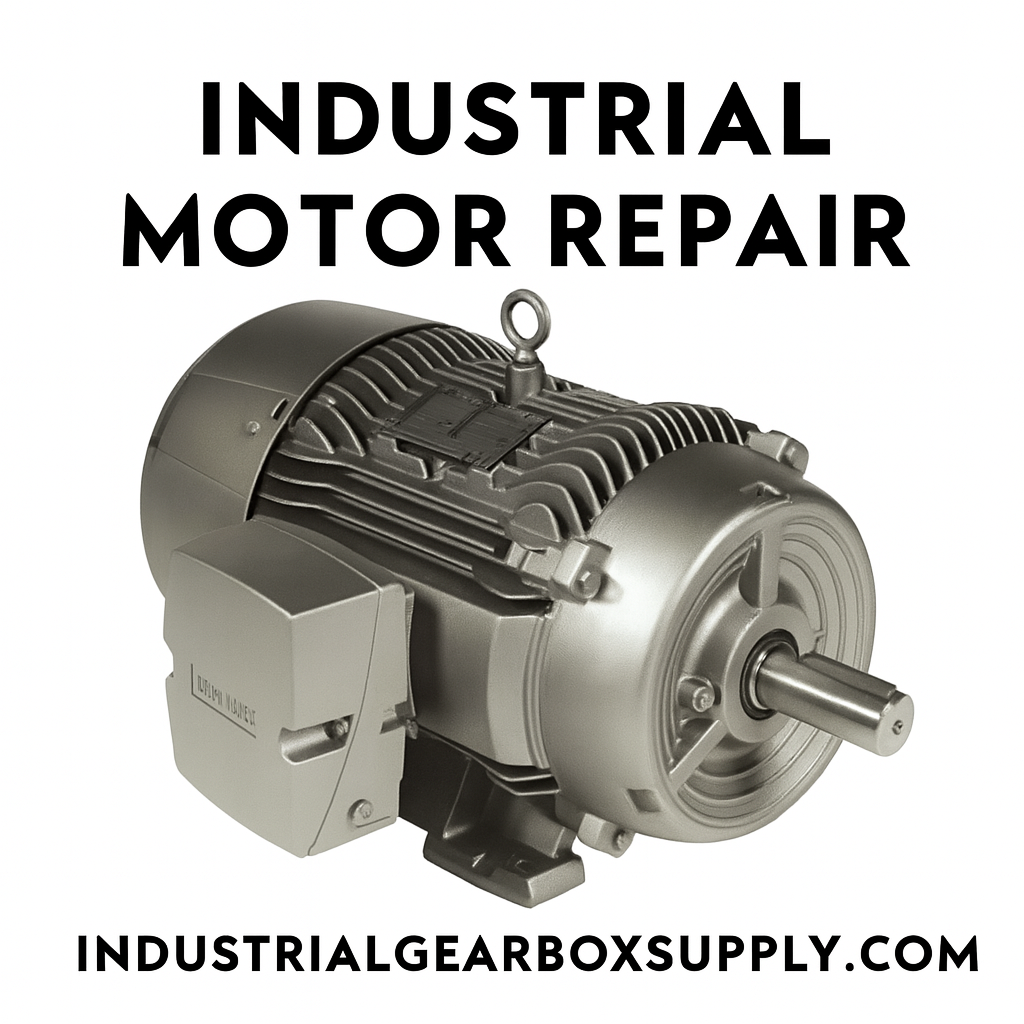
In this article, we’ll walk you through everything you need to know—from common motor problems to the repair process, cost considerations, and how to choose the right service provider.
Why Industrial Motor Repair Matters
Electric motors power countless machines in manufacturing, agriculture, water treatment, and more. A failed motor doesn’t just stop one machine—it can stall your entire production line. That’s why timely electric motor repair is essential. Expert repair services help:
Minimize downtime
Prevent costly equipment replacement
Improve energy efficiency
Extend motor lifespan
Common Problems Requiring Industrial Motor Repair
Understanding common motor issues can help you spot problems early:
Overheating
Excessive heat from blocked ventilation, overloading, or poor insulation can lead to winding failure.
Bearing Wear
Bearings are among the most frequently replaced components. Poor lubrication, misalignment, or vibration often cause premature bearing wear.
Electrical Faults
Short circuits, phase imbalances, and power surges can damage windings or motor starters.
Vibration and Noise
Unusual vibration often signals misalignment, imbalanced rotors, or loose components—issues that, if ignored, lead to serious mechanical failure.
The Industrial Motor Repair Process
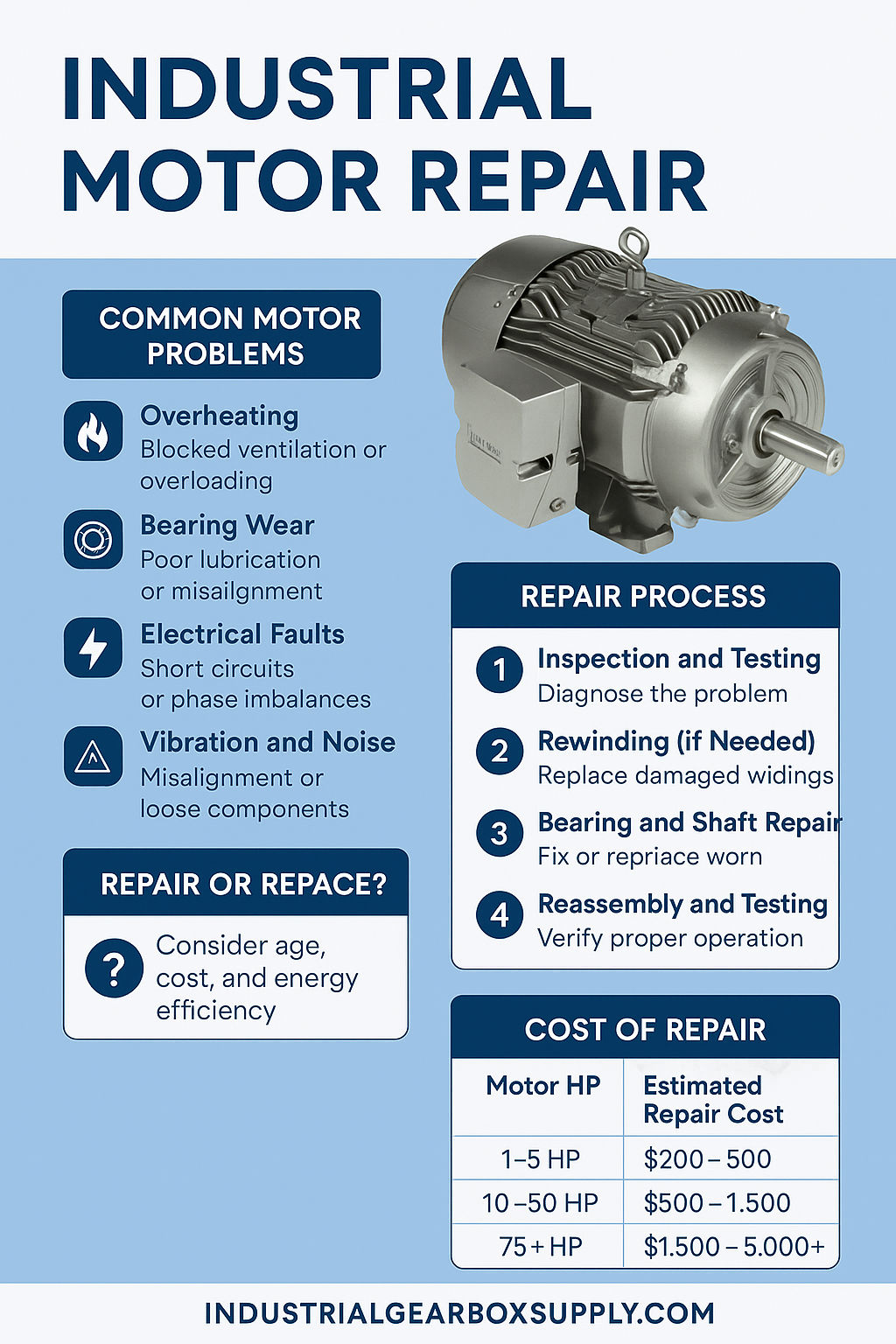
Quality repair starts with a thorough inspection and ends with testing for full functionality. Here's a step-by-step breakdown:
Inspection and Diagnosis
Technicians disassemble the motor and perform electrical and mechanical testing (megohm testing, surge testing, vibration analysis).Cleaning and Reconditioning
The motor is cleaned, bearings are removed, and reusable parts are reconditioned.Rewinding (If Needed)
If the stator windings are damaged, they are rewound with precision and varnished to OEM specs.Bearing Replacement and Shaft Repair
Worn bearings are replaced with high-quality alternatives. Shafts may be re-machined or replaced.Assembly and Testing
The motor is reassembled, balanced, and tested under load to ensure it meets original specs.
When to Repair vs. Replace an Electric Motor
It’s not always obvious whether to repair or replace a motor. Here are key considerations:
Age of the motor: If the motor is newer and high-efficiency, repair is often the better value.
Cost of repair vs. replacement: If the repair cost exceeds 60-70% of replacement, consider a new motor.
Application requirements: Critical systems may benefit from a fresh motor with warranty.
Energy efficiency: Upgrading to a premium-efficiency motor may reduce long-term operating costs.
Specialized Industrial Motor Services
Many providers offer more than basic repairs. Look for shops that provide:
Motor rewind services to OEM or EASA standards
Dynamic balancing for vibration control
Pump and gearbox repair for complete drive systems
Machine shop services (shaft rebuild, keyway repair, custom machining)
On-site inspection or pickup and delivery
Choosing the Right Industrial Motor Repair Service
Here’s what to look for when selecting a provider:
Experience: Look for shops with years of experience in industrial motor repair services across various industries.
Certifications: EASA accreditation or NEMA compliance ensures adherence to repair standards.
In-house capabilities: Machine shops, winding departments, and balancing services should all be on-site.
Fast turnaround: Ask about lead times, especially if your operation depends on urgent repair.
Warranty: Reputable providers stand behind their work.
Cost of Industrial Motor Repair
Prices vary based on size, damage severity, and services needed. Here’s a rough estimate:
| Motor HP | Estimated Repair Cost |
|---|---|
| 1–5 HP | $200 – $500 |
| 10–50 HP | $500 – $1,500 |
| 75+ HP | $1,500 – $5,000+ |
Custom repairs, rewinding, and machining may increase costs.
Preventive Maintenance Saves Money
Preventive motor maintenance is the best way to reduce failures and avoid costly repair. Key practices include:
Routine motor inspection and testing
Bearing lubrication
Thermal imaging
Vibration monitoring
Maintaining motor inventory for quick swap-outs
Contact Industrial Gearbox Supply for Expert Motor Repair
At Industrial Gearbox Supply, we specialize in industrial motor repair with fast turnaround, expert service, and full in-house capabilities. From small fractional motors to large horsepower units, we deliver the reliability your operation depends on.
📍 Address: 3590 Scheele Dr, Jackson, MI 49202
📞 Phone: (517) 858-2966
📧 Email: sales@industrialgearboxsupply.com
🌐 Website: industrialgearboxsupply.com
Conclusion
Don’t let a faulty motor slow you down. With the right industrial motor repair partner, you can restore performance, avoid unnecessary replacements, and keep your operations on track. Whether you need diagnostics, rewinding, or a full rebuild, professional motor repair services give you a smart and cost-effective solution.