

New vs Rebuilt Gearboxes: Cost, Lead Time, Reliability
When a gearbox fails, one of the first decisions plant managers and maintenance teams must make is whether to purchase a new gearbox or rebuild the existing one. The right choice depends on cost, lead time, reliability expectations, and application requirements.
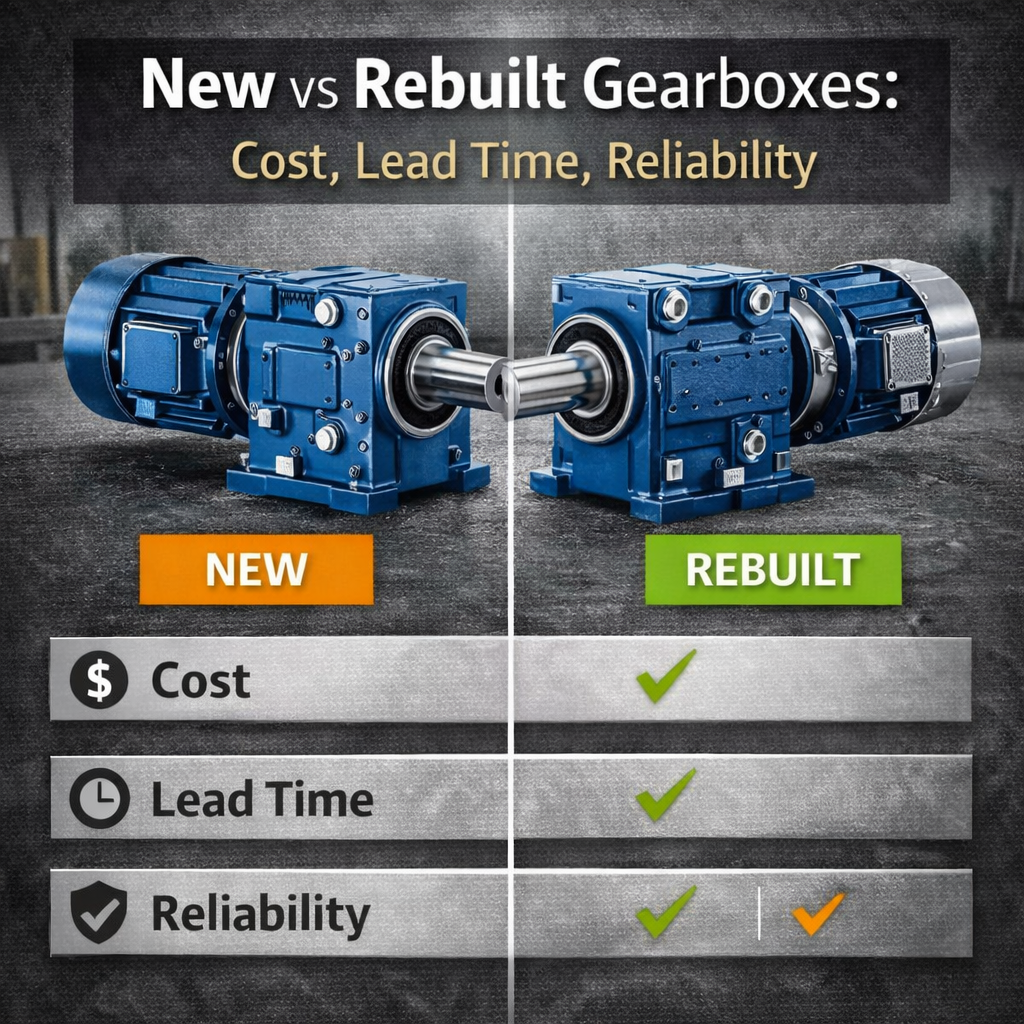
This article breaks down the real differences between new and rebuilt gearboxes so you can make an informed decision based on performance, risk, and long-term value.
What Is a New Gearbox?
A new gearbox is a factory-built unit manufactured using new components and assembled to original specifications. New gearboxes are typically produced by OEMs or authorized manufacturers and are designed to meet current standards for efficiency, materials, and performance.
New gearboxes are most commonly selected when:
The existing gearbox is obsolete or unavailable
Design upgrades are required
Reliability is critical
Warranty coverage is important
Long service life is expected
What Is a Rebuilt Gearbox?
A rebuilt gearbox is an existing unit that has been disassembled, inspected, repaired, and reassembled. Rebuild quality can vary significantly depending on who performs the work and what components are replaced.
A proper rebuild typically includes:
Full disassembly and cleaning
Inspection of gears, shafts, and housing
Replacement of bearings and seals
Gear repair or replacement if needed
Reassembly and testing
Not all rebuilds are equal, and quality depends heavily on process and expertise.
Cost Comparison: New vs Rebuilt Gearboxes
Cost is often the primary driver in the decision-making process.
New Gearbox Cost
New gearboxes typically have a higher upfront cost due to:
New materials and components
OEM engineering and manufacturing
Warranty coverage
Updated design standards
However, the higher cost often includes longer expected service life and lower risk.
Rebuilt Gearbox Cost
Rebuilt gearboxes usually cost less upfront, especially when:
The housing and major components are reusable
Minimal gear damage is present
Labor costs are controlled
However, hidden costs can arise if rebuild quality is poor or if additional failures occur soon after installation.
Lead Time Differences
Lead time is often critical in downtime situations.
New Gearbox Lead Time
Lead times for new gearboxes vary widely depending on:
Manufacturer
Gearbox size and configuration
Customization requirements
Supply chain conditions
Standard models may be available quickly, while custom units can take weeks or months.
Rebuilt Gearbox Lead Time
Rebuilt gearboxes are often faster to obtain, especially when:
The gearbox is already on hand
Replacement parts are readily available
The rebuild shop is experienced
In emergency situations, rebuilding can significantly reduce downtime.
Reliability and Performance Considerations
Reliability is where the biggest differences often appear.
Reliability of New Gearboxes
New gearboxes offer:
New gears, shafts, bearings, and seals
Factory tolerances and alignment
Updated materials and designs
Full manufacturer testing
Warranty protection
They are generally the most reliable option for critical applications.
Reliability of Rebuilt Gearboxes
Rebuilt gearbox reliability depends on:
The condition of the original components
The quality of inspection and repair
Whether gears were repaired or replaced
Proper alignment and assembly
A well-executed rebuild can perform reliably, but variability is higher compared to new gearboxes.
Application-Specific Considerations
The application often determines whether new or rebuilt is the better choice.
When a New Gearbox Makes More Sense
A new gearbox is usually preferred when:
The application involves heavy shock loads
Downtime is extremely costly
The gearbox operates continuously
Precision or low backlash is required
Regulatory or safety compliance is critical
The existing gearbox design is outdated
When a Rebuilt Gearbox Is a Good Option
A rebuild may be appropriate when:
The gearbox operates in a non-critical application
The housing and gears are in good condition
Lead time is the top priority
Budget constraints are significant
The gearbox design is proven and well understood
Warranty and Risk
Warranty coverage varies significantly.
New gearboxes typically include a manufacturer warranty that provides peace of mind and risk protection.
Rebuilt gearboxes may include limited warranties depending on the rebuilder. Warranty terms should always be reviewed carefully.
Long-Term Cost of Ownership
Initial cost does not always reflect total cost of ownership.
New gearboxes often provide:
Longer service intervals
Improved efficiency
Lower maintenance costs
Reduced risk of secondary damage
Rebuilt gearboxes may require:
More frequent inspections
Higher maintenance attention
Earlier replacement
Long-term costs should be evaluated alongside upfront savings.
Obsolescence and Interchangeability
In some cases, rebuilding is not possible due to obsolete parts or unavailable components.
New gearboxes may offer:
Improved interchange options
Better efficiency
Compatibility with modern motors and drives
This can simplify future maintenance and replacements.
Making the Right Decision
The decision between new and rebuilt gearboxes should be based on:
Application criticality
Required reliability
Lead time constraints
Budget
Risk tolerance
Long-term operating goals
There is no one-size-fits-all answer.
Final Thoughts
Both new and rebuilt gearboxes have a place in industrial operations.
New gearboxes offer the highest reliability, longest service life, and lowest risk, while rebuilt gearboxes can provide faster turnaround and lower upfront cost when done properly.
Understanding the trade-offs between cost, lead time, and reliability helps ensure the right decision for your operation.
If you need help deciding between a new or rebuilt gearbox for your application, IndustrialGearboxSupply.com can help evaluate your options and recommend the best solution.