

When to Replace a Gearbox Instead of Repairing It
When a gearbox fails or begins to show signs of serious wear, the immediate question is whether it should be repaired or replaced. While repairing a gearbox can be cost-effective in some cases, there are situations where replacement is the smarter, safer, and more reliable option.
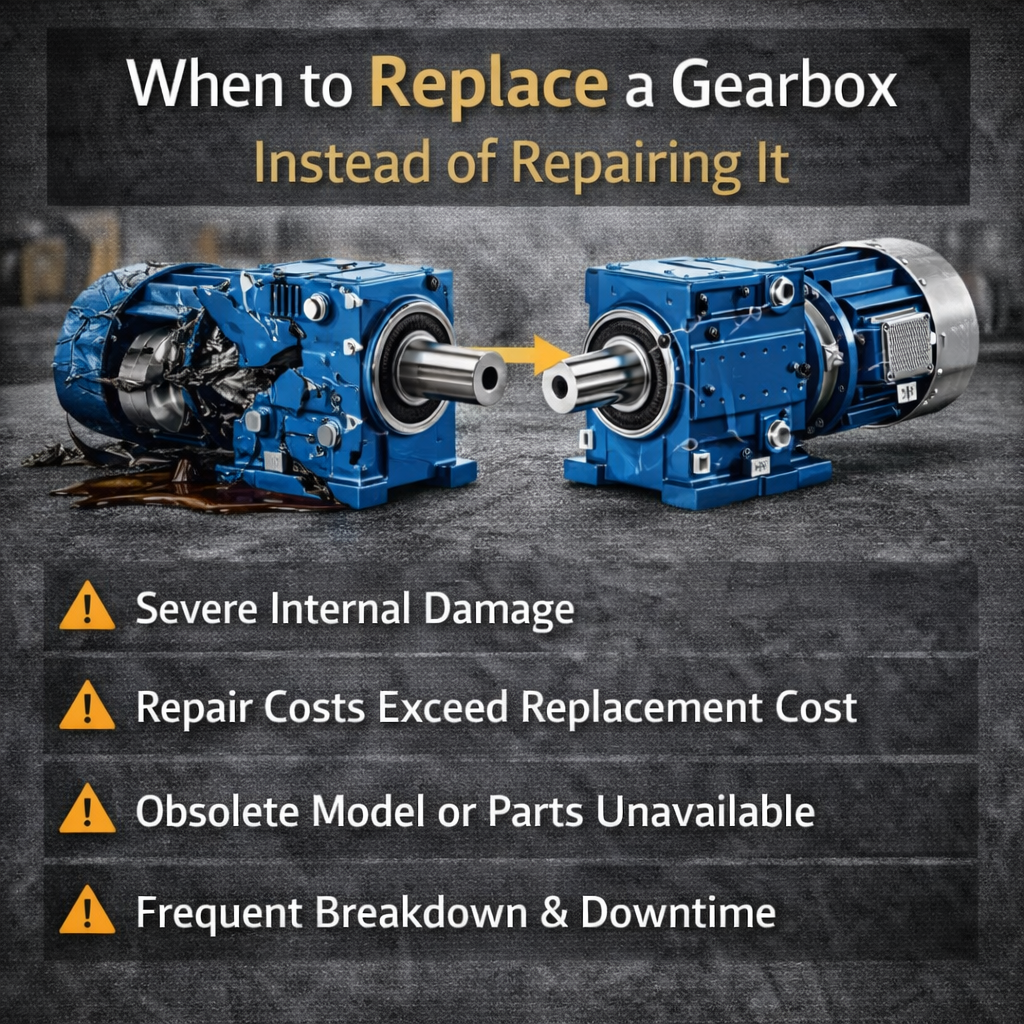
This article explains when replacing a gearbox makes more sense than repairing it, helping you avoid recurring failures, excessive downtime, and hidden long-term costs.
Repair vs Replacement: Why the Decision Matters
Choosing to repair a gearbox that should be replaced often leads to:
Repeated failures
Increased downtime
Escalating maintenance costs
Reduced efficiency
Higher risk of catastrophic breakdown
On the other hand, replacing a gearbox too early can result in unnecessary capital expense. The key is understanding the warning signs and decision factors that indicate replacement is the better option.
When Gearbox Repair Still Makes Sense
Before discussing replacement, it’s important to recognize when repair is still viable.
Repair may be appropriate when:
Damage is limited to bearings or seals
Gear teeth show minimal wear
The housing and shafts are in good condition
The gearbox is not critical to production
Downtime risk is manageable
Replacement lead time is excessive
If core components are still structurally sound, repair can restore reliable operation.
Clear Signs a Gearbox Should Be Replaced
Certain conditions strongly indicate that replacement is the better option.
Severe Gear Tooth Damage
If gears show:
Cracked teeth
Broken teeth
Advanced pitting or spalling
Significant profile wear
Repairing becomes risky and expensive. Gear replacement often approaches the cost of a new gearbox without offering the same reliability.
Housing Damage or Cracks
A damaged housing is a major red flag.
Cracked or distorted housings:
Compromise alignment
Accelerate bearing wear
Increase vibration
Cannot always be reliably repaired
Once housing integrity is compromised, replacement is usually the safest option.
Shaft Wear or Deformation
Shaft damage such as:
Excessive wear
Scoring
Bending
Fatigue cracking
indicates deep structural issues. Shaft repair is difficult and often unreliable in high-load applications.
Repeated or Recurring Failures
If a gearbox has been repaired multiple times and continues to fail, replacement is often more economical in the long run.
Recurring failures indicate:
Undersized design
Incorrect application
Inherent design limitations
Operating conditions beyond gearbox capability
Replacing with a properly sized and selected gearbox solves the root cause.
Obsolete or Unsupported Gearboxes
Older gearboxes may suffer from:
Unavailable replacement parts
Long lead times for custom components
Lack of manufacturer support
In these cases, replacement with a modern equivalent improves serviceability and reliability.
Increased Performance Demands
Replacement should be considered when:
Load requirements increase
Speed requirements change
Shock loading increases
Duty cycle becomes more severe
Repairing an old gearbox will not upgrade its capacity or performance limits.
Safety and Compliance Concerns
If a gearbox failure poses:
Safety risks
Regulatory compliance issues
Environmental hazards
Replacement with a modern, compliant gearbox is often required.
Cost Considerations: Repair vs Replacement
Upfront repair costs may appear lower, but hidden costs often change the equation.
Replacement is usually the better choice when:
Repair costs exceed 50–60% of replacement cost
Downtime cost is high
Warranty protection is important
Energy efficiency improvements are possible
Total cost of ownership should be evaluated, not just immediate expense.
Reliability and Warranty Factors
New gearboxes offer:
New components throughout
Factory testing
Manufacturer warranty
Predictable service life
Repaired gearboxes may carry limited warranties and higher risk, especially if major components are reused.
For critical applications, reliability often outweighs short-term savings.
Lead Time Considerations
Repair is often chosen due to shorter turnaround time.
However, replacement may still be preferable when:
A drop-in replacement is available
Interchange options exist
A stocked gearbox meets requirements
Advance planning and spare gearboxes can reduce replacement lead-time risk.
When Replacement Is the Best Long-Term Decision
Replacement is usually the right choice when multiple factors align:
Significant internal damage
High downtime cost
Application demands exceed original design
Repeated repairs have failed
Long-term reliability is critical
In these cases, replacement often reduces cost and stress over time.
Making the Final Decision
The decision to repair or replace should be based on:
Extent of internal damage
Application criticality
Downtime cost
Future operating conditions
Availability of replacement units
Risk tolerance
A proper evaluation prevents costly mistakes.
Final Thoughts
Repairing a gearbox can be effective in the right circumstances, but there are clear situations where replacement is the smarter option.
Severe internal damage, recurring failures, obsolete designs, and increased performance demands all point toward replacement rather than repair.
Understanding when to replace a gearbox helps prevent repeated downtime and improves long-term reliability.
If you need help evaluating whether a gearbox should be repaired or replaced, IndustrialGearboxSupply.com can help assess your situation and recommend the best path forward.