

What Information You Need Before Ordering a Gearbox
Ordering a gearbox without the right information is one of the most common causes of incorrect sizing, long lead times, and premature failures. Gearboxes are not one-size-fits-all components, and small details can dramatically affect performance, reliability, and compatibility.
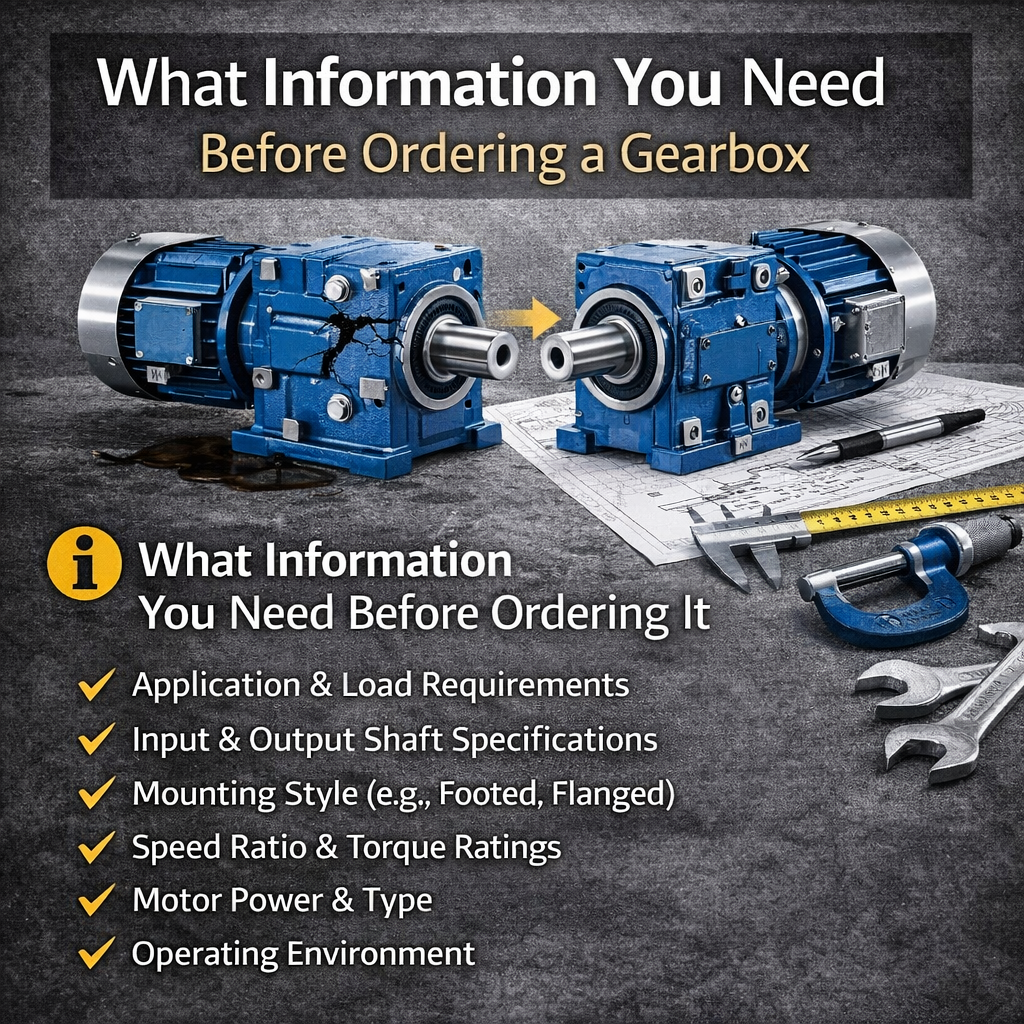
This article outlines exactly what information you need before ordering a gearbox so you can avoid costly mistakes and get the right unit the first time.
Why Preparation Matters When Ordering a Gearbox
Many gearbox problems start before the unit is even installed.
Incomplete or incorrect information can result in:
Undersized or oversized gearboxes
Incorrect ratios
Mounting incompatibility
Shaft mismatches
Overheating
Excessive wear
Long delays due to rework or returns
Providing accurate information upfront saves time, money, and downtime.
Required Output Speed
One of the most critical inputs is the required output speed.
You should know:
Desired output RPM
How the speed was calculated
Whether the speed is fixed or variable
Minimum and maximum operating speeds
Output speed determines gearbox ratio and directly affects torque and efficiency.
Required Torque
Torque requirements must be clearly defined.
At a minimum, you should provide:
Required running torque
Required starting torque
Peak or shock torque, if applicable
Torque should be calculated based on load, not motor nameplate alone. Many gearboxes fail because they were sized only for motor power rather than actual load conditions.
Duty Cycle and Operating Hours
How often and how long the gearbox operates matters.
Key details include:
Hours of operation per day
Continuous or intermittent duty
Number of starts and stops per hour
Reversing operation, if any
High-duty or high-cycle applications require higher service factors.
Service Factor Requirements
Service factor accounts for application severity.
You should specify:
Type of load (smooth, moderate shock, heavy shock)
Application type (conveyor, mixer, crusher, packaging, etc.)
Environmental factors
Underestimating service factor is one of the most common gearbox ordering mistakes.
Mounting Orientation
Gearboxes are designed for specific mounting positions.
Be prepared to specify:
Horizontal or vertical mounting
Shaft orientation
Whether the gearbox will be foot-mounted, flange-mounted, or shaft-mounted
Incorrect mounting can lead to lubrication and bearing failures.
Input Power and Motor Details
The gearbox must match the motor.
Provide:
Motor horsepower or kilowatt rating
Motor speed (RPM)
Motor frame size
Motor mounting type
Motor shaft dimensions
This ensures proper compatibility and alignment.
Output Shaft Details
Output shaft information is critical for proper fit.
You should know:
Shaft diameter
Shaft length
Keyway size
Hollow or solid shaft
Direction of rotation
Mismatched shaft details are a common cause of installation delays.
Overhung and Axial Loads
Many applications apply external forces to the gearbox.
You should specify:
Belt, chain, or sprocket drive details
Distance from gearbox to load
Expected overhung load
Axial thrust, if applicable
Ignoring these loads often leads to bearing failure.
Environment and Operating Conditions
Environmental conditions directly affect gearbox selection.
Important details include:
Ambient temperature range
Presence of dust, moisture, or chemicals
Washdown requirements
Indoor or outdoor operation
Corrosive or sanitary environment
Gearboxes must be designed to survive their environment.
Lubrication Requirements
Lubrication needs vary by application.
Be prepared to specify:
Oil or grease lubrication
Food-grade lubricant requirements
Ambient temperature extremes
Maintenance interval preferences
Incorrect lubricant selection shortens gearbox life.
Noise and Precision Requirements
Some applications require quiet or precise operation.
You should identify:
Maximum acceptable noise level
Backlash limits
Positioning accuracy requirements
These factors influence gearbox type selection.
Available Space and Physical Constraints
Physical fit matters as much as performance.
Provide:
Available installation space
Height, width, and length constraints
Weight limitations
Clearance requirements
Compact designs may be required in tight spaces.
Replacement vs New Installation
The ordering process differs for replacements.
You should clarify:
Whether the gearbox is replacing an existing unit
Manufacturer and model of the existing gearbox
Any performance issues with the old unit
Replacement applications often allow for drop-in alternatives or upgrades.
Lead Time Expectations
Lead time affects gearbox selection.
Be clear about:
Required delivery date
Whether downtime is critical
Availability of temporary solutions
This helps balance performance and availability.
Documentation and Compliance Requirements
Some applications require documentation.
You may need:
Certifications
Compliance with industry standards
Special labeling or materials
Providing this upfront avoids delays.
Final Checklist Before Ordering a Gearbox
Before placing an order, confirm you have:
Output speed and torque
Duty cycle and service factor
Mounting orientation
Motor and shaft details
Load conditions
Environmental requirements
Space constraints
Lead time expectations
A complete checklist ensures correct selection.
Final Thoughts
Ordering a gearbox without complete information increases the risk of failure, downtime, and additional cost.
Providing accurate, detailed information upfront allows suppliers to select or build the right gearbox for your application.
If you’re unsure about any of these details, IndustrialGearboxSupply.com can help review your application and ensure the correct gearbox is ordered the first time.