

Gearbox Housing Materials: Cast Iron vs Aluminum
The material used for a gearbox housing plays a major role in strength, durability, heat dissipation, and overall service life. Two of the most common materials used in industrial gearboxes are cast iron and aluminum.
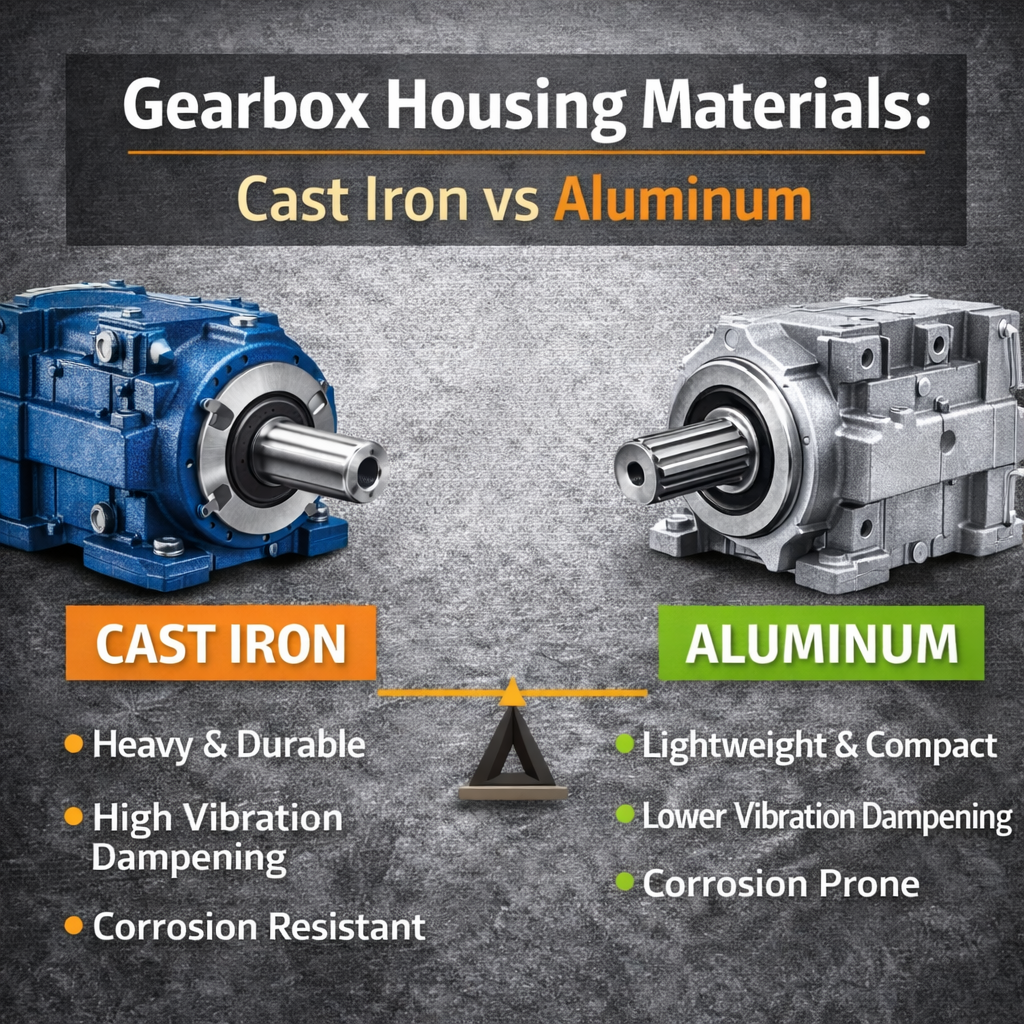
While both materials are widely used, they serve very different purposes. Choosing the wrong housing material for an application can lead to excessive vibration, misalignment, overheating, or premature failure.
This article explains the differences between cast iron and aluminum gearbox housings and when each material is best suited.
Why Gearbox Housing Material Matters
The gearbox housing is more than just a protective shell.
It:
Supports bearings and shafts
Maintains gear alignment
Absorbs vibration
Dissipates heat
Protects internal components from external loads
Housing material directly affects how well the gearbox performs under load and over time.
Cast Iron Gearbox Housings
Cast iron is the traditional and most widely used material for industrial gearbox housings.
Strength and Rigidity
Cast iron offers excellent rigidity and resistance to deformation. This stiffness helps maintain precise shaft and bearing alignment under heavy loads.
Because alignment is critical to gear and bearing life, cast iron housings are preferred for high-torque and continuous-duty applications.
Vibration Damping
One of cast iron’s biggest advantages is its natural vibration-damping capability.
Cast iron absorbs vibration better than aluminum, reducing noise and minimizing the transmission of vibration to connected equipment.
This makes cast iron ideal for:
Heavy-duty machinery
Applications with shock loading
Installations sensitive to noise and vibration
Load and Torque Capacity
Cast iron housings are well suited for high torque and high load applications.
They resist cracking and distortion when subjected to:
Heavy radial loads
Overhung loads
Repeated shock loads
This durability contributes to longer gearbox life in demanding environments.
Heat Dissipation
Cast iron dissipates heat more slowly than aluminum, but its mass allows it to absorb and distribute heat evenly.
In steady-state, continuous-duty applications, this thermal stability helps prevent hot spots inside the gearbox.
Typical Applications for Cast Iron
Cast iron housings are commonly used in:
Conveyors
Mixers and agitators
Crushers
Heavy-duty processing equipment
Continuous-duty industrial machinery
Aluminum Gearbox Housings
Aluminum housings are increasingly popular in light-duty and compact gearbox designs.
Weight Reduction
Aluminum is significantly lighter than cast iron.
Reduced weight makes aluminum housings ideal for:
Space-constrained installations
Equipment where weight is critical
Applications requiring easy handling and installation
Lower weight can also reduce structural load on mounting surfaces.
Corrosion Resistance
Aluminum naturally resists corrosion better than cast iron, especially in humid or washdown environments.
This makes aluminum housings suitable for:
Food and beverage applications
Washdown environments
Mildly corrosive atmospheres
Additional coatings can further improve corrosion resistance.
Heat Dissipation
Aluminum dissipates heat faster than cast iron due to its higher thermal conductivity.
In intermittent-duty applications, this rapid heat dissipation helps control operating temperature.
However, faster heat transfer does not always compensate for lower rigidity in heavy-load situations.
Structural Limitations
Aluminum is less rigid than cast iron.
Under high torque or heavy loading, aluminum housings can:
Deflect slightly
Lose precise alignment
Transfer more vibration
For this reason, aluminum housings are typically limited to lower torque and lighter-duty applications.
Typical Applications for Aluminum
Aluminum housings are commonly used in:
Light-duty conveyors
Packaging equipment
Automation systems
Mobile or modular machinery
Applications with frequent washdown
Cast Iron vs Aluminum: Key Differences
The most important differences come down to strength, rigidity, weight, and vibration control.
Cast iron provides superior stiffness, vibration damping, and load capacity.
Aluminum provides lower weight, better corrosion resistance, and faster heat dissipation.
Neither material is universally better—the correct choice depends on the application.
Impact on Gearbox Alignment and Bearing Life
Housing rigidity directly affects alignment.
Cast iron housings better maintain bearing and shaft alignment under load, reducing bearing stress and extending gear life.
Aluminum housings may experience slight deflection under load, which can increase bearing wear if not properly sized.
This makes proper gearbox sizing especially important when using aluminum housings.
Noise and Vibration Considerations
Cast iron housings naturally reduce noise and vibration.
Aluminum housings tend to transmit vibration more readily, which can increase noise levels in some installations.
Noise-sensitive applications often benefit from cast iron housings or additional vibration isolation when using aluminum.
Cost Considerations
Aluminum housings are often less expensive to manufacture and ship due to lower material and transportation costs.
Cast iron housings typically cost more but often provide lower total cost of ownership in heavy-duty applications due to longer service life and reduced maintenance.
Choosing the Right Housing Material
When selecting a gearbox housing material, consider:
Torque and load requirements
Duty cycle (continuous vs intermittent)
Vibration sensitivity
Environmental exposure
Mounting conditions
Weight limitations
Matching the housing material to the application ensures optimal performance and reliability.
Common Mistakes When Choosing Housing Material
Common errors include:
Choosing aluminum for high-torque applications
Ignoring vibration and shock loads
Selecting based on weight alone
Underestimating alignment sensitivity
Focusing on upfront cost instead of service life
These mistakes often lead to premature gearbox failure.
Final Thoughts
Cast iron and aluminum gearbox housings each serve important roles in industrial applications.
Cast iron excels in strength, rigidity, vibration damping, and heavy-duty service. Aluminum excels in weight reduction, corrosion resistance, and compact design.
Understanding the differences helps ensure the gearbox housing material matches the application demands.
If you need help selecting the correct gearbox housing material for your application, IndustrialGearboxSupply.com can help guide you toward the right solution.